PPS Pro version 8.2.pdf - 第75页
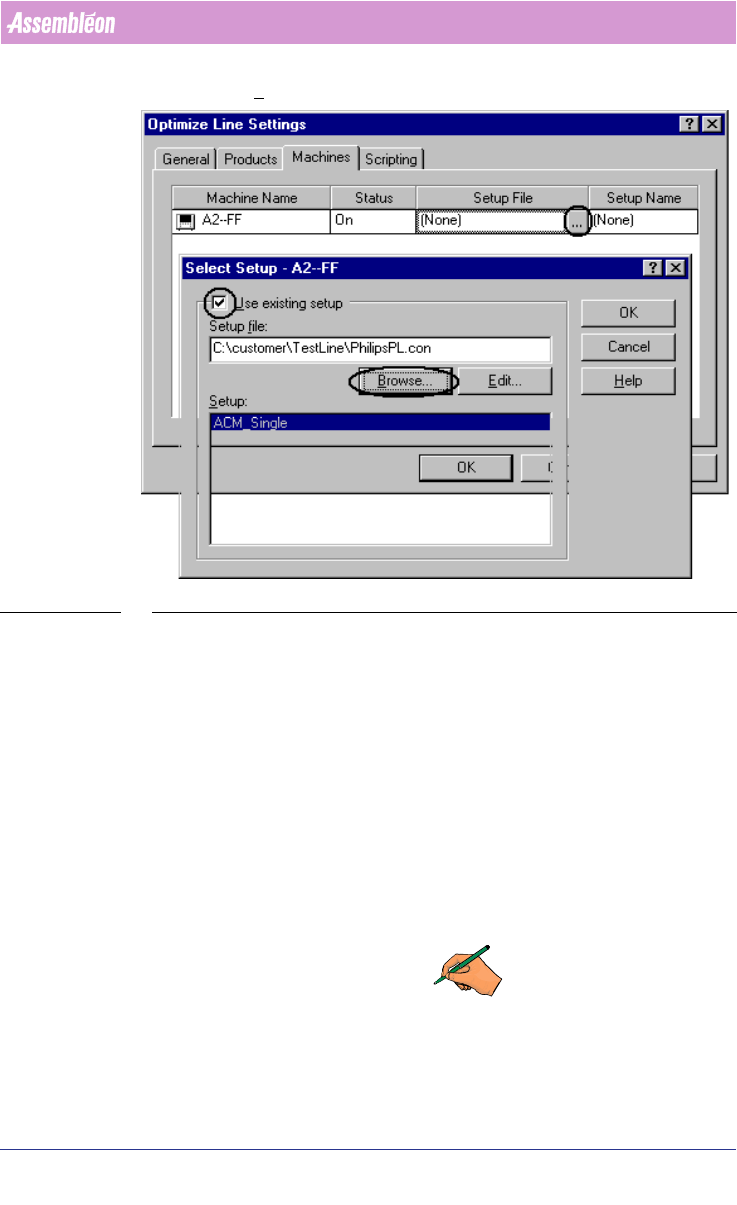
4022 591 98 247 User Manual 05.07 PPS-Pro v8.2 71 PPS-Pro GUI ■ Press the B rowse... button. SCREEN 47 Optimize Line Settin gs - Select Setup After the setup file has been selected a su ccessive calculation will u se it.…

User Manual 4022 591 98247
70 PPS-Pro v8.2 05.07
PPS-Pro GUI
3. Select a machine, and click the Settings button and then the Modify
button.
4. From the Optimize combo box, choose either ‘From MDF’ or ‘From Path’.
Click the
OK button.
5. Click the Close button and then click the Program button.
6. Repeat steps 2-5 above for all machines
7. Press the Optimize Cell button.
After a successful optimization, the created setup files are automatically
written in each machine directory of the project directory. The optimizer will
over write existing setup files that are already located in those machine direc
-
tories.
NOTE: To reuse setup files (see 2.28 on page 70), place them in a directory other
than the machine directory or rename the CON file.
2.28 Use a setup file when optimizing a pcb
Setup files are always created after program machines. These files enablea you
to manually assign certain parts to certain feeders, while allowing the rest of
the parts to be assigned by the Assembléon optimizer. There are two ways to
use the setup file when an optimization is performed. This depends on the
choice that is made in the
File > Preferences... menu in the Optimizer tab.
The two choices for the ‘Line Optimizer type’ are:
1. ‘No Optimizer’.
The setup file can be selected via the Fixed Setup button in the Program
Machines tab.
2. An other selection.
The setup file can be selected via the Settings... button in the Optimize Line
tab.
After pressing one of these above mentioned buttons, the Optimize Line
Settings dialog appears
(see SCREEN 47 on page 71). The setup file can be
selected after:
■ Pressing the ... button.
■ Select the Use existing setup checkbox.
4022 591 98247 User Manual
05.07 PPS-Pro v8.2 71
PPS-Pro GUI
■ Press the Browse... button.
SCREEN 47 Optimize Line Settings - Select Setup
After the setup file has been selected a successive calculation will use it.
After the optimization again a con file will be generated in the machine
directory and project root, take care that these files will be overwritten with
calculations of the same project. The fixed setup of the initial con file will be
part of the latest made con file. The latest con file can be used for successive
calculations if the user wants to keep the machine setup as long as possible.
2.29 Obtaining topguide position information in STP
report
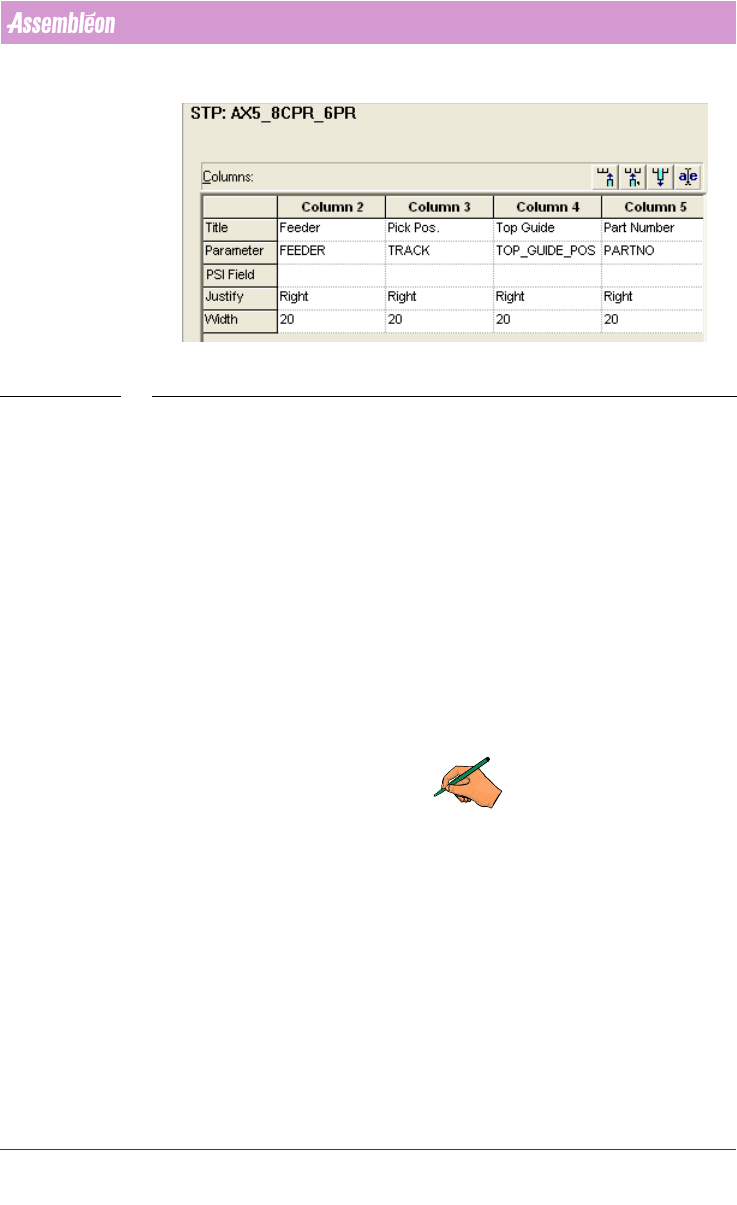
If an A_Series FeederTrolley is configured in an existing ALE file, then the STP
report should mention the feeder topguide positions. In the new example ALE
files this has been added, but in existing files it still has to be added.
REMARK: This only applies to A_Series_FeederTrolley, for FCMII_upgrade
trolleys the topguides should not be set.
User Manual 4022 591 98247
72 PPS-Pro v8.2 05.07
PPS-Pro GUI
SCREEN 48 Example of ALE file with Topguide position information for A-Series Feeder
Trolley (column 4)
2.29.1 Keeping part assignments in lanes of TTF Feeders (A-
Series only)
The A-Series optimizer creates an output file with the filename PreAssigned-
LanesForMultiLaneFeeders.xml in the project’s root directory. Note that this
function applies to all multilane feeders, but focuses on TTF where it’s
expected to be used most often. This file contains the information of TTF
feeder contents, it can be used as input for a successive calculation to keep as
many TTF pairs as reasonably possible together. Before this is done the file
should be copied to a location where it cannot be overwritten (for example
one directory up).
Using this file will have the benefit that it can reduce the work for operators.
This work consists of rearranging the reels from the lanes in TTF feeders
between production batch changeovers.
REMARK: The MultiLane XML file will be overwritten in the project’s root
directory with each calculation, either rename it or save it in another
directory.
If necessary the user can edit this file with an XML editor such as XML
notepad. The comment field can be used if the user wants an additional
method to identify the feeders. This file looks as follows: