TRS GEM Manual for Intel Ver 1.1.pdf - 第27页
GEM Manual for DEK P rinters Capabilities Issue 1.1 March 20th, 2014 Page 27 of 152 Page 27 of 152 5.2.4 Status Data Collection The host can use this capa bility to re quest selected status information. I t provides for …
GEM Manual for DEK Printers Capabilities
Issue 1.1 March 20th, 2014 Page 26 of 152 Page 26 of 152
5.2.3 Trace Data Collection
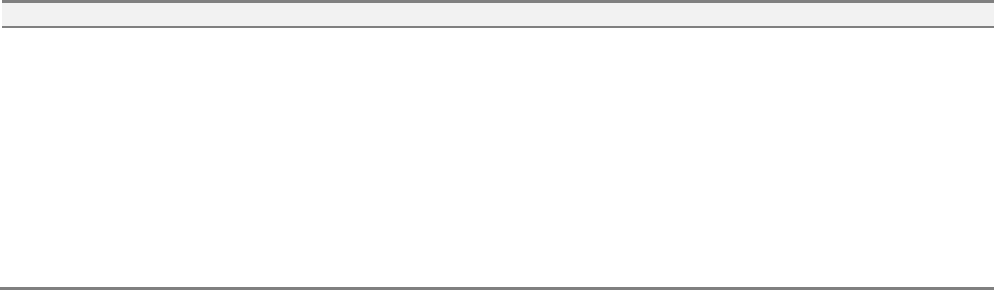
This capability enables reports to be sent at fixed intervals. This is achieved as follows:
The host initialises a trace by sending S2F23. This message defines the trace
report including, time interval (DSPER), total number of samples (TOTSMP),
the number of samples per trace report (REPGSZ) and a list of data to report
(SVID's). The host also provides an identity for the trace (TRID) so that it can
later differentiate between simultaneous traces.
The total number of reports sent will be TOTSMP/ REPGSZ unless the host
sends a new S2F13 with the same TRID, when the trace replaced by a new one.
The host can end a trace by sending the same TRID, with TOTSMP = 0.
For a detailed example, of trace data collection, refer to note A.4 of SEMI E30 standard.
Scenario:
Collection event report set up and send:
Comments
Host
Equipment
Comments
Trace Data Initialisation Request
S2F23 -->
<-- S2F24
Acknowledge trace init.
[DO] TOTSMP / REPGSZ times
[DO] REPGSZ times: collect
SVID1-SVIDn data, wait DSPER
[END_DO]
<-- S6F1
Send report.
Acknowledge report
S6F2 -->
Optional terminate. TOTSMP = 0
S2F23 -->
<-- S2F24
Acknowledge premature terminate. Stop trace.
[END_DO]
GEM Manual for DEK Printers Capabilities
Issue 1.1 March 20th, 2014 Page 27 of 152 Page 27 of 152
5.2.4 Status Data Collection
The host can use this capability to request selected status information. It provides for
synchronisation of equipment status.
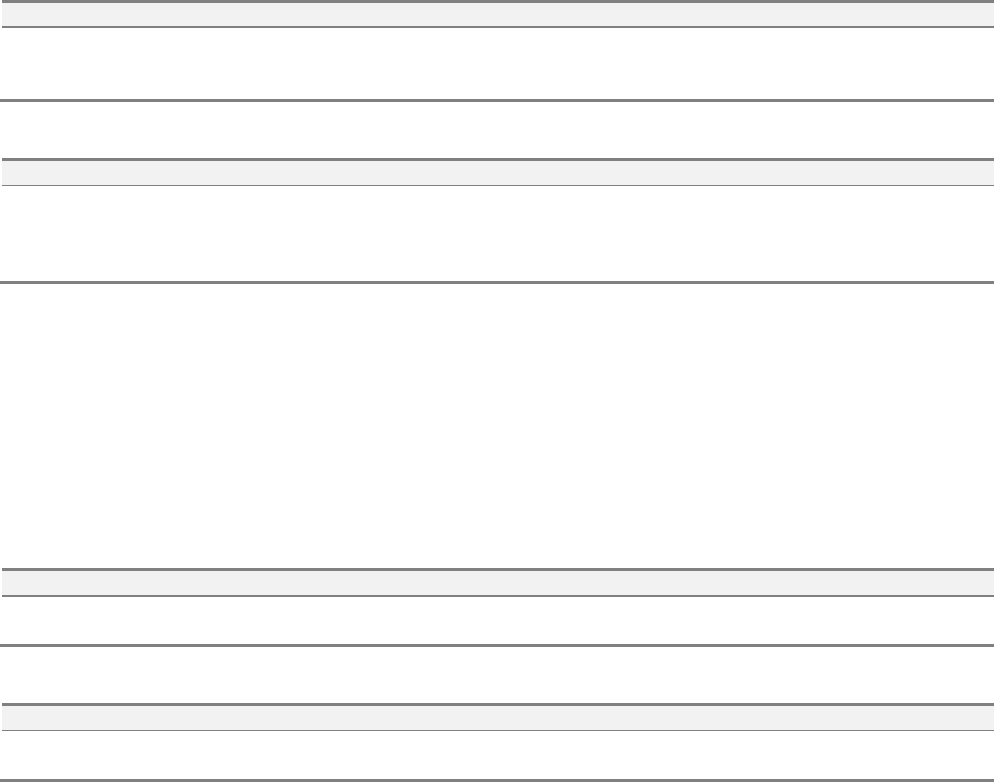
To obtain a status report, the host sends a request with a list of specific SVID's. The
equipment will respond with a list of status values.
Scenarios:
Equipment status variable report request:
Comments
Host
Equipment
Comments
Host requests report of selected status
values.
S1F3 -->
<-- S1F4
Equipment replies with requested data
Equipment status variable namelist request:
Comments
Host
Equipment
Comments
Host requests equipment to identify
selected status values.
S1F11 -->
<-- S1F12
Equipment replies with requested status variable
descriptions.
5.2.5 On-Line Identification
Using this capability, the host can confirm the presence of the equipment. The
equipment will send its identity MDLN and software revision SOFTREV in response to
a request from the host.
Scenarios:
On-Line data report: (Host to equipment)
Comments
Host
Equipment
Comments
Host requests On-Line data
S1F1 -->
<-- S1F2
Equipment replies MDLN & SOFTREV
On-Line data report: (Equipment to host)
Comments
Host
Equipment
Comments
<-- S1F1
Equipment requests On-Line data
Host replies Header only
S1F2 -->
GEM Manual for DEK Printers Capabilities
Issue 1.1 March 20th, 2014 Page 28 of 152 Page 28 of 152
5.3 Alarm Management
The alarm management capability enables the following functionality for host control of alarm
activity:
The host can enable, or disable, specific alarm notification.
The host can request a list of alarm texts.
The host can request a list of alarms set and enabled on the equipment.
The equipment reports both set and clear alarm events with times of alarm changes.
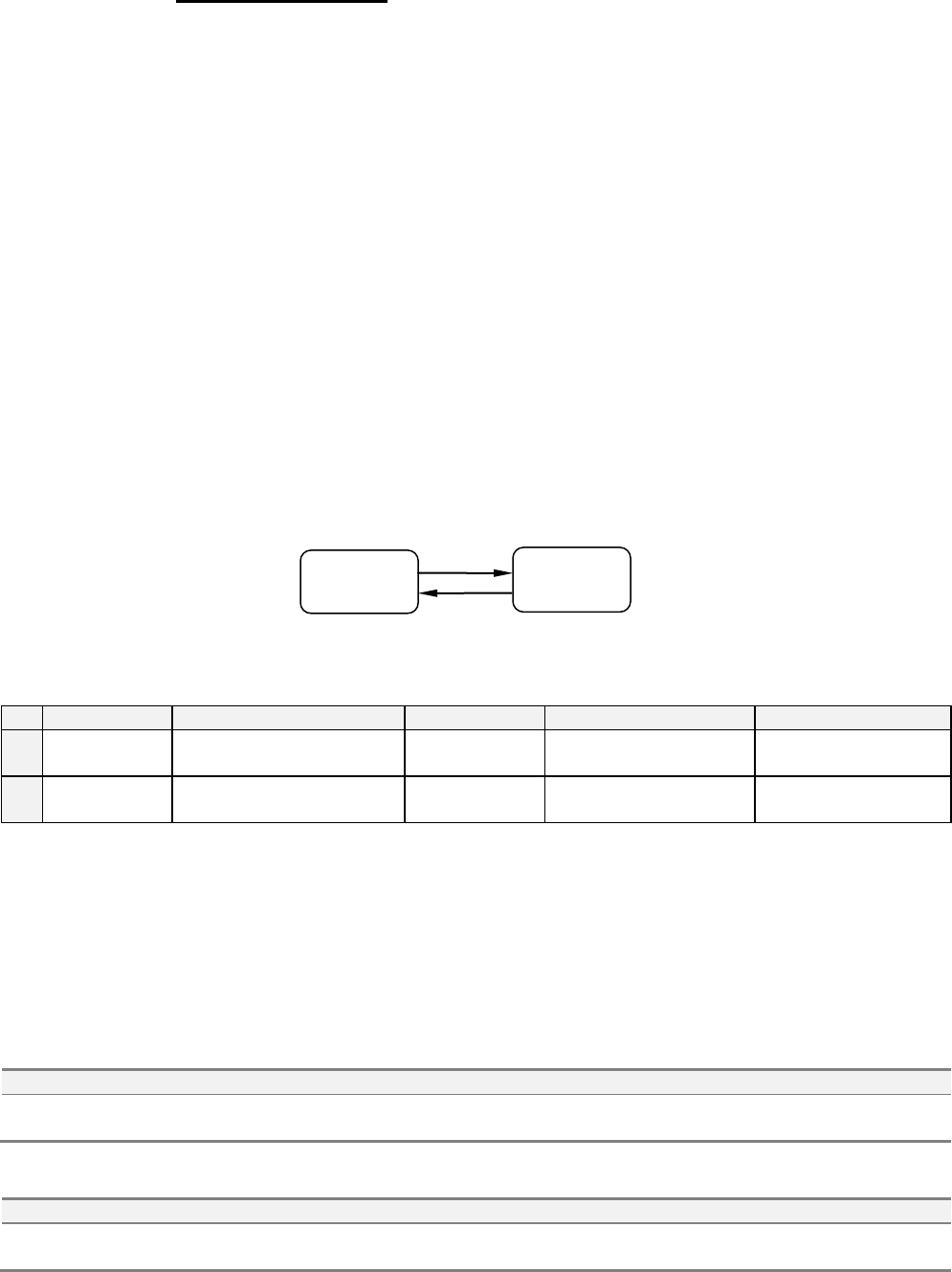
Each alarm has an identity (ALID), which may be in one of two states; SET or CLEAR. Each
ALID can also be ENABLED or DISABLED. The following state model determines alarm
behaviour.
The alarms implemented on the DEK printer are listed in chapter 6.
5.3.1 Alarm Management State Model
State Diagram:
Transition Table:
#
Current State
Trigger
New State
Action
Comment
1
ALARMn
CLEAR
Alarm is detected on
equipment
ALARMn SET
Send report if enabled.
Wait for operator
intervention.
2
ALARMn
SET
Alarm condition no longer
detected
ALARMn
CLEAR
Send report if enabled.
Operator has corrected
error.
State Definitions:
ALARMn CLEAR - The alarm ALID is in safe condition.
ALARMn SET - The alarm is active and operator intervention is required.
Scenarios:
Enable / disable alarms:
Comments
Host
Equipment
Comments
Enable / Disable alarm ALID
S5F3 -->
<-- S5F4
Equipment acknowledges change(s).
Upload alarm information:
Comments
Host
Equipment
Comments
Request alarm data / text
S5F5 -->
<-- S5F6
Equipment sends alarm data / text.
ALARMn
CLEAR
ALARMn
SET
1
2