HOST.pdf - 第51页
BM 122/ 123 /1 33/ 221/2 31 HOST COMPUTER SYSTEM 4. COMMAN D TABLE E35H EC-4A-CC1 -A0 4-2 E35HEC- 4A- CC1-A0 4. COMM A N D T A BLE

BM122/123/133/221/231
HOST COMPUTER SYSTEM
4. COMMAND TABLE
E35HEC-4A-CC1-A0
4-1
4. COMMAND TABLE

BM122/123/133/221/231
HOST COMPUTER SYSTEM
4. COMMAND TABLE
E35HEC-4A-CC1-A0
4-2
E35HEC-4A-CC1-A0
4. COMMAND TABLE
BM122/123/133/221/231
HOST COMPUTER SYSTEM
4.1 Command Table
E35HEC-4A-161-A0
4.1-1
4.1. Command Table
E35HEC-4A-161-A0
4.1.1 Classification of Command
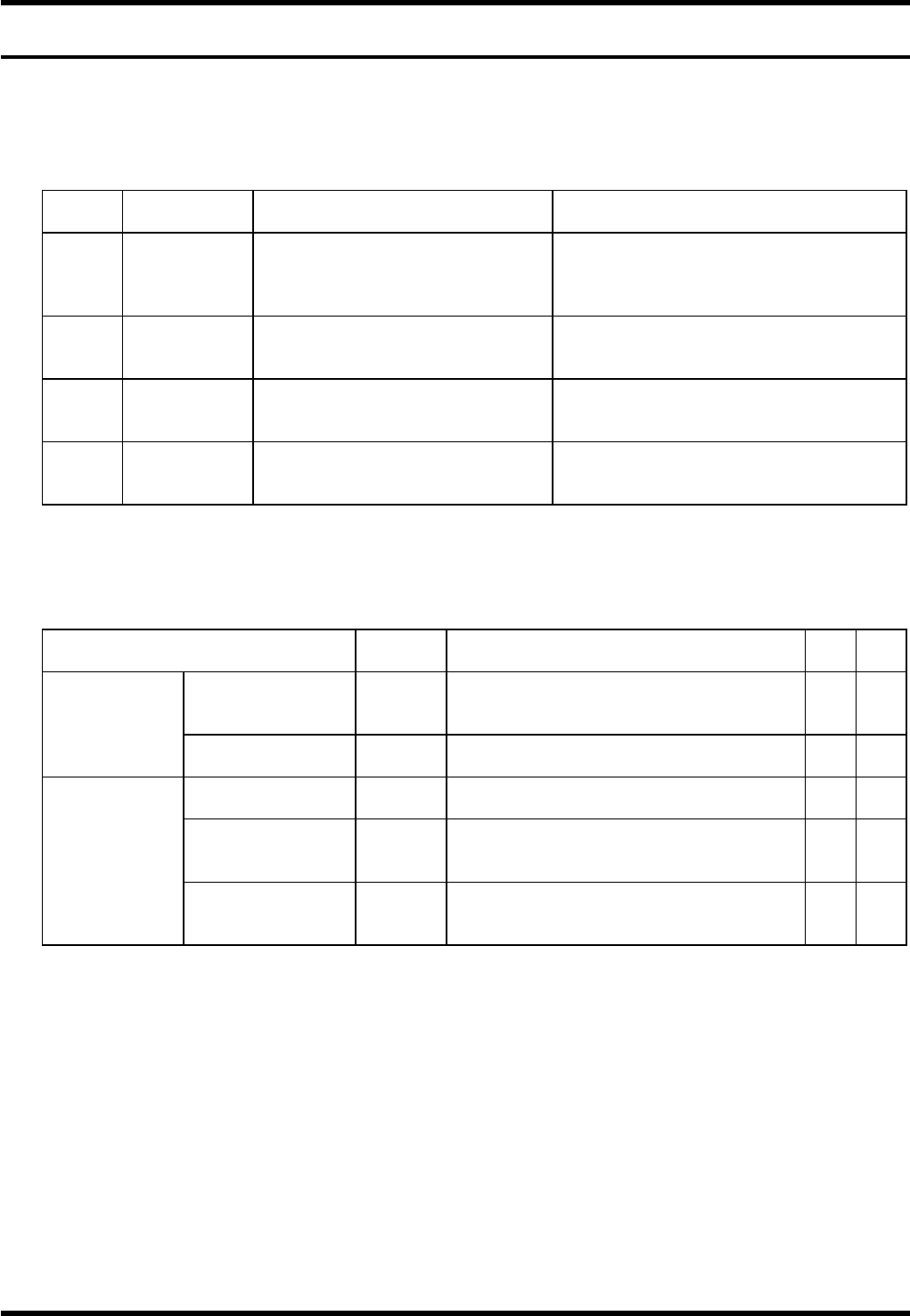
Messages between the machine and the host computer are exchanged using the predetermined commands.
The commands are classified into the four large categories.
Com-
mand
Message Description Usage
A Acknowledge Used when the machine or the host
computer confirms the reception of
message.
Used in communications process, as
‘affirmative response’, ‘negative
response’, or ‘request to resend’ to the
message received.
C Control
Command
Used when the host computer
requests the machine for some
action.
Program transmission and reception
Machine start/stop/reset commands
D Data Means information being
transmitted between the machine
and the host computer.
Program transfer
R Real-time
Information
Used by the machine to inform the
host computer of condition changes
as they occur.
The machine sends information such as
operation status or errors in real time.
4.1.2 A Commands
STD: Commands available in standard specification
PP: Commands available in Panasonic Package (option)
Function
Com-
mand
Description
STD
PP
Request next data A0 Command used to confirm that the
transmitted data were received properly
and to request the next data.
Normal
Data transfer end A2 Command used to indicate that the
communication ended without error.
No requested data A3 Command used when the requested
program does not exist.
Operation error A4E00 This is returned if the machine or the host
computer is not in the condition for
receiving the command sent.
Error
Protocol error A4E01 This is returned if the next command is
sent during the processing of the last
command.