RX-8_SPE_EN.pdf - 第22页
18 4-7-3 Allowable warpage of a boar d 4-7-4 A vailable area for placing a component on the topside and rear side of a board As shown in the fi gure below , the machine cannot place any com ponent in the area 3 mm from e…
17
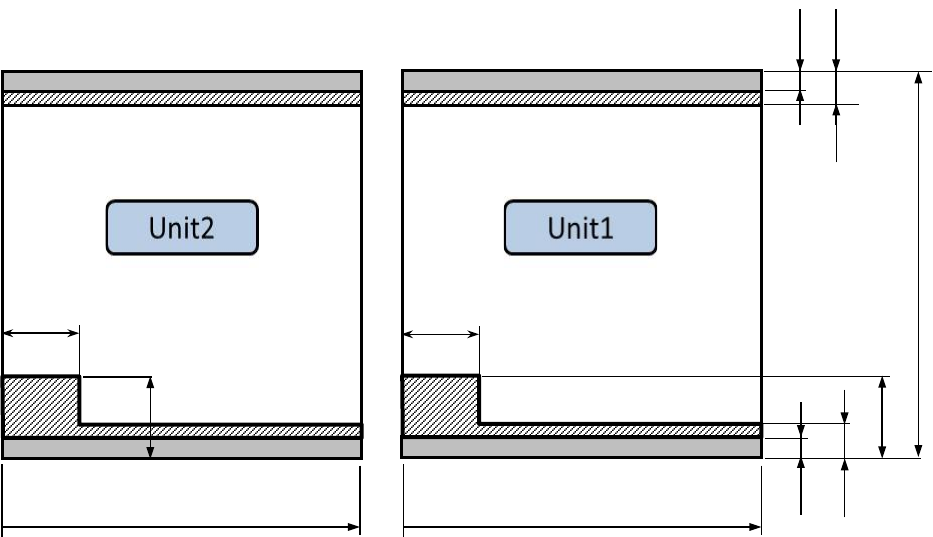
Single transfer specification device (flow direction R to L)
50
~
450mm
40mm
40mm
3mm
3mm
8mm
8mm
40mm
50
~
350mm
50
~
350mm
40mm
18
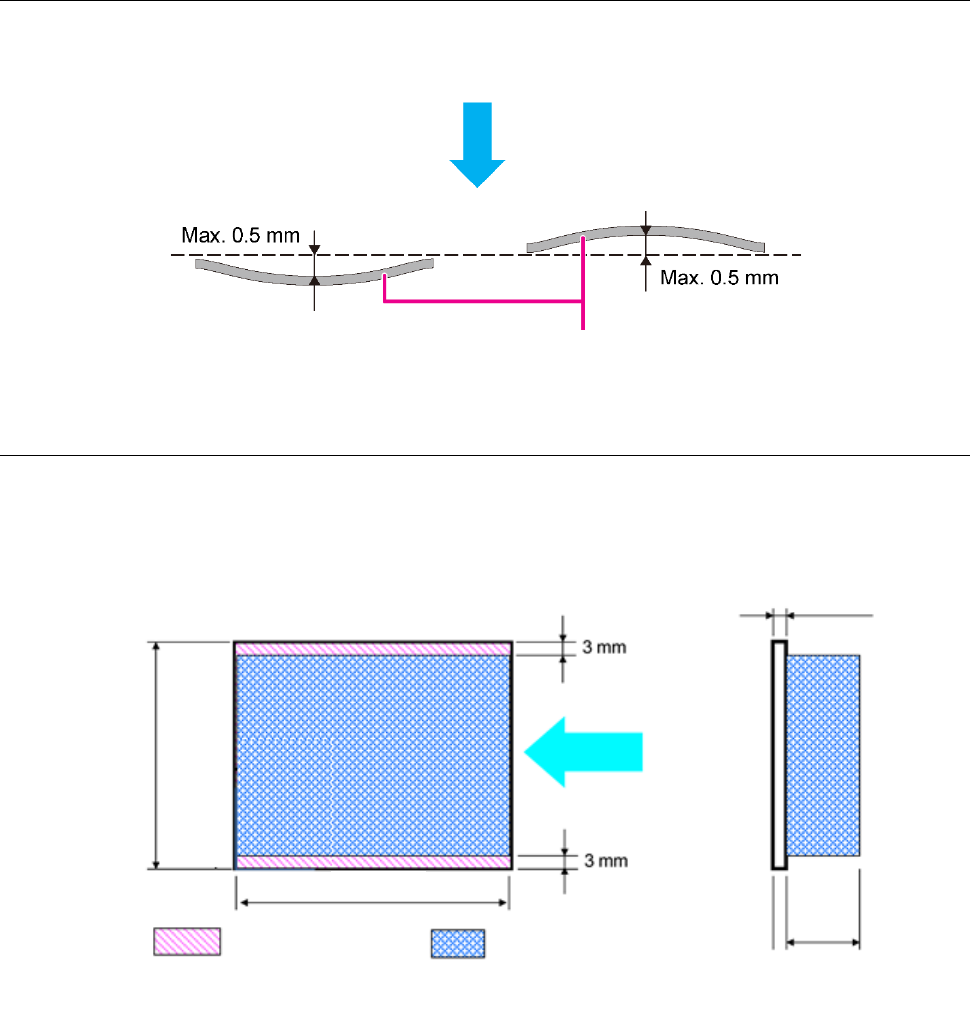
4-7-3 Allowable warpage of a board
4-7-4 Available area for placing a component on the topside and rear side of a board
As shown in the figure below, the machine cannot place any component in the area 3 mm from each
edge of a printed wiring board.
The maximum height of a component mounted on the rear side is 26 mm.
Component placement direction
Board
Flow
direction
Conveyor rail
section
Component installation
range that permits use of
the device
Board D
Board T
Board W
Bottom
side
26 mm
19
4-7-5 Board position correcting function
Board positioning
Reference for positioning a board
Standard specifications (without a stopper): the machine stops a board at a target position by
detecting the board edge.
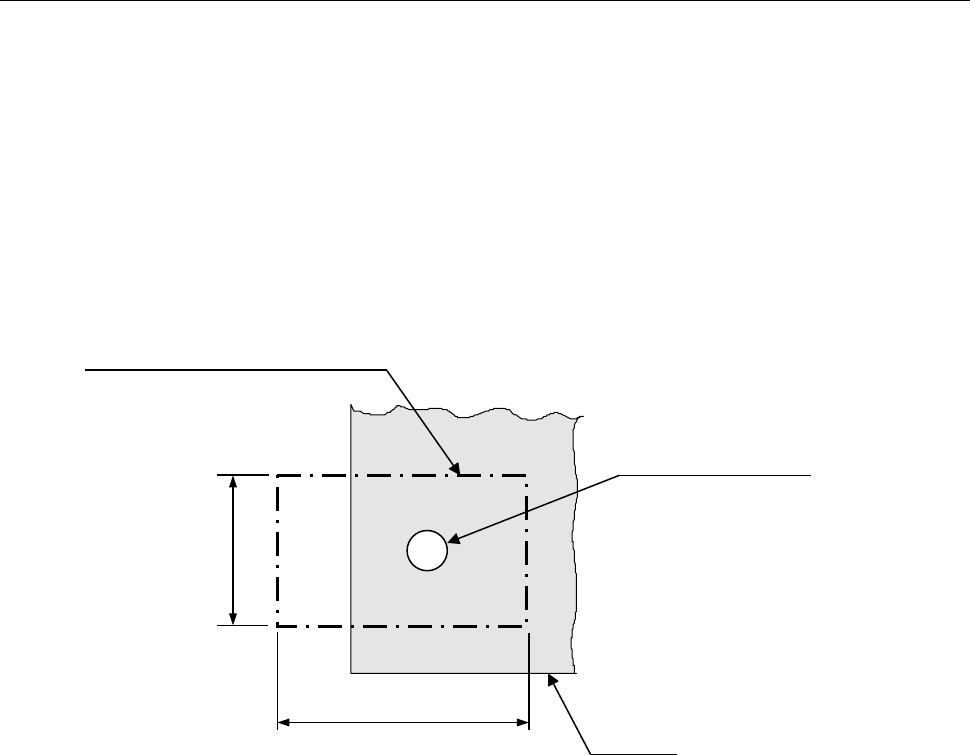
Field of vision for recognizing a board reference mark
Field of vision of a camera: 14.2 × 10.7 mm
Depth of focus: ± 2 mm
Note: The values indicating the field of vision are the designed values. They do not match the
values of the actual machine completely.
Size of the window for recognizing a board reference mark
Although this size can be changed, you have to secure a clearance between a recognition mark and
its surrounding area as described in the sections “Shapes and dimensions of a recognition mark”
and “Clearance of a recognition mark.”
How to correct a recognition mark
Reference mark: Two or three (see Note) marks located on a board to correct the entire board.
When the machine detects two reference marks, it corrects the positioning, angle and
expansion/contraction of the entire board. When detecting three reference marks, it corrects the
perpendicularity in the X and Y direction also.
Note: The position of each mark is arbitrary. However, when three marks are located on a board,
they shall not be located in alignment with one another (it is recommended to locate these marks at
any of four corners of a board respectively.)
Basic material of a recognition mark
• The material of a recognition mark shall be uncoated copper or coated copper. (See the
description “Coating of a recognition mark” for coating.)
• Strong contrast between the surface of a recognition mark and the material used in adjacent
printed circuits is required.
• Any recognition mark shall not be oxidized and its material shall not become inferior.
Coating of a recognition mark
The surface of a recognition mark shall be coated as follows:
• Copper foil (may not be recognized depending on its oxidation or corrosion state.)
• Solder coat (may not be recognized depending on the solder shape or its surface condition.)
14.2 mm
10. 7 mm
Recognition mark
Board
Field of view for recognizing a board