RX-8_SPE_EN.pdf - 第24页
20 Shapes and dimensions of a recognit ion mark A recognition mark shall conform to JIS C5010 “Gener al rules for printed wiring boa rds” and JPCA - PB01 - 2004 “Printed Wiring Board s .” The standard mar k s represent 1…
19
4-7-5 Board position correcting function
Board positioning
Reference for positioning a board
Standard specifications (without a stopper): the machine stops a board at a target position by
detecting the board edge.
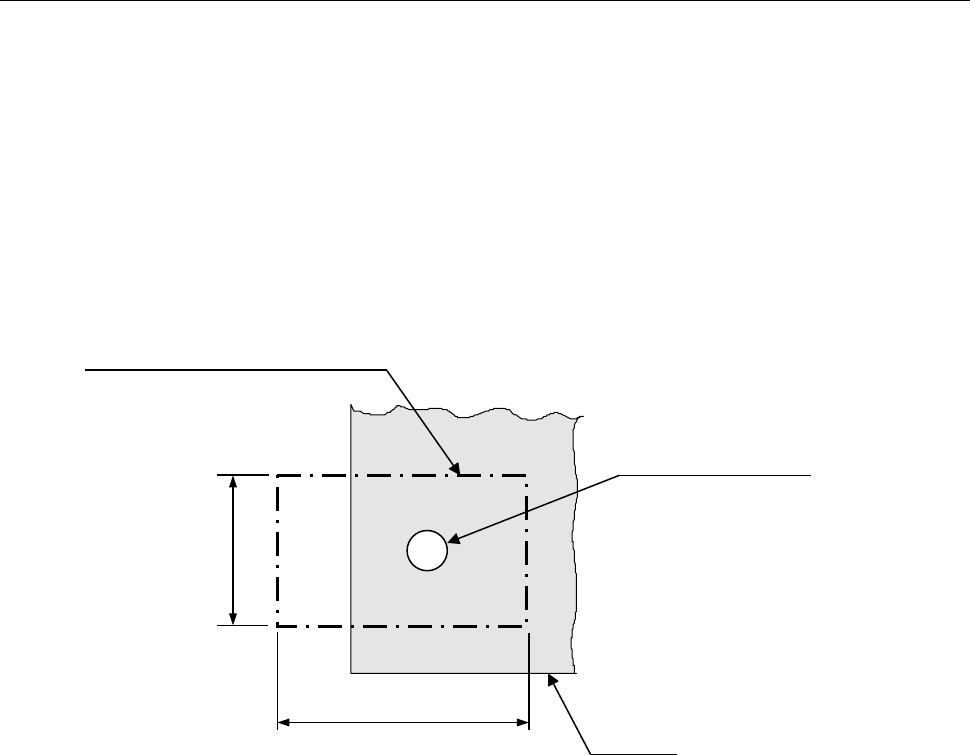
Field of vision for recognizing a board reference mark
Field of vision of a camera: 14.2 × 10.7 mm
Depth of focus: ± 2 mm
Note: The values indicating the field of vision are the designed values. They do not match the
values of the actual machine completely.
Size of the window for recognizing a board reference mark
Although this size can be changed, you have to secure a clearance between a recognition mark and
its surrounding area as described in the sections “Shapes and dimensions of a recognition mark”
and “Clearance of a recognition mark.”
How to correct a recognition mark
Reference mark: Two or three (see Note) marks located on a board to correct the entire board.
When the machine detects two reference marks, it corrects the positioning, angle and
expansion/contraction of the entire board. When detecting three reference marks, it corrects the
perpendicularity in the X and Y direction also.
Note: The position of each mark is arbitrary. However, when three marks are located on a board,
they shall not be located in alignment with one another (it is recommended to locate these marks at
any of four corners of a board respectively.)
Basic material of a recognition mark
• The material of a recognition mark shall be uncoated copper or coated copper. (See the
description “Coating of a recognition mark” for coating.)
• Strong contrast between the surface of a recognition mark and the material used in adjacent
printed circuits is required.
• Any recognition mark shall not be oxidized and its material shall not become inferior.
Coating of a recognition mark
The surface of a recognition mark shall be coated as follows:
• Copper foil (may not be recognized depending on its oxidation or corrosion state.)
• Solder coat (may not be recognized depending on the solder shape or its surface condition.)
14.2 mm
10. 7 mm
Recognition mark
Board
Field of view for recognizing a board
20
Shapes and dimensions of a recognition mark
A recognition mark shall conform to JIS C5010 “General rules for printed wiring boards” and
JPCA-PB01-2004 “Printed Wiring Boards.”
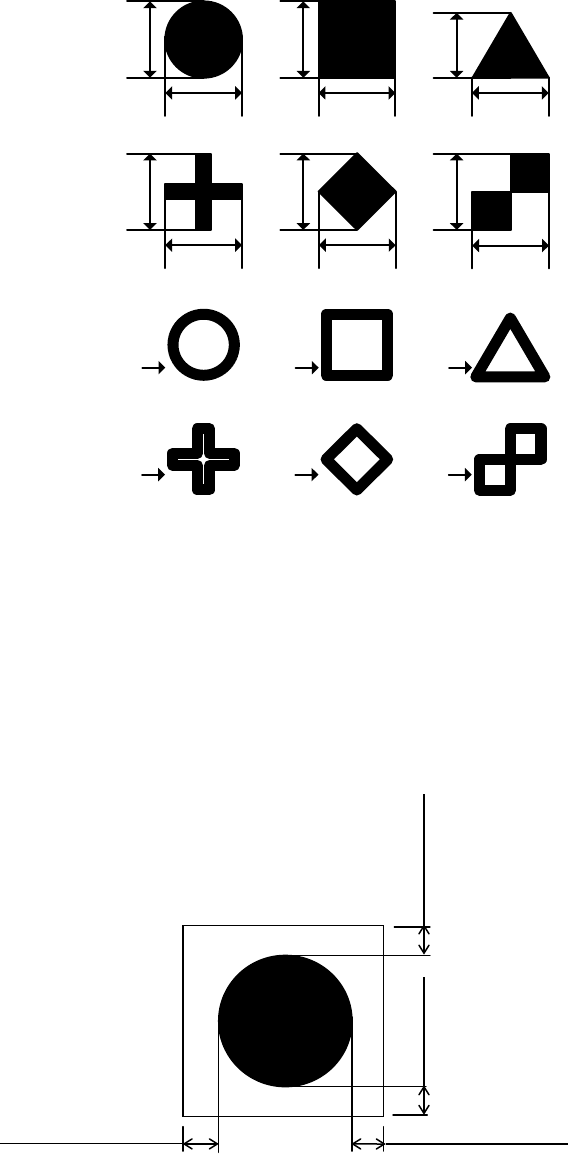
The standard marks represent 12 shapes as shown in the following figure, “Shapes of recognition
marks.”
Shapes of recognition marks
A
A
A
A
A
A
A
A
A
A
A
A
B
B
B
B
B
B
A: 0.4 mm or more but 2.0 mm or less
B: Width of 0.2 mm or more
The size of mark is limited.
Clearance of a recognition mark
There shall be a space in which any other marks such as a conductor pattern, a solder resist and a
marking are not located around each recognition mark. It is preferable that the dimensions of this
space are larger than those of a square by 0.5 mm or more viewed from the outside of a recognition
mark.
Clearance of a recognition mark
0.5 mm or more
0.5 mm or more
0.5mm or more 0.5 mm or more
21
5. Standard Functions and Options
5-1 Standard functions
5-1-1 Bad mark detecting function
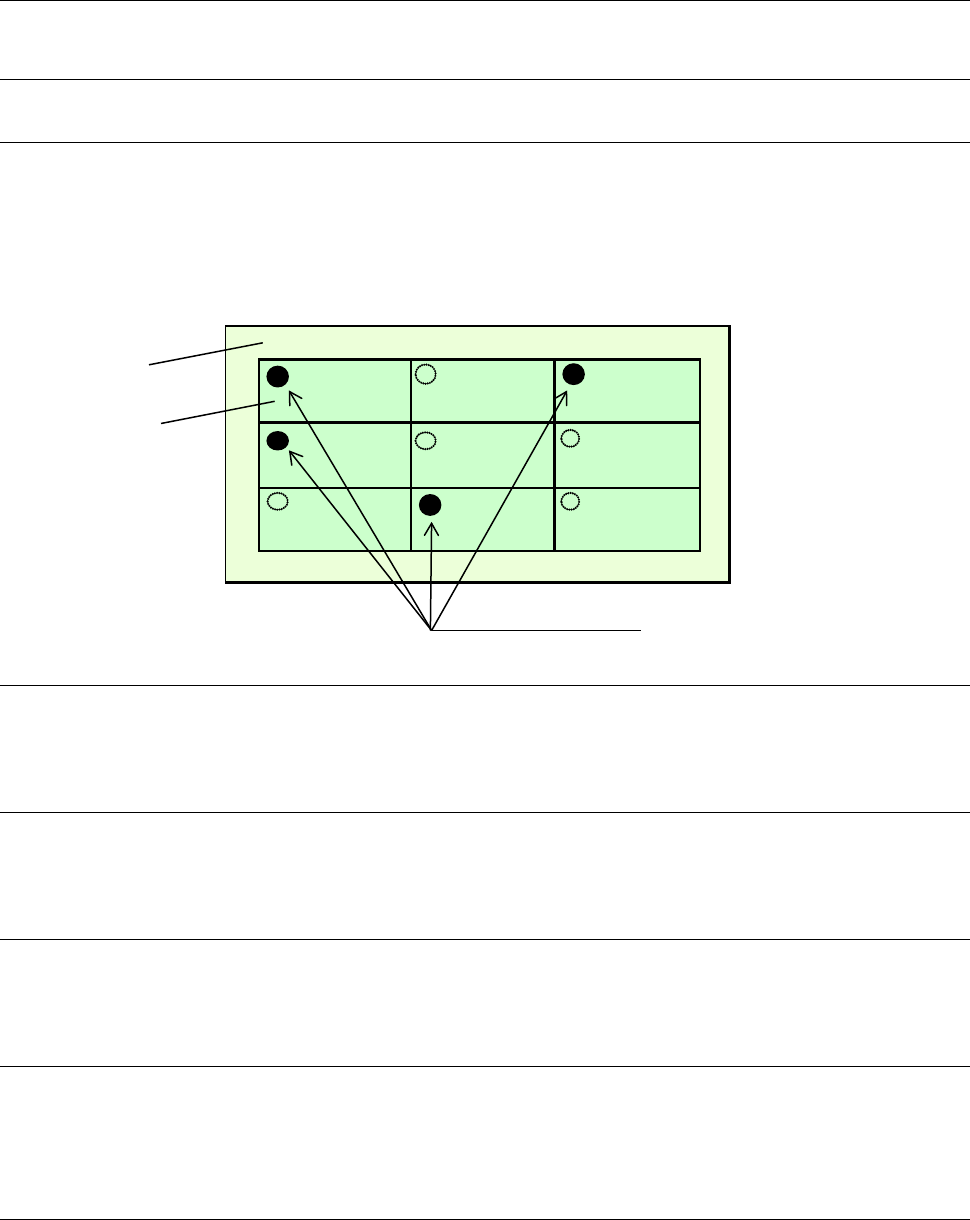
By reading a bad mark (inferior circuit) set on each circuit of a multi-circuit board, the machine can
prevent any component from being placed on the circuit.
The minimum diameter of a bad mark shall be 2.5 mm and the color of a mark should be highly
contrasted with that of a board.
The brightness of the board color can be switched when the reflected light quantity of the board color is
different from that of the mark.
5-1-2 Height measurement system (HMS)
The height measurement system measures the topside of a component or that of a paper tape to correct
the component pick-up height automatically.
5-1-3 Vacuum pump
This pump allows the machine to reduce air consumption of the compressor, and improve the stability of
air supply when it picks up a component.
5-1-4 Automatic board width adjustment function (AWC)
This is the function for adjusting the distance between the rails according to the width of a board
automatically.
5-1-5 Feeder float sensor
This function is provided to prevent mechanical troubles from being caused by improper installation of a
tape feeder. When this sensor detects an improperly-installed feeder, it stops the X-Y axes from moving,
and warns an operator.
5-1-6 Flexible calibration system (FCS)
After a component that is recognized with a camera is placed on a glass jig board, the FCS uses a
camera to automatically measure the difference between a value set with the program and the position at
which the component is placed actually, and calculates the offset value to be used for placing the
component.
A series of operations can be automatically performed when you set the jig board and load the program
to the machine.
Board
Circuit
Bad marks