JAKA Zu 3及JAKA Zu 3 pro-电控柜V2.1-硬件手册( 英文版).pdf - 第22页
JAKA Zu 3 v 1. 1 17 3.2 Installat ion 3.2.1 General instal lation step s 1.Determi ne the w orking ra nge of the r obot ; 2.Mount t he robot on the b ase ; 3.Install the requ ired tools at the end of the robot . 3.2.2 I …
16 JAKA Zu 3 v1.1
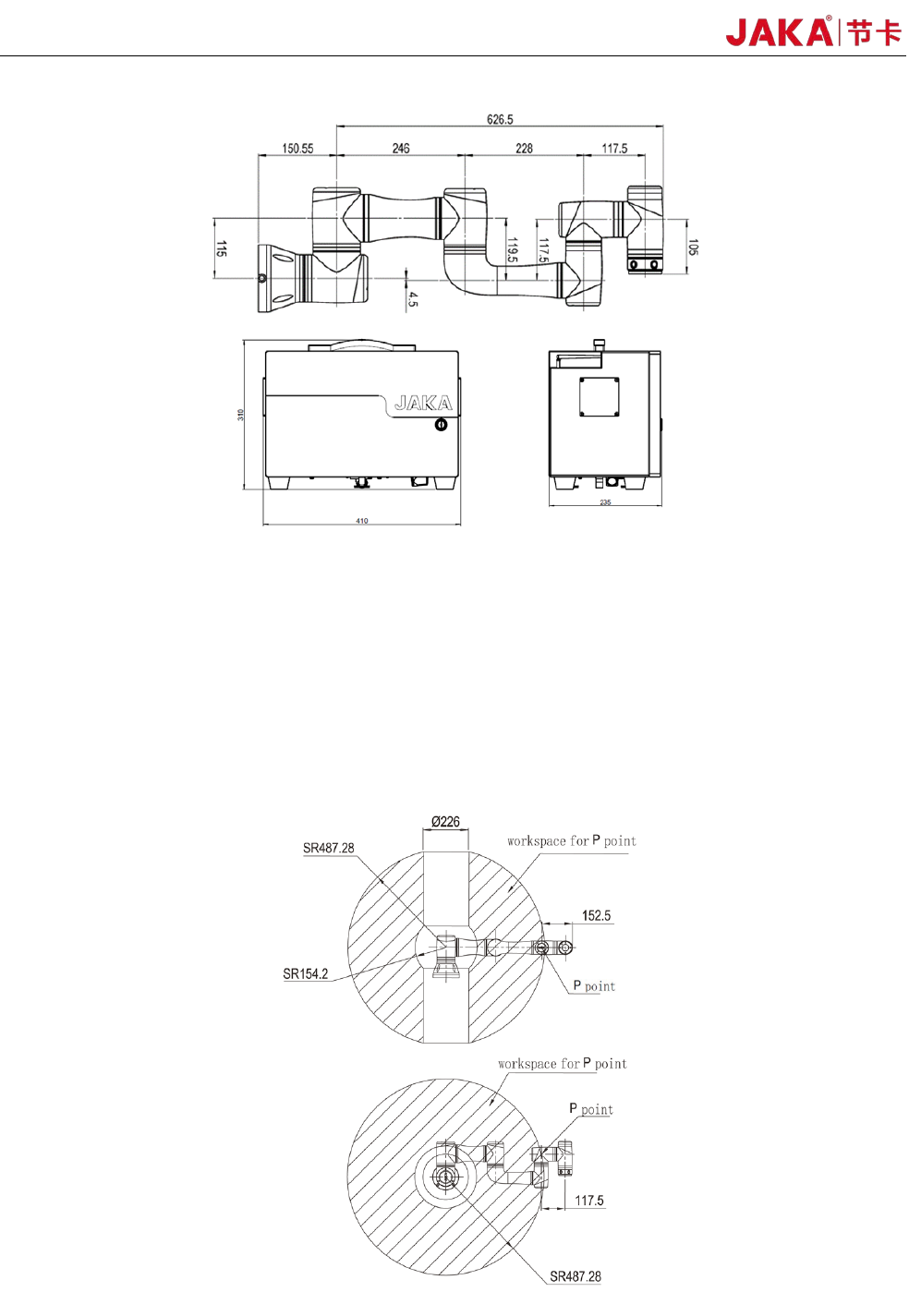
Fig3-3
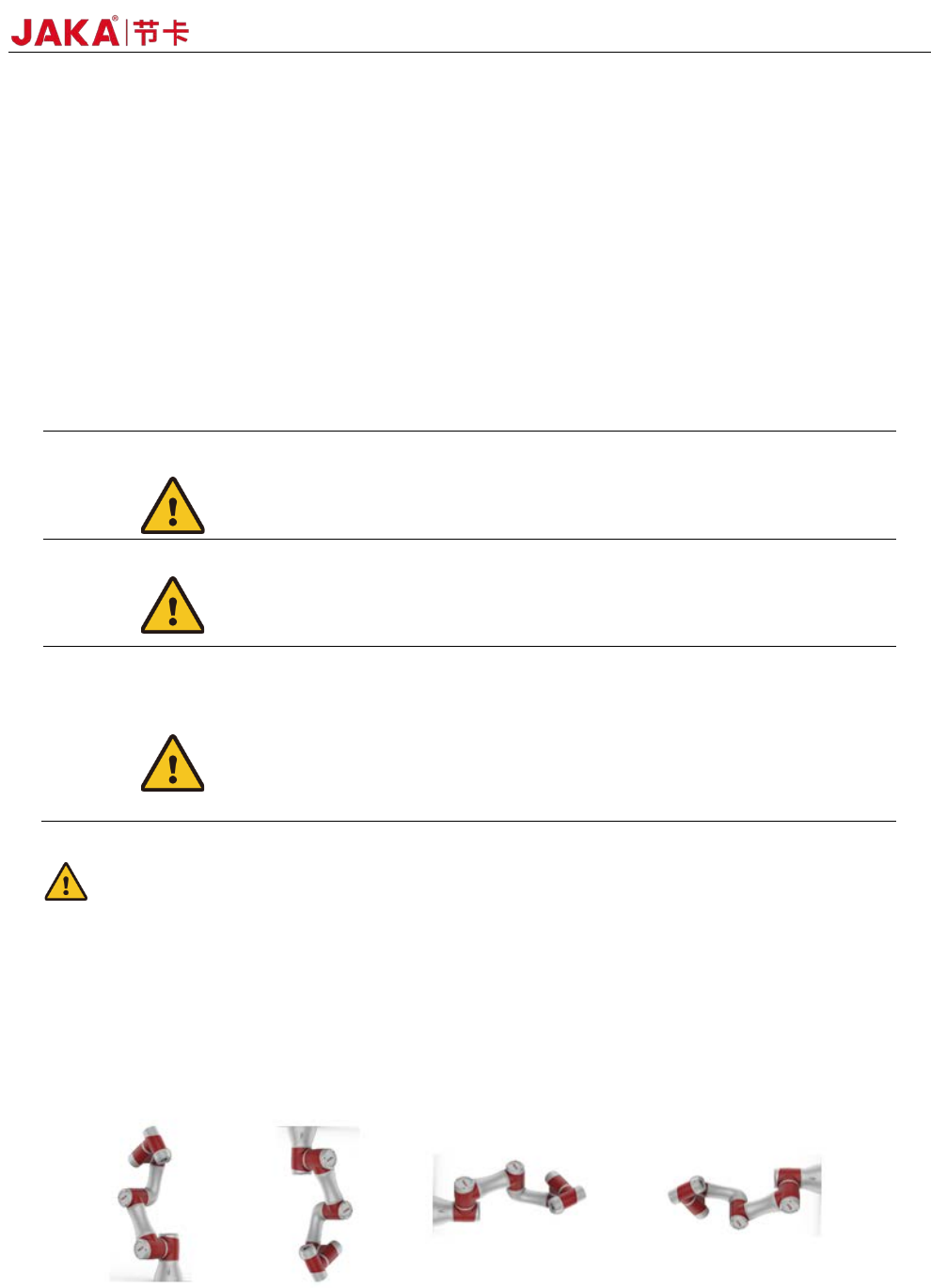
3.1.2 Robot Working Range
The working range of JAKA Zu 3 is shown in Fig 3-4. When choosing the robot installation position, the
cylinder space directly above and below the robot must be considered. Moving the tool close to the cylindrical
volume should be avoided if possible, because it causes the joints to move fast even though the tool is moving
slowly, causing the robot to work inefficiently and making it difficult to conduct a risk assessment.
Fig3
-4
JAKA Zu
3 v1.1
17
3.2 Installation
3.2.1 General installation steps
1.Determine the working range of the robot;
2.Mount the robot on the base;
3.Install the required tools at the end of the robot.
3.2.2 Important safety instructions
DANGE
R:
1. Make sure the robot is properly and securely bolted in place.
2.
The mounting surface must be shockproof and sturdy.
DANGE
R:
1. Make sure the tool is properly and securely bolted in place.
2. Make sure that the tool is constructed such that it cannot
create a hazardous situation by dropping a part unexpectedly.
DANGER:
1. Make sure that the electrical cabinet and cables do not come
into contact with liquids. A wet electrical cabinet could cause
death.
2. The electrical cabinet must not be exposed to dusty or wet
environments that exceed IP20 rating. Pay special attention to
environments with conductive dust.
CAUT
IONS:
If the robot is bathed in water over an extended time period it might be damaged. The robot should not be
mounted in water or in a wet environment.
3.2.3 Robot Body Installation
The robot has an attitude and position adaptation function. It can be mounted in various ways, such
as ground, wall, and celling mounting. As shown in Fig 3-5:
Fig
3-5
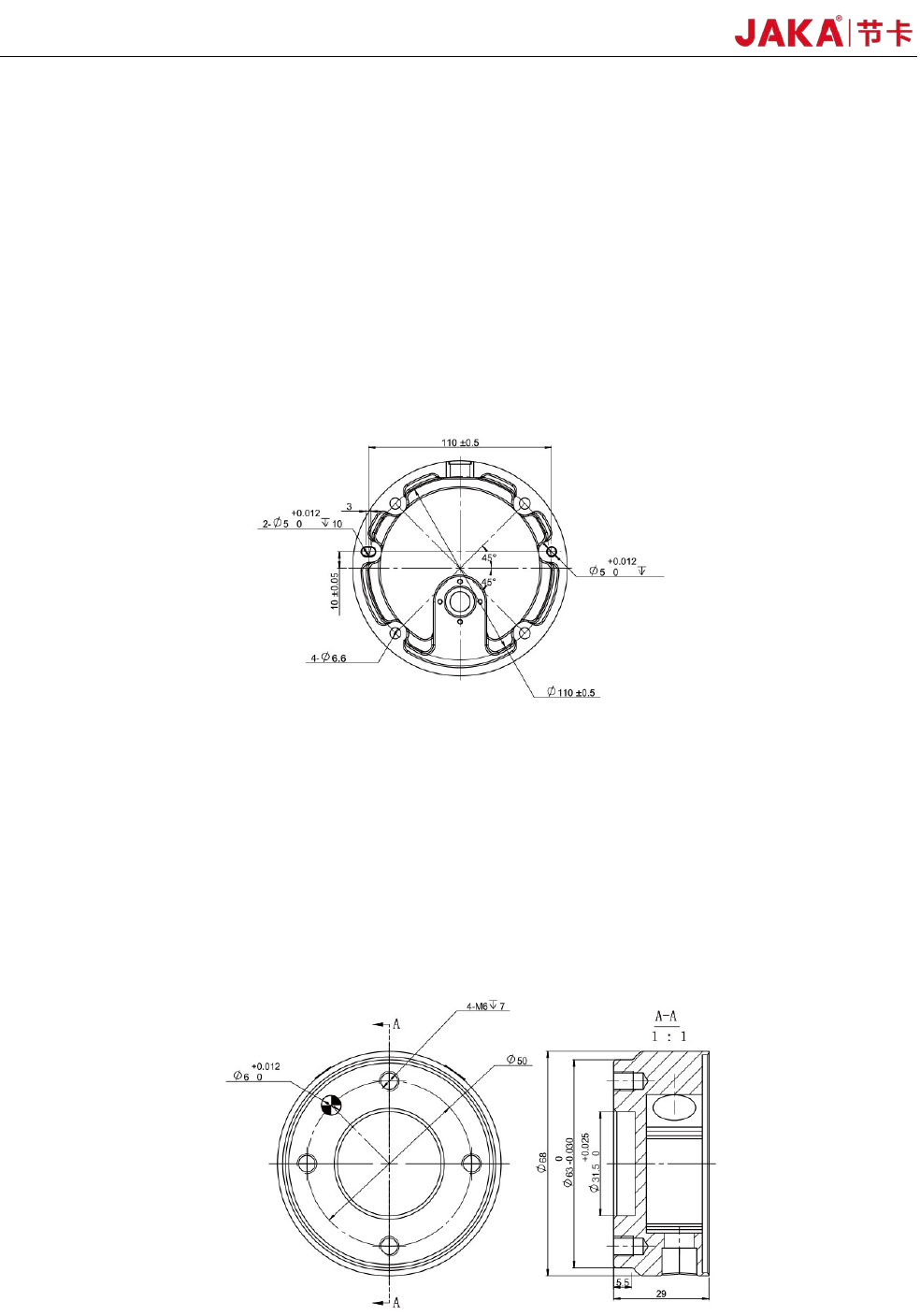
Using four M8 bolts to mount the robot through the four 9mm through holes on the robot base. It is
18
JAKA Zu 3 v1.1
recommended to tighten these bolts with a torque of 40 Nm. If you need to adjust the robot installation
position very accurately, you can also drill two φ8 pin holes and fix them with pins. It is also possible to
purchase an accurate base counterpart as an accessory. Mount the robot on a sturdy surface that is
strong enough to withstand at least ten times the full torque of the base joint and at least five times the
weight of the robot arm. Furthermore the surface shall be vibration free. If the robot is mounted on a linear
axis or a moving platform then the acceleration of the moving mounting base shall be very low. A high
acceleration might cause the robot to stop, thinking it bumped into something. Fig. 3-7 shows the robot
mounting holes. All measurements are in mm.
Fig
3-6
3.2.4 End effector Installation
The robot end flange has four M6 tapped holes to mount the end effector. When screws are installed
in these threaded holes, the screws need to be tightened with a torque of 15 Nm. If you need to adjust the
tool position very accurately, you can also drill a φ6 pin hole and fix it with a pin. Fig. 3-7 shows the
drilling position and the screw mounting position. All measurements are in mm.
Fig
3-7