VDA_6.3_EN_Yellow_Volume_22-05-16.pdf - 第18页
16 3 Requirements f or process audi tors 3.1 Auditor qualific ation Auditor qualification is of vital i mportance when it comes t o achieving the au- dit objective s. The quality and comparability of audit results are gr…
15
Firstly, it must be described what “input” (see questionnaire sub-element
P6.1) is converted into an “output” (see questionnaire sub-element P6.6) by
the process. In addition, the following questions are considered:
• How does the process work (work carried out, workflow, methods,
procedures, instructions – see questionnaire sub-element P6.2)?
• What areas, functions and personnel support the process (personnel
resources such as capacities, competencies, authorities, qualifica-
tions – see questionnaire sub-element P6.3)?
• Which tools are used to implement the process (material resources
such as machines, tools, test equipment, facilities, other equipment –
see questionnaire sub-element P6.4)?
• How effectively is the process carried out (effectiveness, performance
indicators, efficiency – see process sub-element P6.5)?
As a second step, the potential risks in relation to the content of the Turtle el-
ements are identified. The auditor as well as the audit team should make use
of their process know-how to identify potential product and process risks that
could affect product quality. These risks must then be analyzed and evalu-
ated in the audit to ensures a reasonable degree of risk minimization.
Based on the applied Turtle Model, it is possible to set priorities in a targeted
manner.
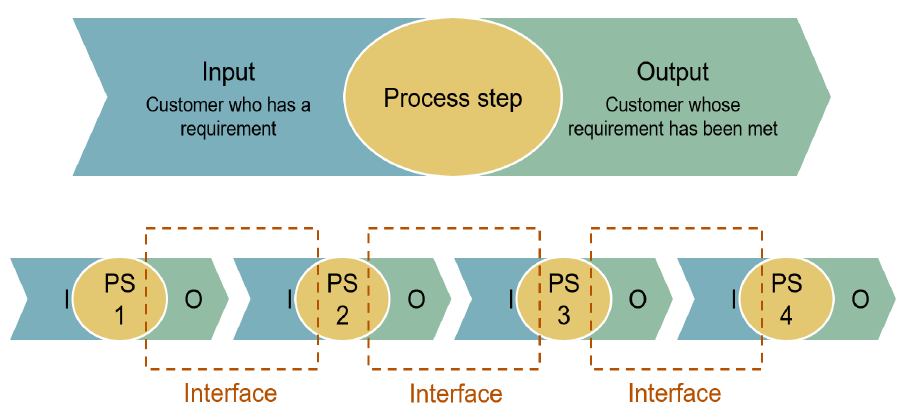
Figure 2-3: Schematic diagram of interlinked processes
The interfaces of the process steps have a significant influence on possible
risks and therefore require a more in-depth analysis.
Copyright by VDA QMC
16
3 Requirements for process auditors
3.1 Auditor qualification
Auditor qualification is of vital importance when it comes to achieving the au-
dit objectives. The quality and comparability of audit results are greatly influ-
enced by the qualification of the auditors. In addition to the qualification crite-
ria of each organization, the following minimum requirements, the require-
ments according to ISO 19011 as well as customer-specific and further exter-
nal requirements should be taken into account. The organization determines
and documents the procedure for auditor evaluation including the approval,
maintenance and improvement of auditor qualifications (e.g. observation dur-
ing audits/approval and witness audits).
3.1.1 Internal process auditors
Specialized knowledge
• Good knowledge of quality tools and methods (e.g. VDA MLA, DoE,
FMEA, FTA, PPA, SPC, SWOT, 8D Method)
• Knowledge of the relevant customer-specific requirements
• Knowledge of the relevant management system requirements (e.g.
IATF 16949, DIN EN ISO 9001, VDA 6.1)
• Specific knowledge regarding the product and the process
Evidence of specialized training
• Successful participation in a VDA 6.3 training course (passing a
test/obtaining a certificate of qualification)
• Knowledge of required quality tools and methods in the technology to
be audited
Professional experience
A minimum of 3 years’ professional experience (after 2 years’ professional
experience, in-house apprenticeship periods may be considered additionally),
preferably in manufacturing companies within the automotive industry, includ-
ing at least 1 year of experience in quality management.
Copyright by VDA QMC
17
3.1.2 Supplier auditors
Specialized knowledge
• Excellent knowledge of quality tools and methods (e.g. SPC, VDA
Volume 5/MSA, FMEA, VDA MLA/APQP, VDA Volume 2/PPAP, 8D
Method)
• If required, knowledge regarding software development processes
and methods
• Auditor qualifications (negotiation, conflict management, audit proce-
dure)
• Knowledge of the relevant customer-specific requirements
• Knowledge of the relevant management system requirements (e.g.
IATF 16949, DIN EN ISO 9001, VDA 6.1)
• Specific knowledge regarding the product and the process
Evidence of specialized training
• Qualification as an auditor on the basis of DIN EN ISO 19011 (e.g.
VDA Auditor qualification, 1st/2nd party auditor for DIN EN ISO 9001,
IATF 16949, or VDA 6.1)
• Knowledge of required quality tools and methods in the technology to
be audited
• Successful participation in VDA 6.3 training (successfully passing a
written and an oral exam)
• Evidence of ability to apply the theoretical knowledge in practice (e.g.
observation during audits/approval and witness audits)
Professional experience
A minimum of 5 years professional experience (after 3 years’ professional ex-
perience in-house apprenticeship periods may be considered additionally),
preferably in manufacturing companies within the automobile industry, includ-
ing at least 2 years’ experience in quality management.
Copyright by VDA QMC