KE-3010A_SPE_EN.pdf - 第45页
- 40 - 5.2.25. Placement Monitor ( Factor y - Set Opti on ) This system uses an ultr a - miniature camera attached on the mounter head to t ake tw o pictures before and afte r a component is picked up durin g P W B produ…
- 39 -
5.2.18. Ionizer (Factory-Set Option)
This option maintains the ion balance inside the machine to eliminate static electricity and
prevent it from being generated.
This option prevents components as well as pick-up/placement operation of a component
from being damaged by static electricity to allow the machine to produce PWBs more
stably.
5.2.19. IC Collection Belt (Option)
* The equipment is different between the mechanical bank and the electric bank. Use the
eq
uipment suitable for each bank type.
- Applicable component size: 10 x 10 mm to 50 x 50 mm, Height: 1 mm or higher
- Belt feeding pitch: 15 mm to 55 mm (in increments of 5 mm)
- Number of components
that can be collected: 5 to 16
- Number of occupied positions: 9
5.2.20. Handheld Operating Device (HOD: Factory-set option)
The KE-3010A/3020VA/3020VRA allows you to check the recognized mark image on the
operation screen or perform various teaching operations. In addition, if an experienced
user of any of conventional mounters does not want to change the operability of the
mounter, or if you want to make the operability of the entire line consistent, you can use
the HOD as conventionally.
5.2.21. Tape Cutter Unit (Option for the electric type of bank)
This tape cutter automatically cuts empty tapes to dispose of them in a lump.
It is an integrated type of unit that is attached onto a main unit, and can be used with a
fixed bank and also an feeder trolley.
5.2.22. Automatic Tape Cutter (Option)
This tape cutter automatically cuts empty tapes to dispose of them in a lump.
5.2.23. Connector Bracket (Option for the Fixed Bank)
This is a unit necessary for connecting devices such as an adhesive tape feeder, an IC
collection belt, an automatic tape cutter and a DTS to the mounter. When the optional
feeder change trolley function is selected, you do not require this unit.
5.2.24. Flexible Calibration System, The adjustment jig (FCS is an option.)
After a jig component that is recognized with the VCS or laser is placed on a glass jig
board, the FCS uses a camera to automatically measure the difference between a value
set with the program and the position at which the component is placed, and calculates
the offset value to be used for placing the component.
A series of operations can be automatically performed by setting the jig PWB and reading
the program.
When you use the FCS, you can check whether the precision is maintained and adjust the
precision at relocation or routine maintenance.
The calibration jig is optional.

- 40 -
5.2.25. Placement Monitor (Factory-Set Option)
This system uses an ultra-miniature camera attached on the mounter head to take two
pictures before and after a component is picked up during PWB production, and take
three pictures before, while and after a component is placed on a board. It, then, sends
these pictures to the computer for the placement monitor system. You can check these
pictures to analyze the cause of an error.
By comparing two pictures taken before and after a component is placed on a board, you
can check to see if a component exists or not also.
Features
(1) Function for shooting images of component pick-up/placement
• The micro miniature camera takes pictures when a component is picked u
p and
w
hen it is placed on a board.
• An image can be shot for each nozzle.
• You can specify whether to shoot an image or not with a production program.
• An obtained image can be displayed onto a computer for the Placement Monitor i
n
real time.
• If a communication error occurs, the corresponding error is displayed on th
e
M
ounter.
• User’s visual check can obtain an optimum parameter, or shorten the time for
analyzing the cause of a trouble.
(2) Trouble cause analyzing tool
• Recorded images are linked to the mounter and the computer for the Placement
Monitor, and a database of these images is made.
If any trouble occurs, search through the database allows you to analyze its cause
easily.
(3) Setup Assistance
• When the current lot is switched to a new one, the optimum pick-up/placement
parameters can be verified.
• An image of a component normally placed on a board can be stored onto t
he
dat
abase as the master image, and this image and an image of placement
operation being performed during PWB production can be displayed side-by-side.
(4) Movie mode
• Two or more images of a component pick-up operation can be shot, and th
en
di
splayed continuously with a computer for the Placement Monitor.
• You can select the movie mode: “mode for increasing the number of images that
can be shot by setting the Z-axis speed to ‘Low’” or “mode for repeating pickin
g up
t
wo or more components and rearranging the shot images by setting the Z-axis
speed to optional”
(5) Judgment of existence of a component
• The function of the Placement Monitor System that automatically judges if
a
component exists or not prevents a component placement trouble.
• You do not have to enter any parameter for judging existence of a component.
Applicable component sizes:
Minimum size
0.4×0.2 (mm)
Maximum size
5.0×5.0 (mm)
Height
2.0 (mm)
Packaging (feeder) type
Tape feeder, Tray holder ,DTS
- 41 -
(
6) Digital-zooming function
• A stored image can be zoomed.
• Components from a minute one, 0402 (mm) component are supported, and a shot
image of such a small component is enlarged by default.
(7) Database management
• Its simple search function can shorten the time for searching data.
• You can conduct database search with various queries.
(8) Bar-code recognition function of the PWB
(Barcode, 2-D code)
• By using the function for recognizing a barcode and/or 2-D code on a board, y
ou
c
an set the PWB code in the database of the taken pictures.
Note: Prepare a barcode reader assembly (for a barcode and a 2-D code) separately.
When you use this system with the IFS-NX/IntelliPD, you do not have to prepare this
assembly.
Barcode reader assembly
Barcode: Barcode on the topside of a board is read at the upper section of the
board carry-in entrance.
2-D code: 2-D code on the topside of a board is read with an OCC attached on
the head.
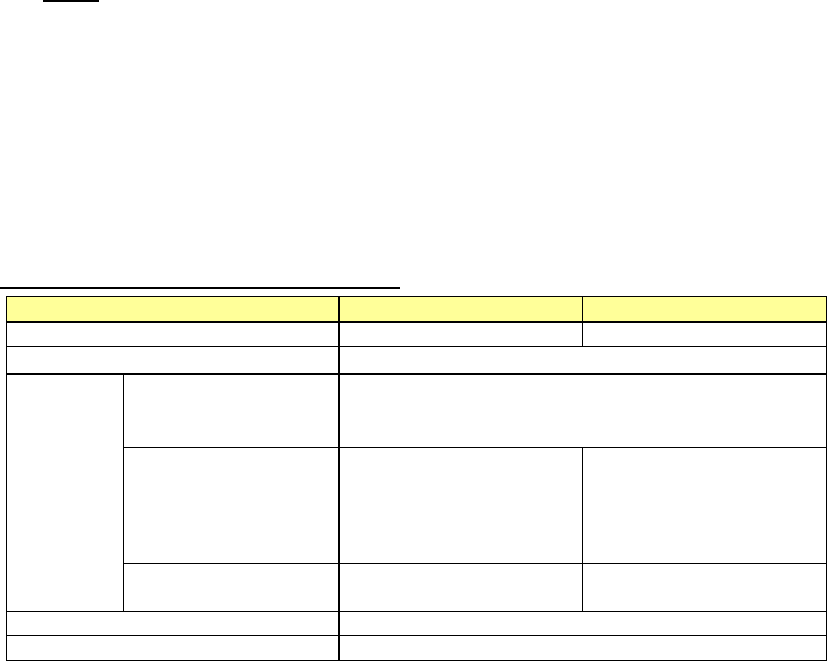
Specifications of the Placement monitor
KE-3010A
KE-3020/20VR
View field
12X7.5mm
10.3X7.3mm
Focus depth
(
PWB Top View
)
±2mm
Captured
images
Per image
approximately 200 KB (**.bmp) approximately 50
~
120 KB (**.png)
(Monochrome)
Per hour
Approximately 18.5GB
(Approximately 200KB ×
5 images × 15,400CPH)
(Conforming to the
IPC9850.)
Approximately 17.1GB
(Approximately 200KB ×
5 images×17,100 CPH)
(Conforming to the
IPC9850.)
Per 1TB of hard disk
Approximately 55 hours
(18,500 CPH)
Approximately 59 hours
(17,100 CPH)
Supported languages *
English and Japanese
Destination
Europe, Japan, China and Southeast Asia
* The cycle time will take longer by up to 3% when the placement monitor is used. In addition,
when the setting “The system pauses if a component existence error occurs” is enabled, the
cycle time will take longer by up to 30%.
* When the supported language of the machine main unit is Chinese, the application of the
placement monitor is written in English.