Host Computer System.pdf - 第17页
AVK3 HOST COMPUTER SYSTEM 1.2 PanaP rotoc ol and Co mm and S pecific ations D77HEC-51- 020-A0 1.2- 4
AVK3
HOST COMPUTER SYSTEM
1.2 PanaProtocol and Command Specifications
D77HEC-51-020-A0
1.2-3
If the check sum is not necessary because of making the software for the host computer, leave the
message format as it is and substitute a dummy data in the check sum column and then select
changeover switch. All the check sums in the machine will all be OK.
ETX (END OF TEXT)
The ETX which appears at the end of the message is to complete the message which started with STX.
In ASCII code with parity, it becomes X’03’.
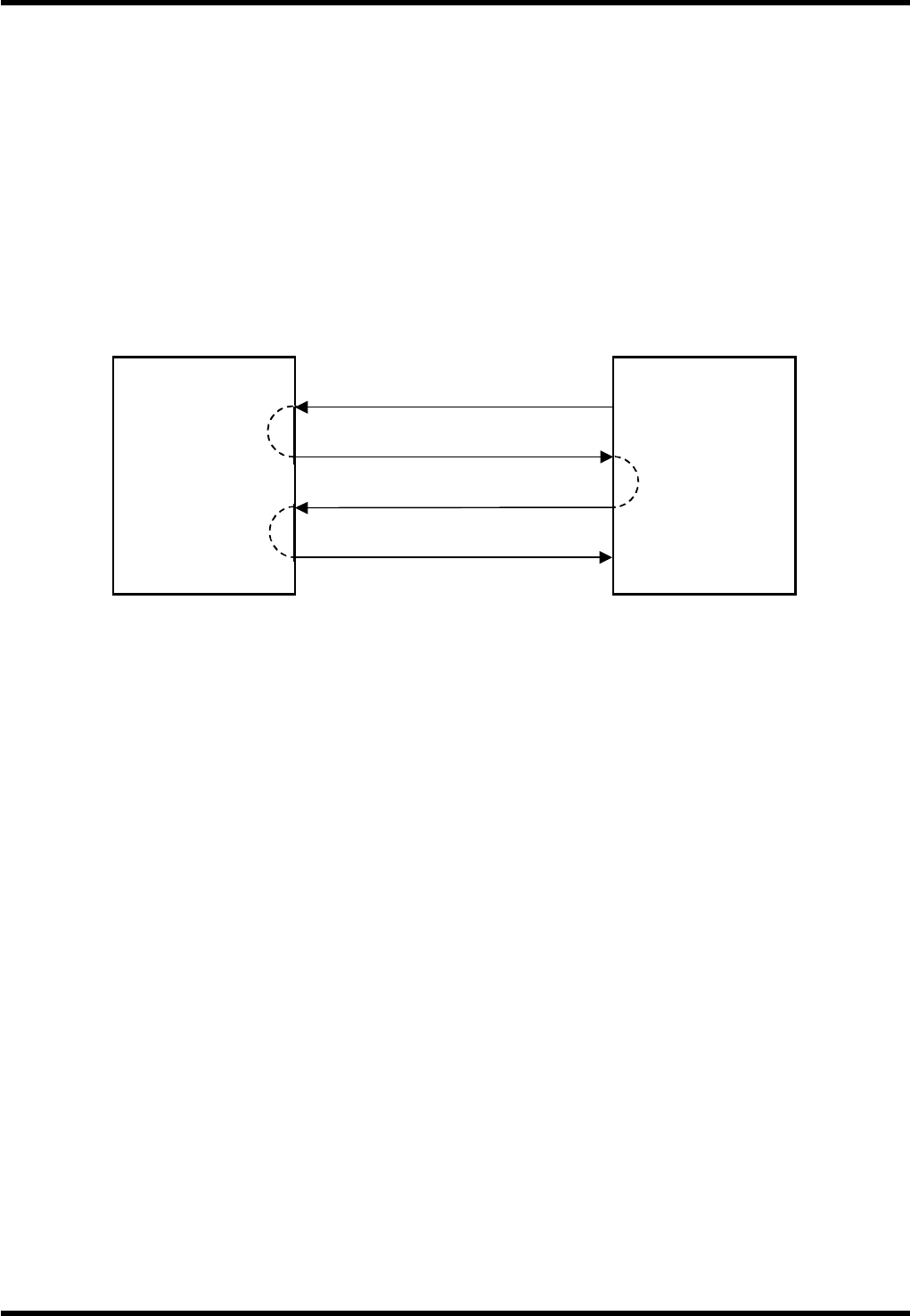
Break (Optional)
When a conversation takes place between a machine and the host computer, several messages are
exchanged between the two according to commands. A break code is used to start a conversation
from a machine to the host computer, and is output to the host computer only once at the start of the
conversation.
This is the code that SD terminal of the RS-232C interface is clamped forcefully to signal level “1” by
1.5-digit character, and this is usually used on the mini-computer to lead the data which is sent by
breaking the current job.
When this is not necessary for the convenience of the host computer, select changeover switch of
checksum function to cut the break. Never add this to the machine. This is not output in the standard
settings.
Start
End
A break code is attached
only this time.
No break code
Host
computer
AVK3
No break code
No break code

AVK3
HOST COMPUTER SYSTEM
1.2 PanaProtocol and Command Specifications
D77HEC-51-020-A0
1.2-4
AVK3
HOST COMPUTER SYSTEM
1.3 Command Description
D77HEC-51-030-A 0
1.3-1
1.3. Command Description
D77HEC-51-030-A 0
Commands can be largely divided into the following 4 categories.
C command Control command
D command Data command
R command Real time command
A command Acknowledge command
1.3.1 C Commands (C0, C1, C2, C3, C4, C5)
There are 6 types of remote control commands to AVK3, C0, C1, C2, C3, C4 and C5. These commands are
all effective only from the host computer controlling AVK3. C commands cannot be output from AVK3 to the
host computer.
1.3.2 A Commands (A0, A1, A2, A3, A4)
A (Acknowledge) command is a command when the host computer converses with AVK3 to acknowledge
that commands have been mutually received and that there are no errors. This command can be used both
by the host computer and AVK3.
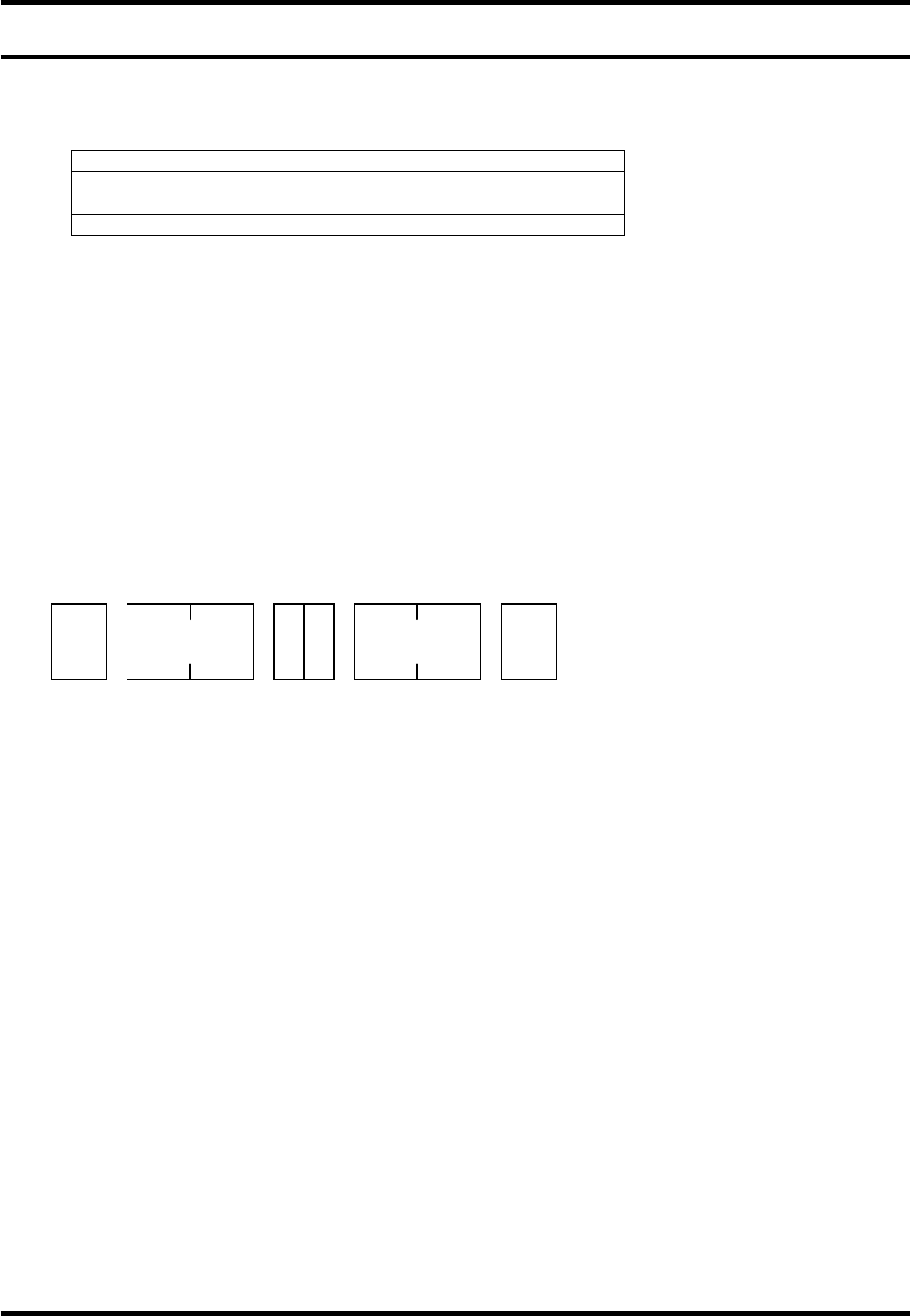
Command to request the next data (A0)
This command shows that the receiver has properly received the data transmitted by the sender, and is
usually used as a command requesting the next data during NC program data transmission.
Data resend request command (A1)
If the data received is not normal, an A1 command is returned to the sender. When the sender receives the
A1 command, it becomes data resending mode. Data resending is to send again the data which was in error.
There are the following 6 types in data receiving error.
Framing error
Stop bit is not detected after data character.
Overrun error
The received data is sent within Z80 data buffer and the next data is received before the CPU can
be read by Z80B.
Parity error
There is parity error (even parity check) in the data received.
Check sum error
The figure of the check sum code of the data column received is wrong.
Overflow error
Receiving buffer overflow has occurred.
Format error
No STX or No ETX in the data received.
STX
A 0
No. of
characters
0 2
ETX
Check sum
2D