X3_X4_Series machine.pdf - 第122页
3 Technical data User manual SIPLACE X-Series 3.7 Placement heads Software Version SR.601.xx 11/2005 US Edition 122 3.7.2.1 Des cription The 2 0-segment Coll ect & Place h ead works o n the Colle ct & P lace prin…
User manual SIPLACE X-Series 3 Technical data
Software Version SR.601.xx 11/2005 US Edition 3.7 Placement heads
121
3
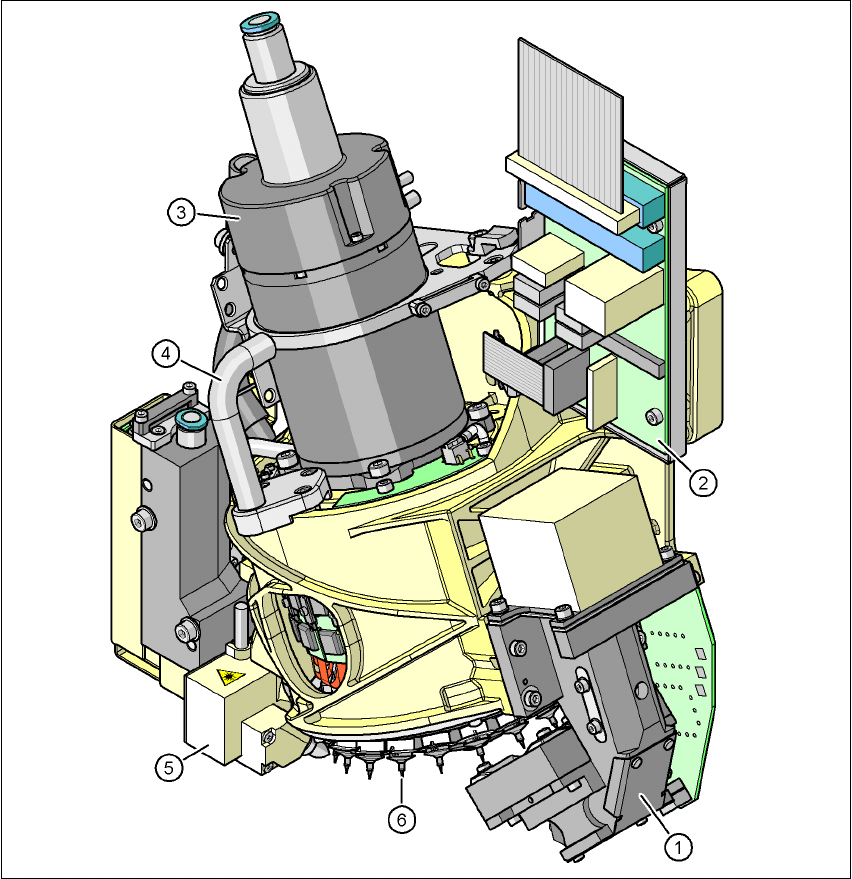
Fig. 3.7 - 5 20-segment Collect&Place head - Function groups, part 2
(1) C&P component camera, type 23, 6 x 6, digital
(2) Intermediate distributor board
(3) Star motor
(4) Handle
(5) Component sensor
(6) Star with 20 nozzles
3 Technical data User manual SIPLACE X-Series
3.7 Placement heads Software Version SR.601.xx 11/2005 US Edition
122
3.7.2.1 Description
The 20-segment Collect & Place head works on the Collect&Place principle. This means that,
within each cycle, twenty components are picked up by the placement head. At the pick-up and
placement position the component sensor checks that the component is present at the nozzle. On
their way to the placement position the components are optically centered and rotated into the re-
quired placement angle. Finally forced air sets down the component gently and accurately on the
board.
The C&P head succeeds in considerably increasing the output of the placement head and thus of
the overall placement machine. The compact construction of the C&P20 head allows very short
cycle times. In this case, the star axis is at an angle to the PCB level. This geometry allows the
segments to be arranged in a very small space.
The CO camera is still integrated into the C&P20 head. This saves additional traveling distances
to external centering cameras. Each segment also has a separate DP drive for rotating the nozzle.
The nozzles are therefore no longer rotated into the correct position at a single head station. They
can be rotated into their placement position at any time and independently of one another.
Each segment has a separate vacuum generator. This greatly reduces the time taken to switch
between vacuum and air kiss. It also allows a vacuum check to be carried out in the holding circuit
for each individual nozzle.
The Z drive for the segments is implemented with a linear motor with linear path measuring sys-
tem, and is thus extremely precise. In the pick-up/placement position, the Z drive moves the seg-
ments up or down in the vertical direction.
3.7.2.2 Checking and self-learning functions
The reliability of the 20-segment Collect&Place head is increased by checking and self-learning
functions.
– The vertical axis for picking up and placing the components is driven by a linear motor.
The traversing path is detected optoelectronically by a linear path measuring system. A
sensor registers the relative movement between nozzle and segment while setting down
components, and sends a signal to the axis controller to regulate the position. With this
sensor stop method, differences in height during pick-up and any unevenness of the
board surface are compensated during placement. The average of the deviations during
the last 10 placement operations is taken into account when adapting the further stroke
and placement speeds. The programmed placement force always remains constant.
– A component sensor is installed on the 20-segment Collect & Place head to increase
placement reliability. At the pick-up and placement position, it checks that the component
is present at the nozzle and in addition the component edge ratio. In this way it is possible
to determine whether the component was picked up by the nozzle transversely or on
edge. The beam intensity is also checked regularly to avoid false measurements.

User manual SIPLACE X-Series 3 Technical data
Software Version SR.601.xx 11/2005 US Edition 3.7 Placement heads
123
– The package form is also checked and the component is not placed if the geometric data
thus determined differs from the programmed data.
– A digital component camera on the placement head determines the precise position of
each component at the nozzle. The 20-segment Collect&Place head camera can opti-
cally center components from 0.2 x 0.2 mm² to 6 x 6 mm². Any deviations from the re-
quired pick-up position are corrected before placement takes place. When a component
is picked up, the average of the deviations for the last 10 placement operations is taken
into account, thus increasing the pick-up accuracy.
3.7.2.3 Description of the functions
The 20-segment Collect&Place head has three axes - the DR or star axis, the Z axis and the
DP axis.
Star axis (item 3 in Fig. 3.7 - 5) 3
The star rotates about the star axis with its 20 DP drives. This is tilted away from the vertical. A
three-phase servomotor with position control is used as the drive motor. An optoelectronic en-
coder returns information about the angle of rotation at the axis card. The actual position values
are analyzed on the axis card. The position control on the axis card provides the current and volt-
age setpoint values for the servo amplifier used to operate the star motor. On each DP drive there
is a nozzle that sucks up the component during the pick-up process. The star transports the picked
up component from the pick-up/placement position (item 1 in Fig. 3.7 - 6
) to the optical centering
position (item 11 in Fig. 3.7 - 6
) and onward for placement to the pick-up/placement position. On
the way to the pick-up/placement position, the DP drive rotates the component into the required
placement position.
Z axis (item 6 in Fig. 3.7 - 4) 3
The Z axis performs a vertical movement. A three-phase linear motor is used as the drive. An op-
toelectronic encoder is used to measure positions. A scanner scans the positioning fiducials on a
tape measure and thus returns the position signals to the axis card.
The Z motor is operated with position control. The actual position values are analyzed on the axis
card. The position control on the axis card provides the current and voltage setpoint values for the
servo amplifier used to operate the star motor.