SIPLACE OIS Version 13.1 Getting Started.pdf - 第34页
3 Practical Examples Getting Started with SIPLACE OIS 05/2016 EN Edition Software Version 13.1 34 3.3 Example 3: Entering the Operating State Using the OIS T erminal Y ou can use this function (option) to enter values if…
Getting Started with SIPLACE OIS 3 Practical Examples
Software Version 13.1 05/2016 EN Edition
33
3.2.2 Step 2: How to Save the Dta in Text Format
Action: 3
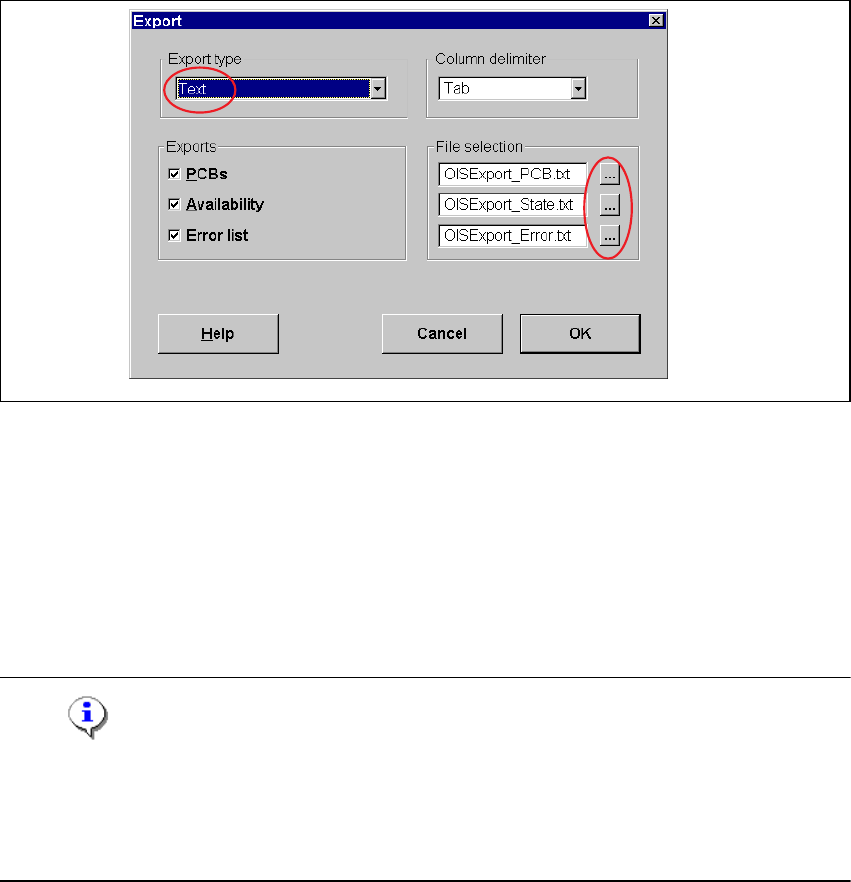
Click Export... in the File menu.The following dialog appears:
3
Fig. 3 - 3 "Export" dialog
Choose the Text format in the Export type field.
In the Exports field, choose the data types you want to export.
Click the ... button in the File selection field and choose the appropriate folder.
Confirm your directory selection by clicking OK.
Start the data export procedure by clicking OK.
3
Note
The selected data is saved as text files in the current directory under the specified file name:
PCBs OISExport_PCB.txt
Availability OISExport_State.txt
Error list OISExport_Error.txt 3
3 Practical Examples Getting Started with SIPLACE OIS
05/2016 EN Edition Software Version 13.1
34
3.3 Example 3: Entering the Operating State Using the OIS Terminal
You can use this function (option) to enter values if the machine's operating state changes and
this is not recorded automatically. 3
Action: 3
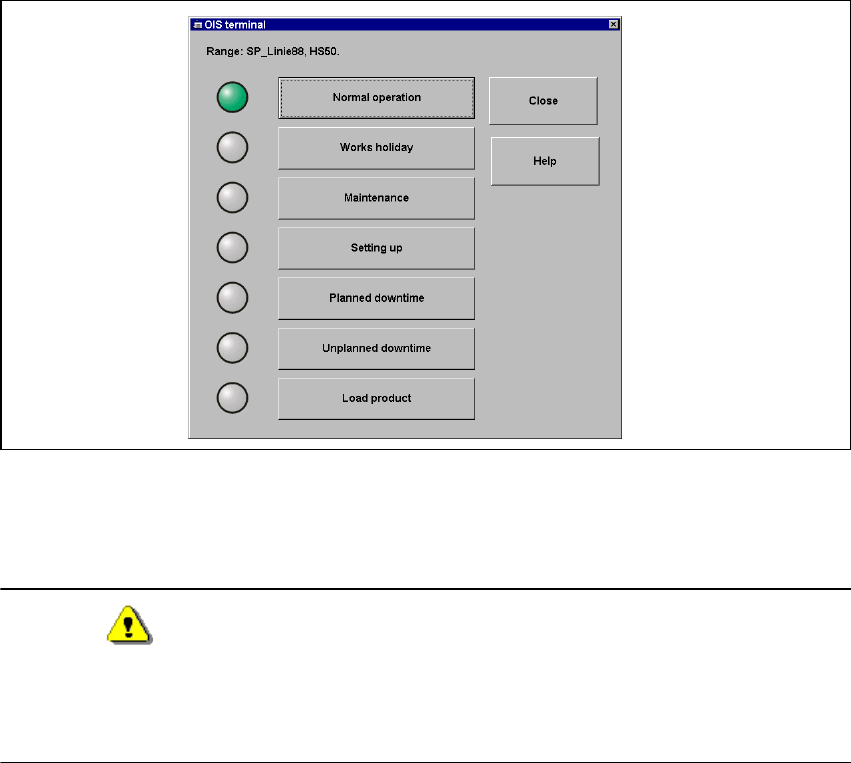
Click Terminal in the File menu.The following dialog appears:
3
Fig. 3 - 4 "OIS Terminal" dialog
Press the button that describes the desired state.
The associated icon is highlighted in red.
Warning
When a state is selected, all machine data will still be sent to the database but may not be included
in the evaluation.
Reason: The status of the OIS terminal has a higher priority in the evaluation. 3
Press the Normal operation button.
The machine data is evaluated again.
Click the Close button.
The OIS terminal is exited.

Getting Started with SIPLACE OIS 3 Practical Examples
Software Version 13.1 05/2016 EN Edition
35
Description of states: 3
Normal operation: Resets to the previously set operating state; the data is entered
automatically. 3
Works holiday: Operation is shut down. 3
Maintenance: The machine is being maintained. 3
Setting up: Feeding areas are being set up. 3
Planned downtime: Production halted, e.g. due to company meeting. 3
Unplanned downtime: Production halted, e.g. due to missing components. 3
Load product: Preparation for a new product to be produced on the line for the first time.3
Note:
Once actions have been completed, you must press the Normal operation button.
Reason: Otherwise, recording remains in the activated state. 3