YG12_英文保养手册.pdf - 第9页
iii Safety instructions 1.3 Restrictions on machine use 1.3.1 Defining the operator and ser vice personnel c …

ii
Safety instructions
1. Safety
To ensure that the machine you purchased is used safely and correctly, always comply with the instructions
and rules in this manual regarding safety. However this manual cannot cover all items regarding safety in
detail. So it is extremely important that the operator or person handling the machine make correct decisions
regarding safety.
1.1 To ensure safety
To maintain the safety of the operator or person working with this machine, it is essential that it (including
external parts feeders) be installed correctly in compliance with the safety standards and conditions of that
country.
Complying with the safety regulations and laws of that country is the responsibility of the customer who
purchased this machine. The supervisor of this machine must take responsibility to ensure all measures have
been taken for machine safety.
1.1.1 Defining safety
1. Safety has priority over all other operations.
2. Safety is more important than any other task.
3. Safety is the foundation for work efficiency.
4. Safety begins with maintaining (keeping it neat and orderly) the work environment.
1.1.2 Causes of injuries and accidents
Most accidents are not something that occurs but something that are caused. So it is important to make an
effort NOT to cause accidents.
n
Hazardous actions
• Ignoringcausesofaccidents
• Workingoroperatingequipmentincrampedlocations
• Workinginlocationsorpositionswheresafetycannotbeensured
• Unsafemachineoperationandusingequipmentwhosesafetycannotbeensured
• Workingoroperatingequipmentatspeedswheresafetycannotbeensured
• Workingoroperatingmachineswithsafetyequipmentremoved
• Performingworkortasksontopofamachinecurrentlyinoperation
• Playingaroundorgoofingoffduringwork
• Performingmaintenanceorinspectionswithoutwearingsafetygear
1.2 Using safety gear
Always wear safety gear when operating or servicing equipment.
Helmet : Use during maintenance work
Safety glasses or goggles : Use around light harmful to eyes and when applying lubricant, etc.
Respiratory gear : Use when handling organic solvents
Safety gloves : Use when applying lubricant, etc.
n
Precautions when applying lubricant (grease)
w
WARNING
iii
Safety instructions
1.3 Restrictions on machine use
1.3.1 Defining the operator and service personnel
c
Operator:
The operator is someone who has been trained by us in machine operation, has a thorough knowledge of the machine
operation manual and demonstrates adequate knowledge of machine operation and safety.
Main tasks of the operator include pre-operation checks, operation (component mounting) and making setups
(changeovers). The machine is only used in normal operating mode.
Service personnel:
The service personnel are those trained by us in machine maintenance as well as safety instruction and demonstrate a
thorough knowledge of safe handling of the machine according to the type and location of machine operation. They must
also understand hazardous sections of the machine and residual risks.
Main tasks of the service personnel include machine maintenance, repair, adjustment and management of the system.
The service personnel may make changes to the machine settings and operation in factory adjustment mode.
1.3.2 Restricting machine operation with passwords
Machine operating levels usable by the operator and service personnel (mentioned above) must be restricted
by password. This prevents the operator and service personnel from using the machine at a higher level than
allowed.
1.4 Cautions during machine operation
• Always make pre-operation checks before turning on the main power switch.
• Do not use an air blow gun when cleaning the machine. (Airborne dust will badly affect machine operation.)
• Stop all machine operation before cleaning around the machine.
• Do not turn off the compressed air during operation.
• Always make periodic inspections to prevent unexpected machine breakdowns.
• Allow only properly trained, experienced workers to perform repair and adjustment.
1.5 Cautions during power outages
If a power outage (blackout) occurs during automatic machine operation, always turn the main power switch
off to prevent faulty operation and equipment damage after power has been restored. Remove items such as
boards that remain inside the machine.
1.6 Cautions regarding ferromagnetic fields
The head assembly of this machine contains parts generating strong magnetic fields which may cause bodily
injury, death, or device malfunction. Always comply with the following instructions.
• Persons wearing electronic medical devices such as cardiac pacemakers must keep away from the head assembly.
• Persons with implanted magnetic metals must keep away from the head assembly.
• Do not bring ferrous objects such as metal tools and screws close to parts labeled with a warning about strong
magnetic fields.
• Do not bring magnetic cards or objects that are erasable or vulnerable to magnetic fields close to the head assembly.
iv
Safety instructions
1.7 Handling the internal tape cutter (YS12)
• Never supply electrical power and compressed air to the machine while the covers for the tape cutter are removed.
• Tape cutter maintenance tasks must be performed by YAMAHA service personnel.
1.8 Keeping hands away from moving parts (YS12)
During use of this machine, the customer’s equipment and operating conditions might allow the operator’s
hands to come into contact with moving parts.
Use the following safety measure options to avoid possible danger where openings or gaps are found on the
machine.
n
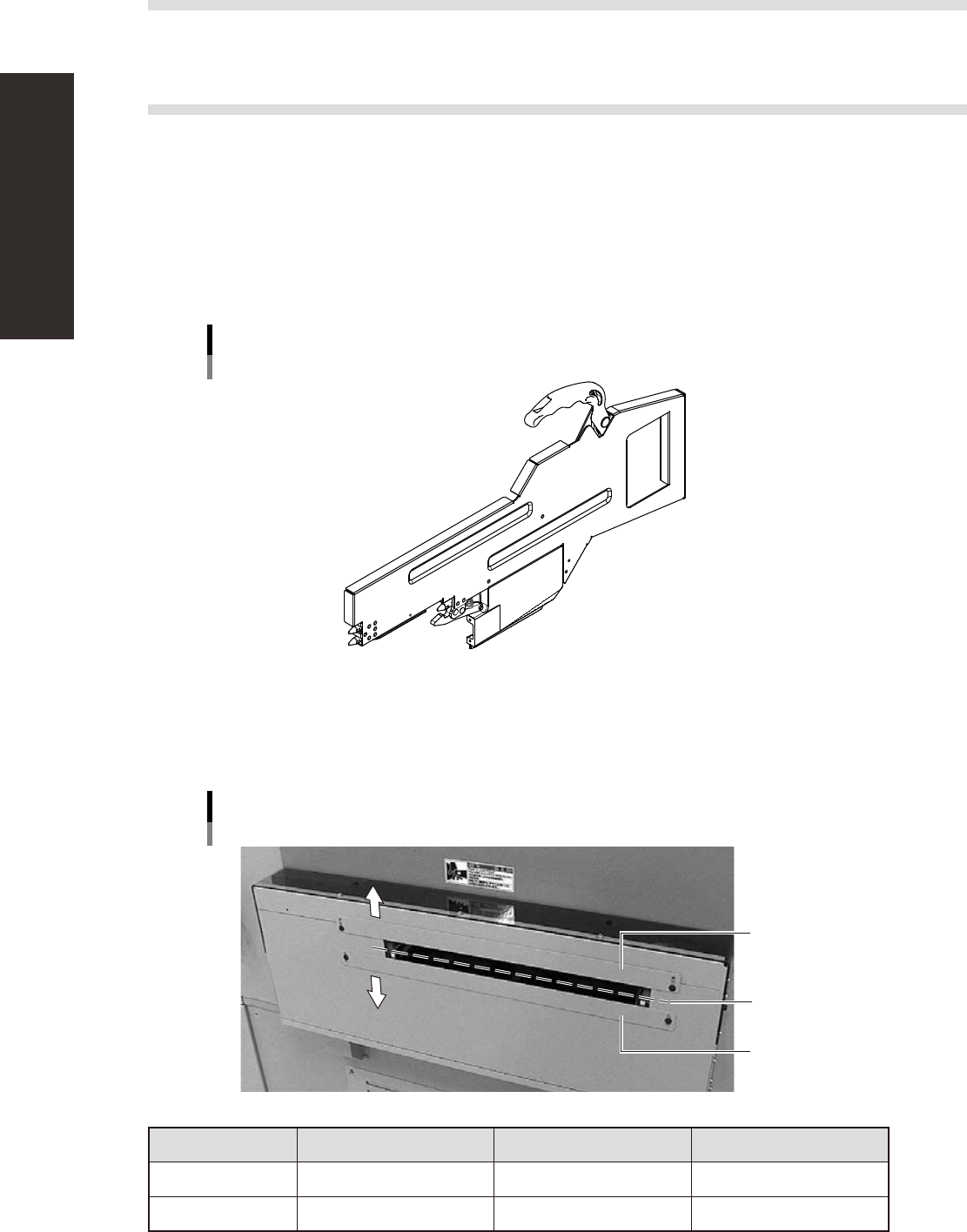
Dummy feeder
Use a dummy feeder as a safety measure to fill a gap between tape feeders. Install a dummy feeder on the feeder bank
the same way as normal SS feeders in order to prevent hands from entering.
Dummy feeder
8mm
93203-L0-00
n
Muzzle plate
Use these plates as a safety measure for the board conveyor entrance and exit openings. Each plate is movable, so adjust
the mounting position to match the boards to be produced.
Muzzle plate
Upper muzzle plate
Lower muzzle plate
Board conveyance plane
93205-L0-00
Upper clearance Lower clearance Remarks
YS100/YS88 8.0 to 38.5mm 1.0 to 31.0mm From board conveyor plane
YS12 5.0 to 20.0mm 4.2 to 39.2mm From board conveyor plane