00191297-02.pdf - 第102页
3 Introduction and Ba sic Concepts User Manual SIPLACE S-23 HM 3.3 User Interface - Views and Menus Software Version SR.405.xx 05/99 Issue 100 3 Processing PCB 3 Assembl y of th e PCBs i s started or con tinued if previ …
User Manual SIPLACE S-23 HM 3 Introduction and Basic Concepts
Software Version SR.405.xx 05/99 Issue 3.3 User Interface - Views and Menus
99
3.3 User Interface - Views and Menus
3.3.1 Views
To perform a particular operation at a particular moment via the user interface, you may need to
switch this to a different view. You can do this by clicking the appropriate toolbar button (see
section 3.2.2.2) or by selecting the corresponding menu item in the "View" menu (see section
3.3.2.2). 3
NOTE
For a description of the functions available in the various views, refer to the chapters which explain
the procedures applicable to the operations to be performed (e.g. "Refilling Empty Tracks",
Chapter 4). 3
3.3.2 Menus
3.3.2.1 "Mode" Menu
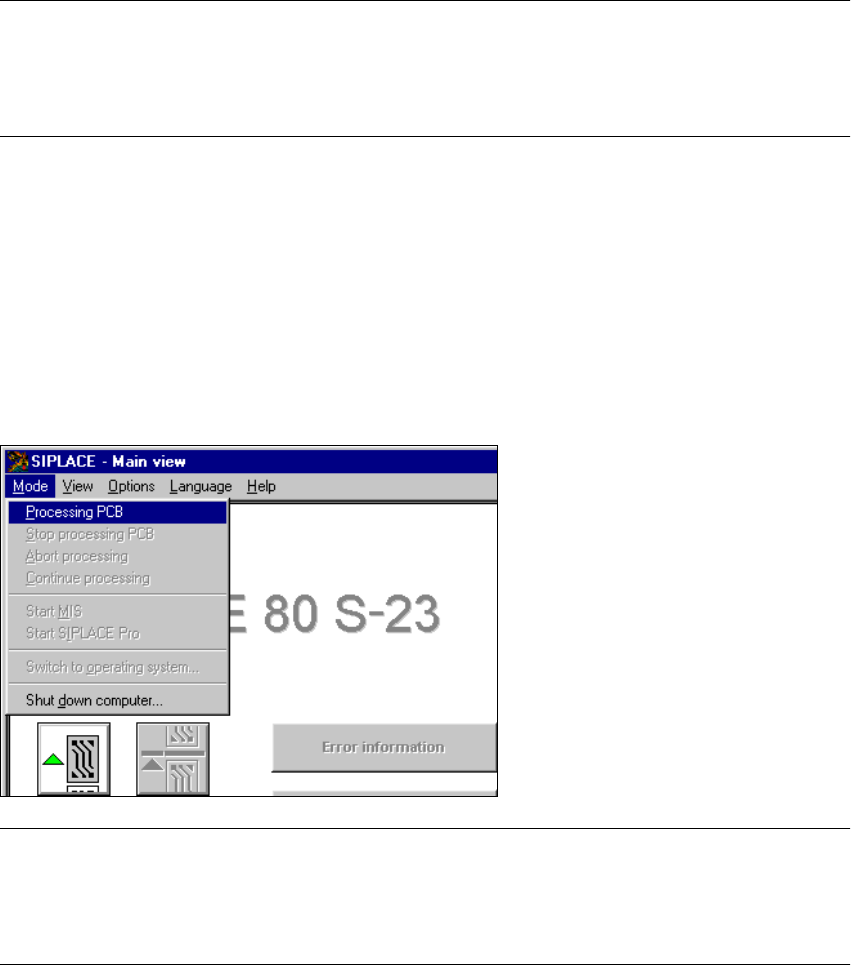
The complete set of functions present in the "Mode" menu is only available in the main view.
In the views "Setup ...", "Errors..." and "Feeders" and their sub-views, only the menu items "Stop
processing PCB" and "Processing PCB" are available. In the other views, the "Mode" menu is not
displayed. 3
3
NOTE
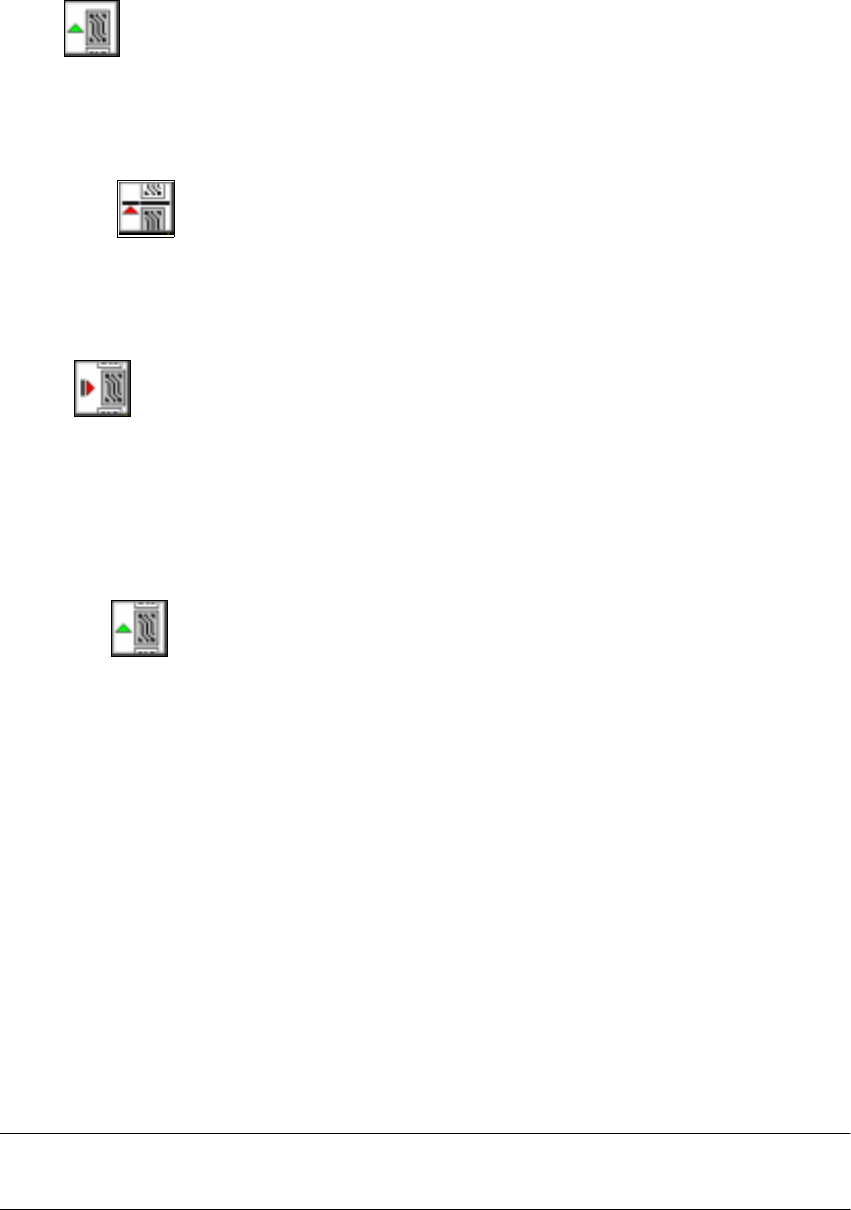
For a detailed description of the menu items "Stop processing PCB", "Processing PCB" and
"Continue processing", refer to section 3.2.2.1 since these functions are usually activated via the
corresponding icons in the working area. 3
3 Introduction and Basic Concepts User Manual SIPLACE S-23 HM
3.3 User Interface - Views and Menus Software Version SR.405.xx 05/99 Issue
100
3
Processing PCB 3
Assembly of the PCBs is started or continued if previously interrupted. 3
È Click the menu item Processing PCB (or the corresponding icon).
3
Stop processing PCB 3
The current PCB assembly process is stopped. 3
È Click the menu item Stop processing PCB (or the corresponding icon)
3
Abort processing 3
This function allows you to abort certain operating steps such as feeder position recognition or
nozzle changes in the event of a machine stoppage (fatal error, Stop button pressed) 3
È Click the menu item Abort processing.
The current operation is aborted when you confirm the action in the displayed dialog box.
3
Continue processing 3
The preceding assembly process, interrupted for example because of an error, is continued once
the fault has been eliminated. 3
È Click the menu item Continue processing (or the corresponding icon).
Switch to MIS 3
This menu function cannot be executed in the current software version. 3
Switch to SIPLACE Pro 3
This menu function cannot be executed in the current software version. 3
Switch to operating system ... 3
You use this menu item to switch to the Windows operating system after entering your password.
From here, you can then subsequently return to the SIPLACE user interface. 3
NOTE
This menu option is not available at the "Operator" access level. 3
User Manual SIPLACE S-23 HM 3 Introduction and Basic Concepts
Software Version SR.405.xx 05/99 Issue 3.3 User Interface - Views and Menus
101
È Click the menu item Switch to operating system ...
The Windows user interface is displayed and the SC software continues to run in the
background.
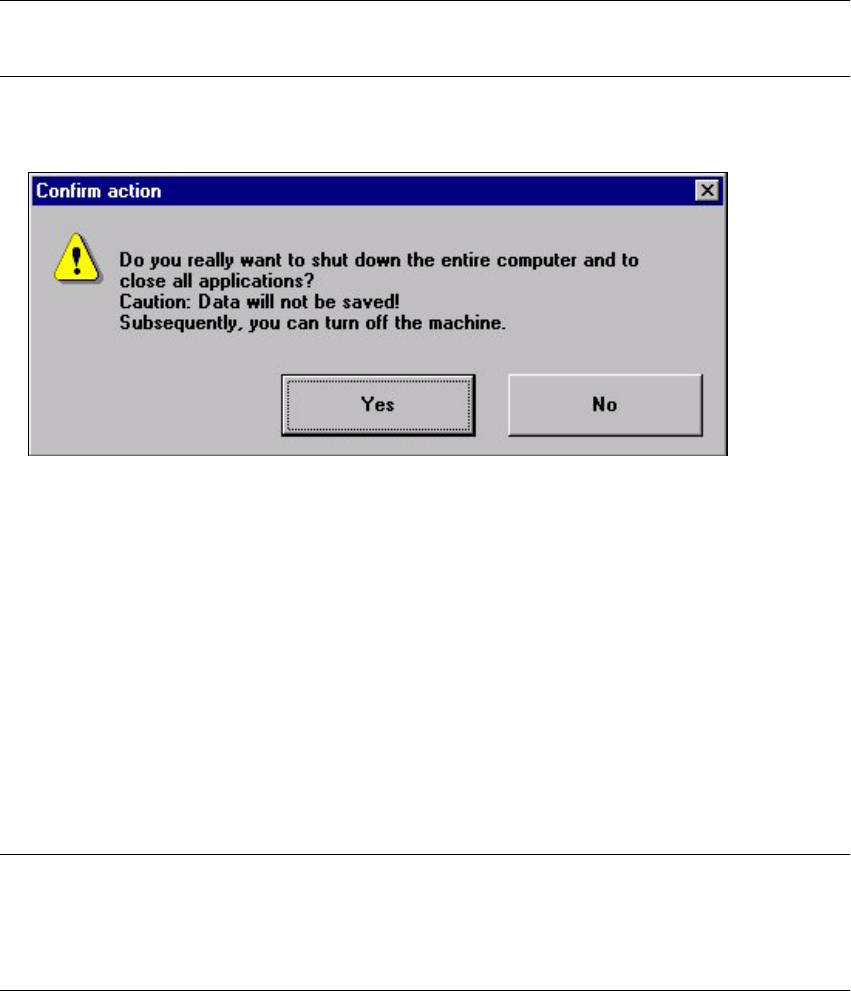
Shut down computer... 3
All applications are closed without any files which may have been processed being saved and the
station computer is shut down. 3
NOTE
This menu option is not available at the "Operator" access level. 3
È Click the menu item Shut down computer...
The following dialog box is opened.
È Click Yes if you want to terminate your work.
The station computer is shut down.
È Switch off the machine at the main switch.
3.3.2.2 "View" Menu
The "View" menu contains the options for calling the placement functions, single functions and
vision functions. It is also used to start the SITEST test program and call the view for running the
GEM functions. 3
È Click the required menu option.
The screen display is switched to the corresponding view in which you can then call the
necessary functions.
NOTE
All the options in this menu can also be called by clicking the corresponding toolbar button (see
section 3.2.2.2) or by pressing the corresponding function key. If shortcuts have been defined,
these can also be used. 3