SIPLACE CA4 V2规格说明书.pdf - 第15页
15 Single lane and dual lane conveyor Technical data Single lane conveyor Dual lane conveyor Dual lane conveyor in "single lane con- veyor" mode Board dimensions (length x width) S tandard 50 mm x 50 mm to 450 …
14
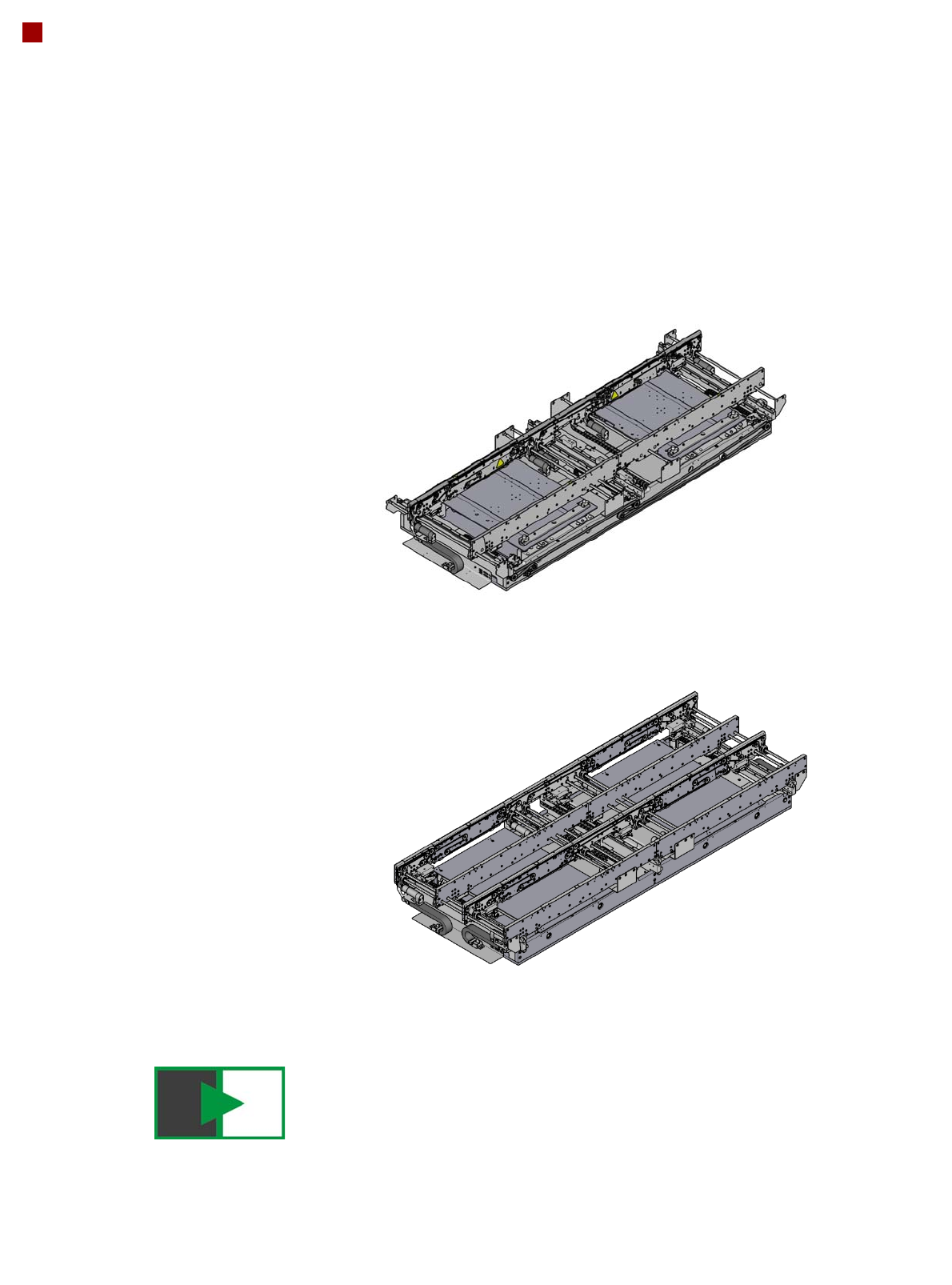
Single lane and dual lane conveyor
Overview
Single lane conveyor
When using a single lane
conveyor, boards are moved
behind one another, along a
conveyor lane and into the
placement machine, where
they are placed. This con-
veyor variant is particularly
suitable for very wide boards.
Dual lane conveyor
To keep the range of PCBs to
be processed as wide as
possible - whilst maintaining
maximum productivity - the
dual lane conveyor allows
you to choose between sin-
gle lane mode and dual lane
mode. In dual lane mode,
two boards are moved into
the placement machine and
placed either at the same
time (synchronous mode) or
alternatively (asynchronous
mode). This makes it possi-
ble to process the top and
bottom sides of a board in
one line.
Single lane conveyor
Dual lane conveyor
IPC-Hermes-9852
A protocol for advanced development of Industry 4.0 in electronics production
The Hermes Standard, also published as IPC-HERMES-9852, is a non-proprietary open protocol,
based on TCP / IP and XML. This boosts the exchange of PCB-relevant data between the various
machines in the electronics production lines. The Hermes Standard was initiated, developed and
established and is still managed by a group of leading equipment manufacturers, who share their
know-how to achieve a significant step towards advanced process integration. It has been recognized
by IPC as the next generation solution for IPC-SMEMA-9851, normally known as "SMEMA standard".
The founding and defining body The Hermes Standard Initiative is available to all equipment providers
wanting to actively participate in using the benefits of Industry 4.0 for their customers.

15
Single lane and dual lane conveyor
Technical data
Single lane conveyor Dual lane conveyor Dual lane conveyor in
"single lane con-
veyor" mode
Board dimensions
(length x width)
Standard 50 mm x 50 mm to
450 mm x 685 mm
a
a) Board width up to 560 mm as standard. Board widths up to 685 mm available on request.
50 mm x 50 mm to
450 mm x 320 mm
50 mm x 50 mm to
450mm x 600mm
b
Long board
b
b) With input and output conveyor extension only.
50 mm x 50 mm to
850 mm x 685 mm
b
50 mm x 50 mm to
850 mm x 320 mm
50 mm x 50 mm to
850mm x 600mm
b
Stationary conveyor side Right or left Right, left or outer
Automatic electrical width adjustment? Standard
PCB thickness
Standard 0.3
c
mm to 4.5 mm
c) Thinner than 0.3 mm on request
PCB warpage See page 18
PCB weight
d
d) The board weight value refers to the weight of the board plus the weight of the components.
Max. 3.0 kg
e
e) Standard 3.0 kg. Board weight up to 8.0 kg on request
Max. 2.0 kg
f
f) Standard 2.0 kg. Board weight up to 5.0 kg on request.
Max. 2.0 kg
f
Clearance on PCB underside 25 mm
PCB conveyor height
Option
Standard
Option SMEMA
900 mm
930 mm
950 mm
Type of interface SMEMA or IPC-HERMES-9852
Component-free PCB handling edge 3 mm
PCB changeover time
Single lane conveyor
Dual lane conveyor
g
g) 0 seconds in asynchronous mode, otherwise 1.5 seconds.
< 1.5 seconds
0 seconds
Important notes
When setting up a placement machine (TX, SX, or X-Series S) next to a SIPLACE CA4 V2, please be aware of the limited room
between the two placement machines. In these cases, use suitable conveyor extensions to create room of 0.5m for the operator
between the two machines.
To achieve top placement performance, fit the first machine in a SIPLACE CA4 V2 line with an input conveyor extension and the
last machine in the line with an output conveyor extension.

16
Single lane and dual lane conveyor
Placement modes
Synchronous mode
In synchronous mode, two
boards of the same size are
transported into the place-
ment position at the same
time. They are processed as
a common panel. When
using products with greatly
differing placement content,
common optimization
increases the performance of
the whole content on both
boards.
Asynchronous mode
In asynchronous mode, only
one board on a conveyor
lane is processed. At the
same time, another board on
the second conveyor lane is
moved into the placement
position. This saves the full
conveying time of one board,
thus considerably increasing
performance, particularly for
boards with a short cycle
time.
I-Placement
The SIPLACE line achieves
top placement performance
with the use of I-Placement.
In this mode, the two heads
work simultaneously and
populate the PCB on the cor-
responding conveyor side,
totally independently of one
another. Short distances fur-
ther increase the output.
Borrow Performance
By facilitating simultaneous
production of two boards with
different contents in one line,
Borrow Performance is the
ideal addition to I-Placement.
In placement machines with
Borrow Performance, both
heads place the same board
in alternation The board in
the other conveyor lane is
simply transported through
the system. This makes it
possible to achieve the same
cycle time for both boards,
despite the different place-
ment contents.
Convoy Mode
When processing boards
with lengths shorter than 175
mm, Convey Mode moves
more boards into the place-
ment area and input con-
veyor section. While one
board is being processed,
the second one waits directly
behind it. The transportation
time is therefore reduced sig-
nificantly, especially in I-
Placement mode.