00195089-0102_AI_Vakuumpumpe_X-Serie_60X_DE+EN.pdf - 第122页
Assembly Instructions SIPLACE Vacuum Pump Ausgabe 07/2006 118 2.14.2 Inspection of V acuum Circuit Fig. 2.14.1 Measuring location at the va cuum distributor bloc k (machine input) 2.14.2.1 Check V acuum System of C&P…

Assembly Instructions SIPLACE Vacuum Pump
Ausgabe 07/2006
117
2.14 Final Work
2.14.1 Conditions for Turning the Machines on
2
Before turning the machines on, check the following to prevent injuries or major property damage:2
Before turning the compressed air back on, ensure that: 2
– all hose attachments and connectio
ns are co
rrectly allocated
(i.e. no compressed air flows into a vacuum hose)
–
all preconditions for turning on the vacuum pump and the placem
ent machines connected to it
have been followed as stated in the operating instructions.
– the vacuum pump is always turned on before the placement machine is turned on.
2
: Turn the vacuum pump on.
: If necessary, open the vacuum shut-off valves which have been inserted.
2
: Open the compressed air shut-off valve.
: Push the pneumatic unit into the placement machine.
: Close all doors.
: Turn on the main switch.
: Repeat above steps for all connected placement machines.
Assembly Instructions SIPLACE Vacuum Pump
Ausgabe 07/2006
118
2.14.2 Inspection of Vacuum Circuit
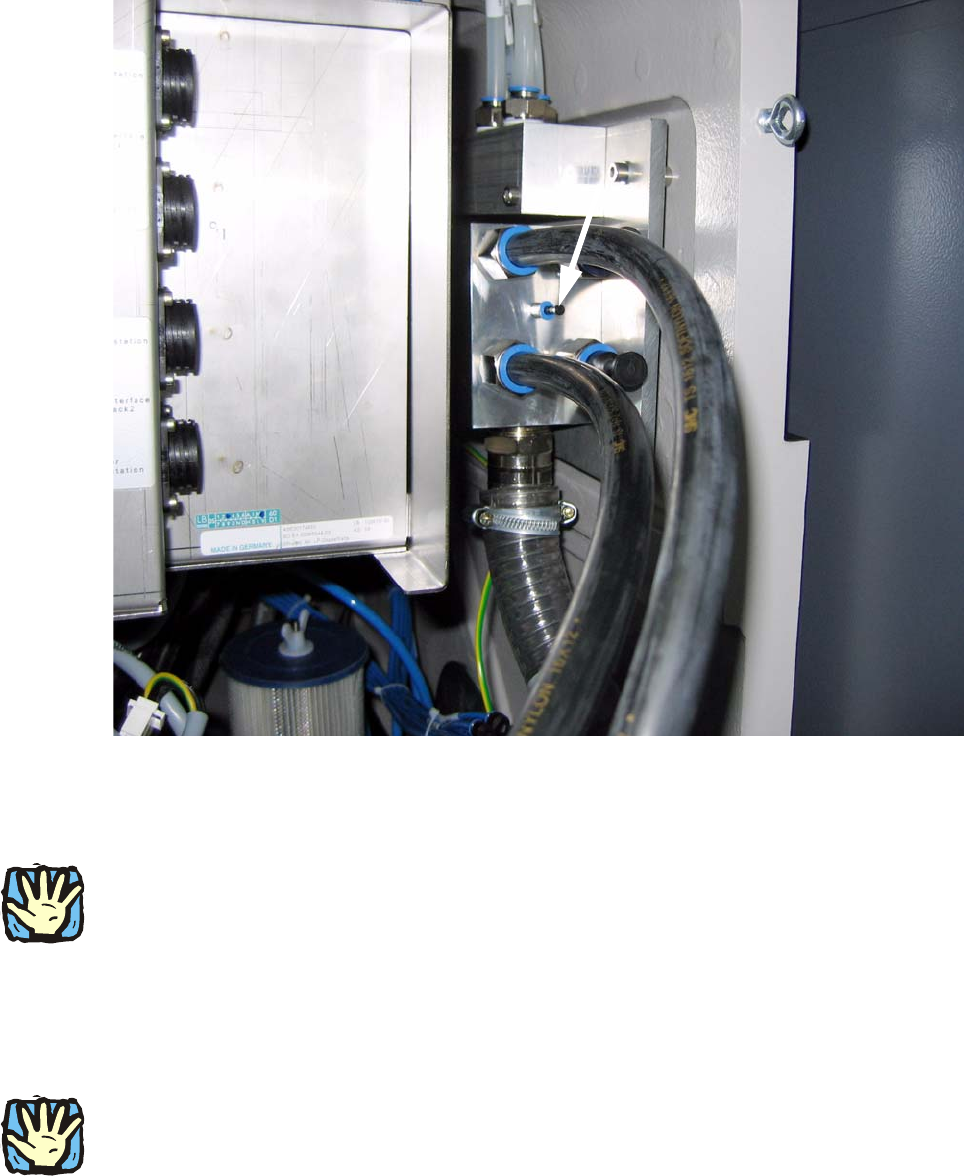
Fig. 2.14.1 Measuring location at the vacuum distributor block (machine input)
2.14.2.1 Check Vacuum System of C&P20’s Holding Circle for Leak Tightness
2
2
Depending on the pipette configuration, at each placement machine/head a vacuum of at least
-500 mbar (for very large pipettes 1235) or -600 mbar (of very small pipettes 1006) should occur!2
Measuring occurs at a pipette with an external measurin
g device, which corresponds to a closed
pipette (with component). 2
2
Measuring location at the vacuum distributor block at machine input (see Fig. 2.14.1): 2
2
2
During operation the vacuum here should never fall below -400 mbar. If this occurs anyway,
please call the SIPLACE hotline. 2
2

Assembly Instructions SIPLACE Vacuum Pump
Ausgabe 07/2006
119
Procedure to Inspect Leak Tightness for C&P20 Head: 2
2
To prevent differences based on offset errors, it makes sense to take both measurements with the
same measuring device. 2
2
: Measure the vacuum with the external pressure measurement device:
– at an attachment of the “distributor placement head vacuum” at the portal (see Fig. 2.8.5)
and thereafter
– at an open pipette in the placement head’s holding circle.
The pressure differential can be a max. of 30-5
0 mbar
! Otherwise not everything is leak tight. 2
2
Measurements during the vacuum test (in the SITEST) always occur with an open pipette. For
large pipettes (1235) the vacuum is generally lowered to below -100 mbar because of a higher
amount of absent air. The reason for this high slump – for large pipettes without component – is
the relatively small reduction jet diameters in the orifice ring compared to the pipette diameter.
With a component, vacuum values of -500 to -600 mbar are reached. 2
If these values are not reached, the reason is usually
a hose in the head area which is not pulled
up all the way to the catch. Do the following: 2
: Re-squeeze all hoses with the tube gripper.
: Repeat th
e vacuum measurement.
2.14.2.2 Inspect Entire Function of the C&P20’s Holding Circle Vacuum System
The entire function of the vacuum system can be tested by a vacuum test in the SITEST, just like
with the Venturi principle. 2
The vacuum sensor in the holding circle is only used to
check whether the small jets in the orifice
ring are free of dirt. 2
2.14.2.3 Inspect C&P6/12’s Holding Circle Vacuum System for Leak Tightness
If a vacuum pump for the X Series (C&P20) is used, the following differences with the vacuum
pump for the HS-60/HF occur: 2
– Throughput is 4x higher than for the “vacuum pump fo
r HS-xx/S-27HM/HF” (item no. 119017)
– The maximum vacuum reached now is at approx. -640 mbar, instead of the previous -850
mbar.
Therefore the minimally allowable vacuum value for the holding circle must be reduced
from -750 to -400 mbar. Otherwise an error message “258 vacuum in holding circle too low
(should/is)” occurs during the reference run.