VDA_6.3_EN_Yellow_Volume_.pdf.pdf - 第41页
39 6.5 Using the questionnaire (process eleme nts P2 to P7) The questionnaire forms the ba sis of the audi tor’s work. The auditor sele cts the relevant pro cess element s for the audit depending on the pha se of the pro…
38
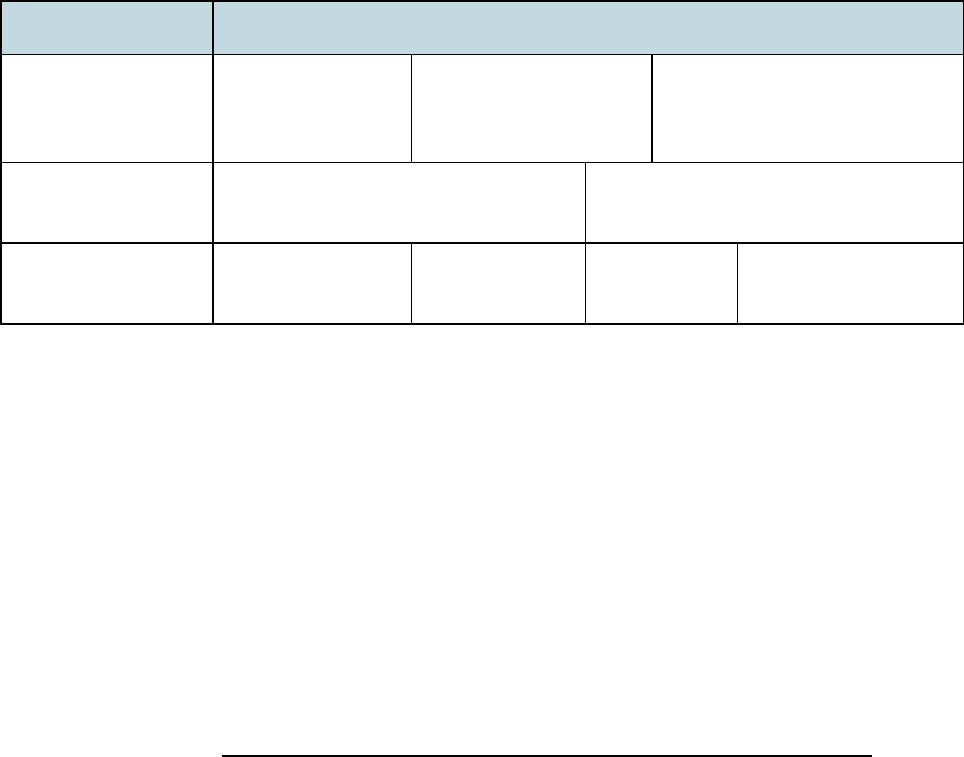
Product group
Possible process steps
Pressed and
stamped parts
Stamping,
drawing,
forming
Galvanic plating
Painting
Plastic injection
moldings
Plastic molding
Painting
Control devices
Fitting compo-
nents
Soldering
Assem-
bling
Functional check
Note: To evaluate process steps, additional process requirements should be gener-
ated from the organization’s own knowledge databases.
In the evaluation matrix, the relevant process steps are allocated to the prod-
uct group being evaluated.
The overall level of compliance for each product group E
G(PGn)
is calculated as
follows:
E
G(PGn)
[%] =
Total points awarded for the questions for the evaluated
process elements Pn (for each question in P6, the average
value per question from the process steps for this PG is cal-
culated
++
)
Total possible points for the questions for the evaluated
process elements (
++
)
++
for explanations of “points awarded” and “possible points” see section: 6.2: Exception.
When evaluating product groups, the downgrading rules are applied specifi-
cally to the product group concerned.
39
6.5 Using the questionnaire (process elements P2 to P7)
The questionnaire forms the basis of the auditor’s work. The auditor selects
the relevant process elements for the audit depending on the phase of the
product life cycle (see section 2.2). Additional specific requirements can be
added to the questions depending on the product/process risks identified.
The questions can be used for processes for material products and products
with integrated (embedded) software as well as for auxiliary and process ma-
terials.
Structure of the questionnaire
The questions for the process elements are structured as follows:
• Questions
• Minimum requirements relevant for assessment
• Examples for implementation
The “examples for implementation” provide a selection of potential applica-
tions. They should be selected on a product/process-specific basis and ex-
panded, analyzed and evaluated when necessary.
The evaluation is carried out based on the questions in the “Minimum require-
ments relevant for assessment” list.
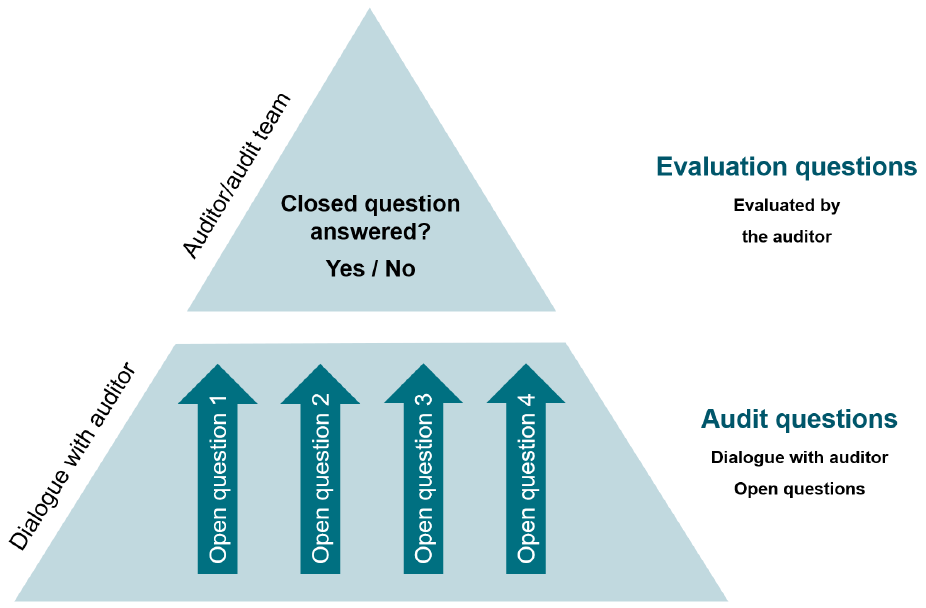
For the auditor, the audit consists of two mutually independent activities (see
figure 6.1):
1. The auditor asks the auditee open questions to assess compliance
with the requirements. The risks identified in the preparations for and
during the audit are taken into account.
2. Based on the audit findings, the auditor uses closed questions to as-
sess compliance with the requirements.
40
Figure 6-1: Audit pyramid
Process elements P3 and P4 can be audited either together or separately
when evaluating the product planning/implementation and process plan-
ning/process implementation. This depends on the audited organization.
If process element P6 (“series production”) requires a breakdown into pro-
cess steps, each step must be specified and evaluated separately.
In addition to the VDA 6.3 questions listed in this volume, it is recommended
that a knowledge database be created to store information about the risks as-
sociated with individual products and processes. The experience stored in the
knowledge databases can be used in addition to the requirements relevant for
the evaluation.
Based on the risk analysis described in section 2.4, identified risks must be
checked against the questionnaire and integrated into the applicable ques-
tions.