PCP-Manual-REV-C.pdf - 第8页
PCP Series Manual Revision B / October 2021 Page 8 of 56 System Description This manual applies to the followin g Precision Valve & Automation, Inc. valves: PCP-015 PCP015-C PCP050 PCP050-C PCP150 PCP150-C PCP500 PCP…
PCP Series Manual
Revision B / October 2021
Page 7 of 56
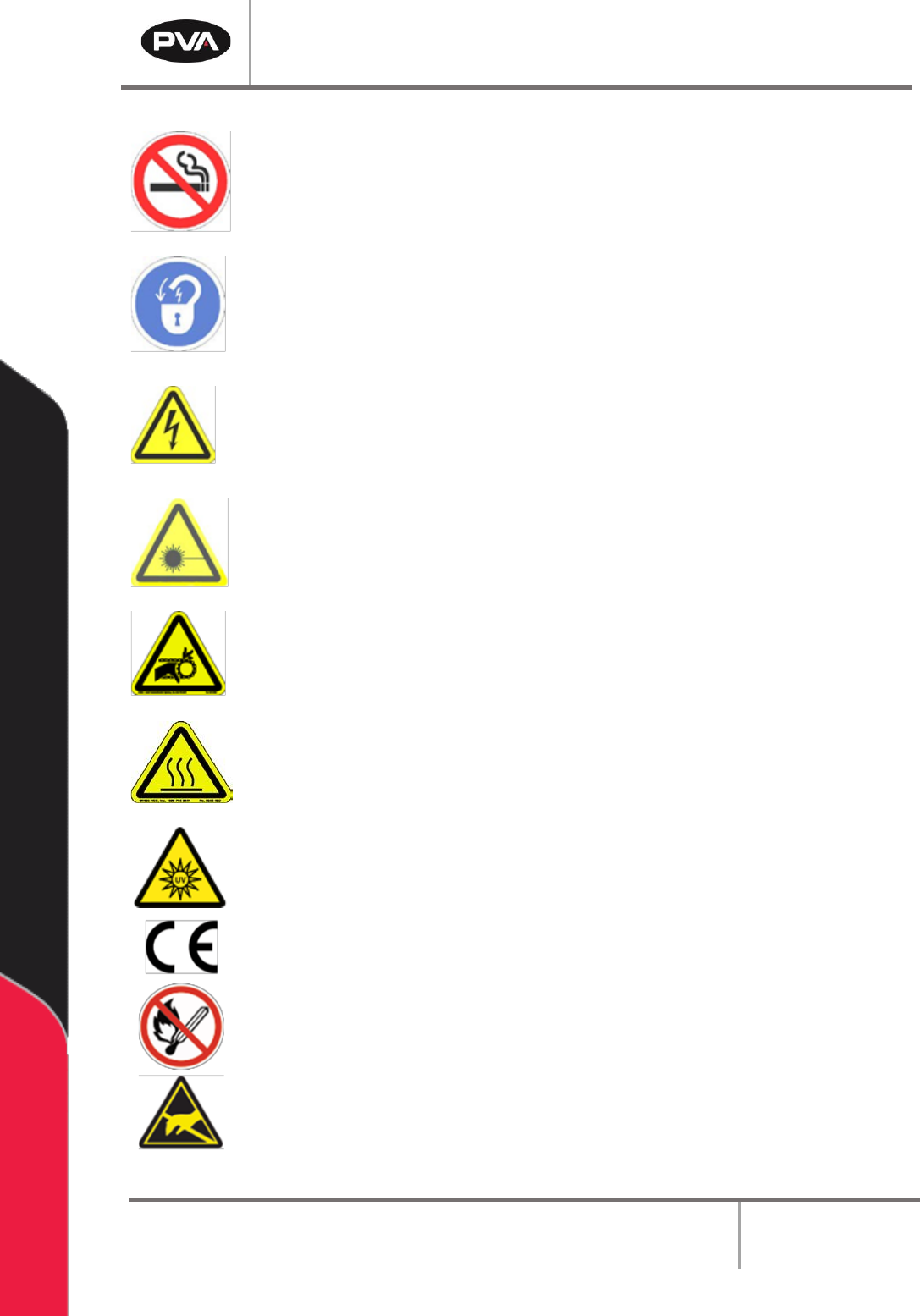
Do not smoke near the machine. Always have a fire extinguisher available
for emergency use.
Before performing any repairs or maintenance to the system, turn off power
and lock out the power disconnect switch.
Warning notices are used to emphasize that hazardous voltages, current,
temperatures, or other conditions that could cause personal injury exist in
this equipment or may be associated with its use. Only qualified personnel
should enter areas designated with this symbol.
Laser light source present. Do not stare directly into the beam. Do not use in
the presence of highly reflective surfaces
Pinch hazard from moving parts. Avoid contact.
Hot surface. Avoid contact.
Warning, Ultraviolet (UV) light hazard. Do not look directly at the UV light
source.
This product meets EU standards for health, safety, and environmental
protection.
Warning, no open flames.
Electrostatic sensitive device warning. Observe precautions for handling.
PCP Series Manual
Revision B / October 2021
Page 8 of 56
System Description
This manual applies to the following Precision Valve & Automation, Inc. valves:
PCP-015
PCP015-C
PCP050
PCP050-C
PCP150
PCP150-C
PCP500
PCP500-C
PCP1000
PCP1000-C
The PCP Series of progressive cavity pumps feature a machined rotor that couples with a
rubberized seal to assure drip-free operation with a wide range of viscous chemistries.
Each servo-controlled rotor displaces a fixed volume of material per revolution. This true
positive displacement process assures consistent volume regardless of slight material
variations.
The PCP Series features five different rotor sizes allowing the end user to select their ideal
flow rate. An optional carbide rotor allows processing of filled or abrasive chemistries while
extending the life of the rotor.
Theory of Operation
The PCP Progressive Cavity Pump is a high precision, rotating, positive displacement
pump. It dispenses high precision beads or dots of almost any chemistry or viscosity.
The pump contains a stainless steel or carbide rotor and an elastomeric seal (stator). The
PCP uses the principal of the “endless piston,” and is a progressive cavity pump that
provides pulse-free, drip free dispensing. Reverse operation of the pump will cause “suck
back” or “snuff back” which gives excellent shut off.
PCP Series Manual
Revision B / October 2021
Page 9 of 56
Description of Components
Component
Description
Electric Motor
The motor turns the rotor. Motor speed can be fully adjusted to
change the flow rate.
Rotor
The rotor is a stainless-steel or carbide helical shaft. A fixed
volume of material is moved as it rotates inside the stator and
uses the principal of the “endless piston”.
Stator
The stator is an elastomeric seal with a double helix molded into it.
The stator lets material flow when the rotor turns but has a
perfect seal when the rotor is stopped.
Manifold
The manifold is fed by the rotor/stator and supplies it to the
dispense needle through the material outlet.
Personal Protective Equipment
Operators must use eye protection because material contents are under pressure. Always
wear gloves when handling materials and solvents. Refer to MSDS sheets on the material
being dispensed for other precautions.
Waste Disposal
Dispose of all used parts and materials in accordance with local laws and regulations.
Necessary Tools
PVA offers tools and cleaning accessories to maintain the PCP progressive cavity pumps.
Part Number
Description
12862
Stator Tool
02506
Hook and Pick Set
Figure 1: Necessary Tools