IPC-TM-650 EN 2022 试验方法1.pdf - 第415页
IPC-TM-650 Number Subject Da te Revision Page 3 of 7 2.4.54 TestMethodforThermalTransmissionPropertiesof 09/2022 MetalBasedPrintedBoards(MBPB) N/A observed tempe rature range. It i s recommend ed to …
Page 1 of 1
IPC-TM-650
Number Subject Date
Revision
Page 3 of 7
2.4.54
TestMethodforThermalTransmissionPropertiesof
09/2022
MetalBasedPrintedBoards(MBPB)
N/A
observed temperature range. It is recommended to use high conductive metals for the heat flow meter bars when measuring
high conductive specimens e.g., aluminum alloy with a thermal conductivity of 100 W/(mK) or higher.
4.7
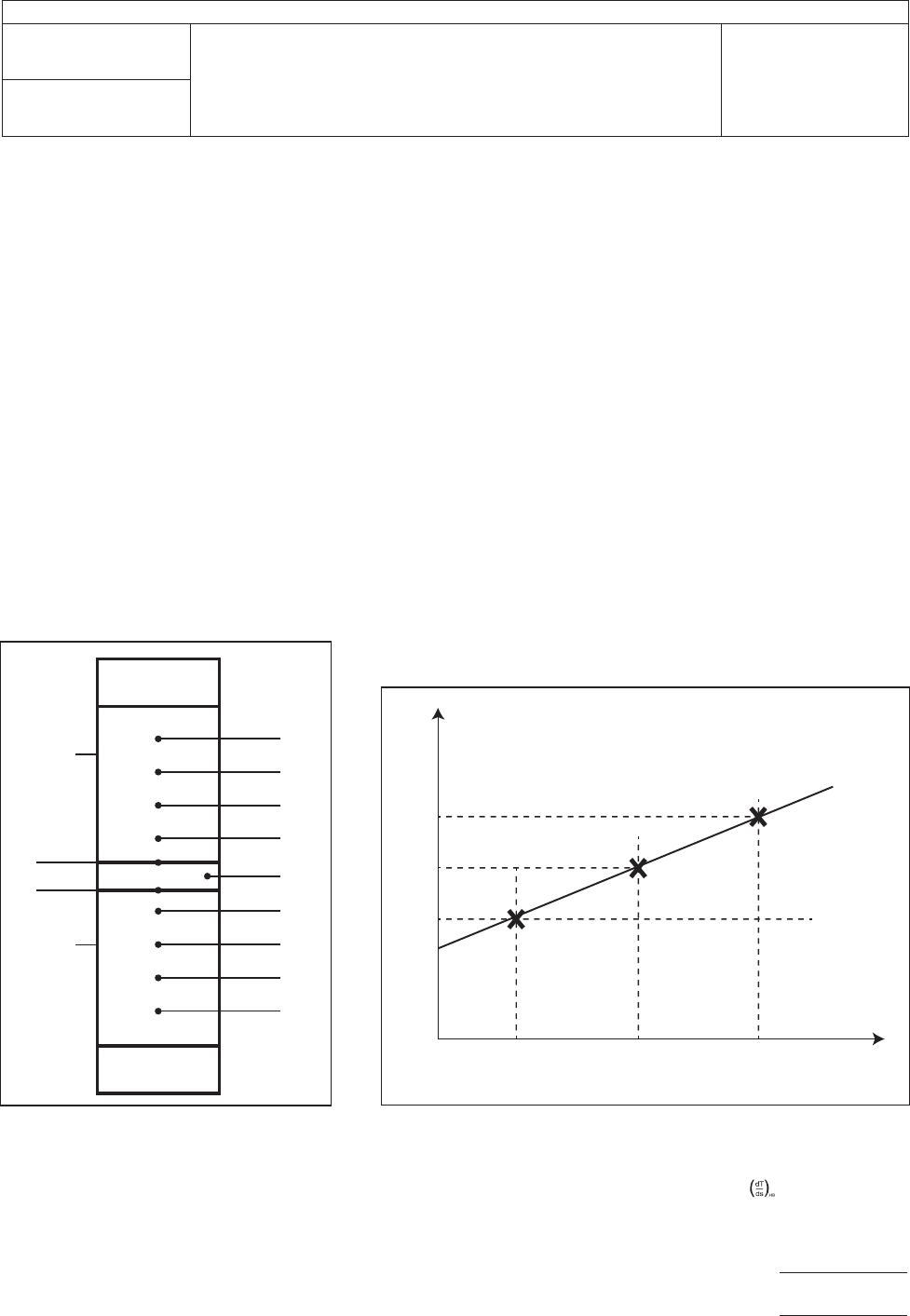
Use more than two thermocouples for the heat flow measurement on each meter bar. It is recommended to use four
thermocouples on every bar. This reduces the error in the slope (Figure 2). The thermocouples should be located in extreme
proximity to the surfaces (about 1.5 mm) (Table 1 Equations 1 to 3). Use thin calibrated thermocouples with a diameter of
< 0.6 mm and a measurement accuracy smaller than +/- 0.1 K. This increases the measurement accuracy significantly.
4.8
The heat flow meter bars are used to determine the temperature of the test surfaces by extrapolating the linear array of meter
bar temperatures to the test surfaces (Table 1 Equations 4, 5 and 6). This should be done for both, the hot side and cold side
meter bars (see Figure 1 Notes 2 and 3).
4.9
The recommended way to create a cooling source in the apparatus is with a metal block cooled by a temperature controlled
circulating liquid (e.g., silicone oil or even water, depending on the temperatures, which should be measured).
4.10
The temperature stability of both, the heating and cooling source, should be very high due to stationary conditions during
the test. Typical stabilities are +/- 0.1 K/(300 seconds).
4.11
The thermal contact resistances between the specimen and the heat flow meter bars is highly dependent on the contact
pressure, which is the reason why this parameter is important. A high contact pressure reduces the thermal contact resistances
and maintains the parallelism and alignment of the surfaces.
4.12
ForMBPBahighpressure≥2.0N/mm²shouldbeappliedduetoasignificantreductionofthethermalcontactresistant.
This guarantees more accurate testing results.
1
2
3
4
8
9
10
11
12
13
14
15
16
7
5
6
Figure1HotandColdMeterBardswithMore
ThanTwoThermocouples
Note1 – Hot Meter Bar,
see 1.3.1
Note2 – T
H
Note3 – T
C
Note4 – Cold Meter Bar
Note5 – Heat Source
Note6 – Specimen
Note7 – Heat Sink
Note8 – T
HB,1
Note9 – T
HB,2
Note10 – T
HB,3
Note11 – T
HB,4
Note12 – T
S
,
see 6.4.2 and
Table 1
Equation 18
Note13 – T
CB,1
Note14 – T
CB,2
Note15 – T
CB,3
Note16 – T
CB,4
1
2
3
4
5 6
8
7 x
y
Figure2LinearRegressiontoDeterminetheHeatFlowintheHotMeterBar
OutofThreeorMoreThermocouples
Note1 – T
HB,1
Note2 – T
HB,2
Note3 – T
HB,3
Note4 – T
H
Note5 – S
HB,3
Note6 – S
HB,2
Note7 – S
HB,1
Note8 – Slope:
Note9 – x – Path s in m
Note10 – y – Temperature in K
IPC-TM-650
Number Subject Date
Revision
Page 4 of 7
2.4.54
TestMethodforThermalTransmissionPropertiesof
09/2022
MetalBasedPrintedBoards(MBPB)
N/A
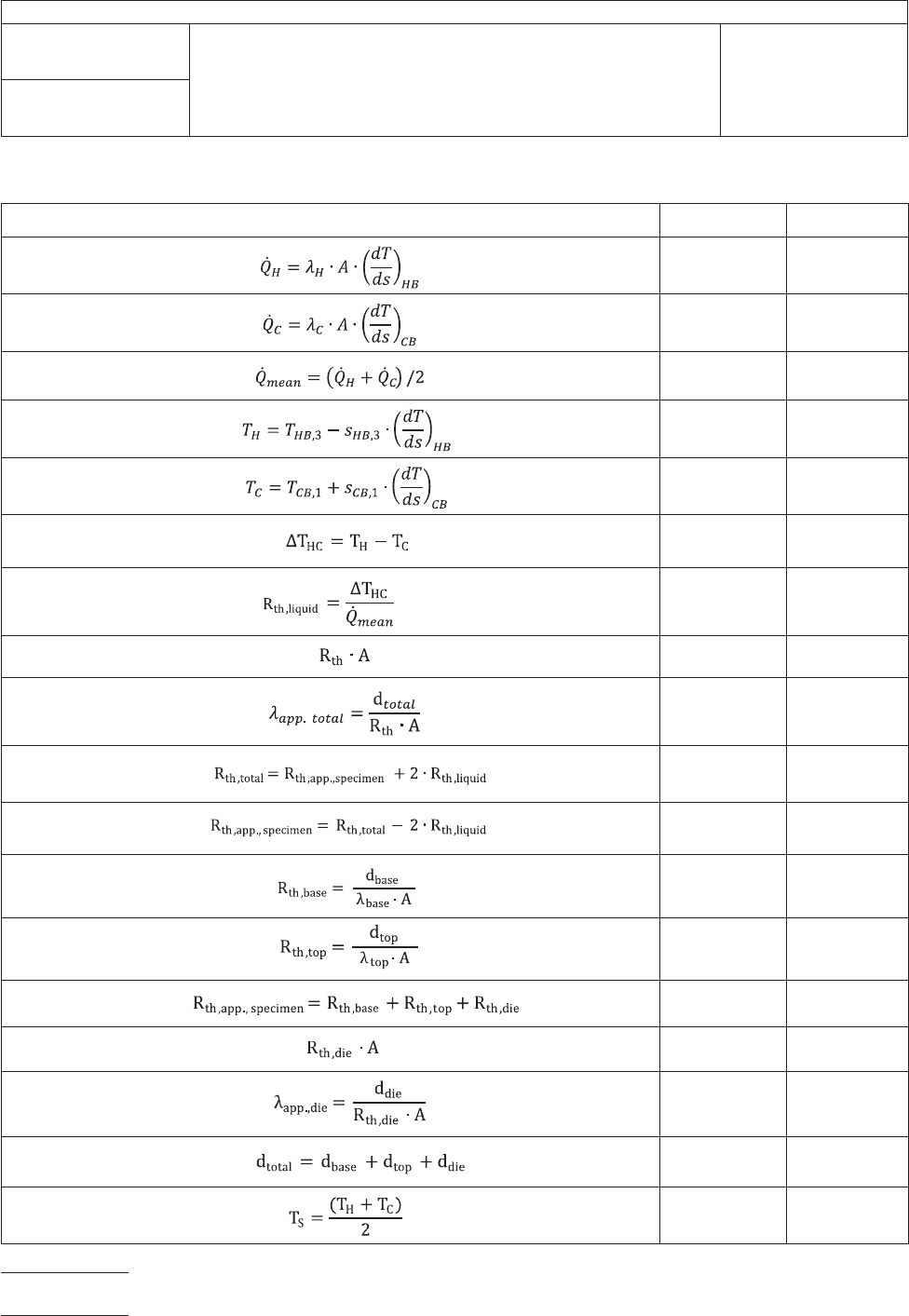
Table 1 Equations
Equation Unit Reference
W 1
W 2
W 3
°C 4
°C 5
K 6
K/W 7
mm²K/W 8
W/(mK) 9
K/W 10
K/W 11
K/W 12
K/W 13
K/W 14
mm²K/W 15
W/(mK) 16
µm 17
°C 18