CP43维护手册.pdf.pdf - 第56页
Chapter 5 The T welve Stations Follow the procedur e below to adjust the str oke of the waste tape cutter claw . (1) Attach the cam handle on the handle shaft. T urn the handle until the cam angle indicator reads 245°. (…
5 – 13
Version 6.0
Chapter 5 The Twelve Stations
5.1.5 Cutting Waste Tape
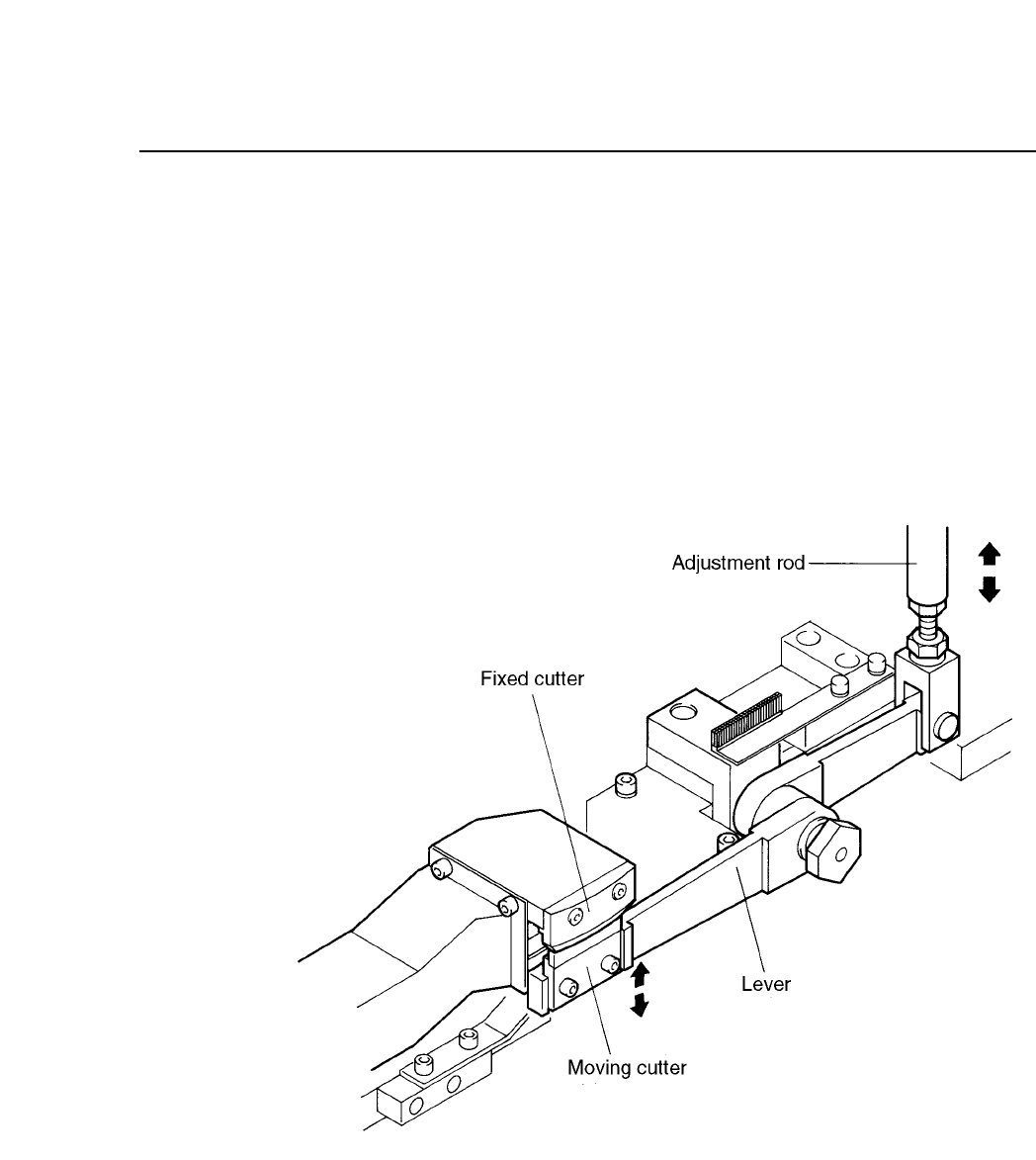
After parts have been picked out of the tape, the empty “waste”
tape is cut off. Waste tape that has been cut is collected by a
vacuum at the back of the machine.
The waste tape cutting operation is driven by a cam mechanism.
The cam drives a lever, which drives a rod, which drives a lever,
which drives the cutter.
The stroke of the rod is a fixed value determined by the curve of the
cam.
Fig. 5-13 Waste Tape Cutting Mechanism
CP IV-3 Maintenance
Chapter 5 The Twelve Stations
Follow the procedure below to adjust the stroke of the waste tape
cutter claw.
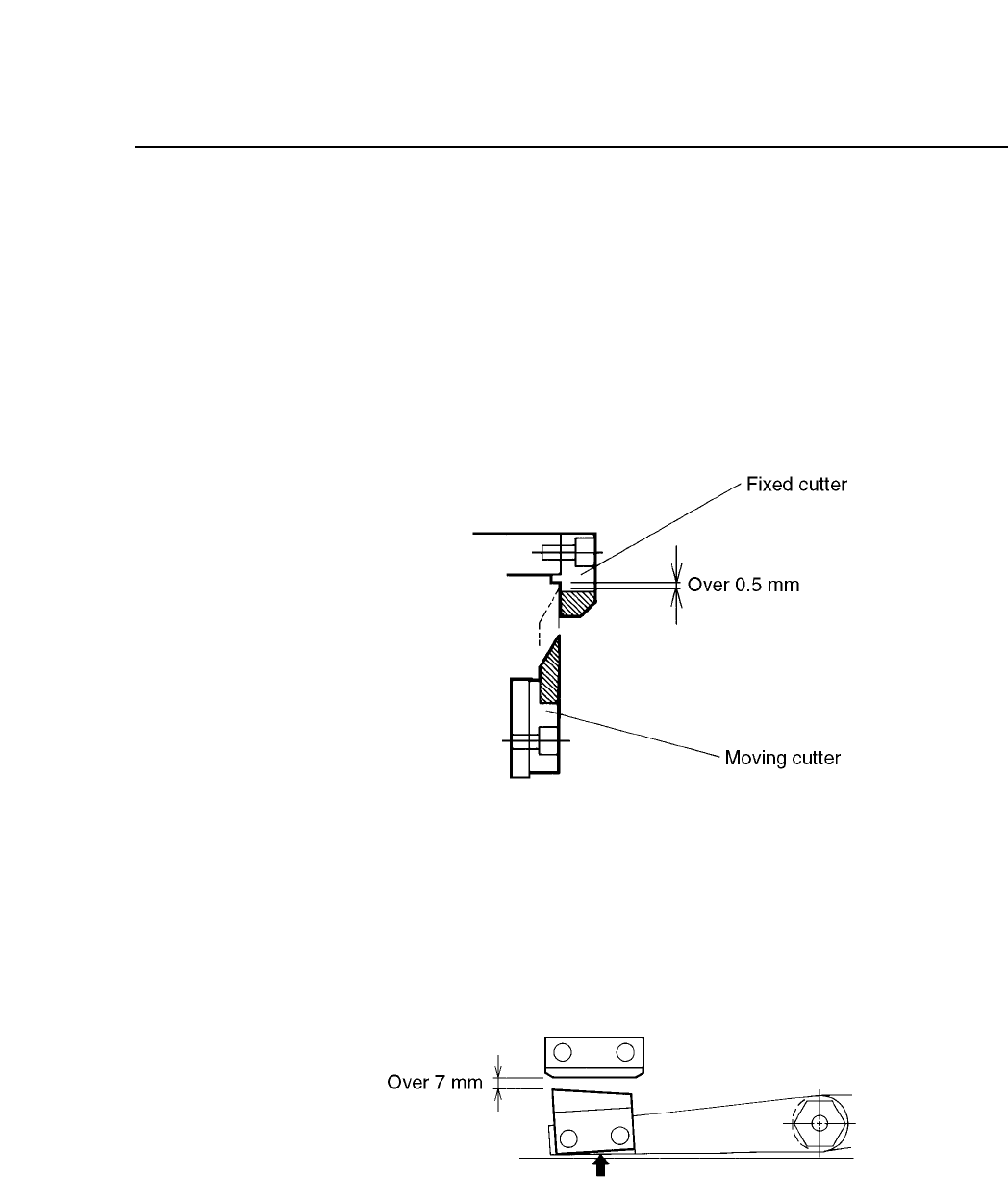
(1) Attach the cam handle on the handle shaft. Turn the handle
until the cam angle indicator reads 245°.
(2) With the cam angle set to 245°, adjust the rod so that the
moving cutter touches the fixed cutter. At this time, the gap
between the the tip of the moving cutter and the underside of
the fixed cutter should be more than 0.5 mm.
Fig. 5-14 Gap Between Moving and Fixed Cutter
(Cam Angle 245°)
(3) Return the cam angle to 0°. Confirm that the gap between the
moving cutter and the fixed cutter is more than 7 mm, and that
the moving cutter lever does not contact the plate.
Fig. 5-15 Gap Between Moving and Fixed Cutter
(Cam Angle 0°)
5 – 14
Version 6.0
CP IV-3 Maintenance
5 – 15
Version 6.0
Chapter 5 The Twelve Stations
5.1.6 Tape Feeder Lift Sensor
Adjustment of the tape feeder lift sensor requires a special jig.
5.1.7 Nozzle Up/down Operation
The nozzle lowers to pick up the parts that lie within the tape set in
the tape feeder, and then rises to its original position.
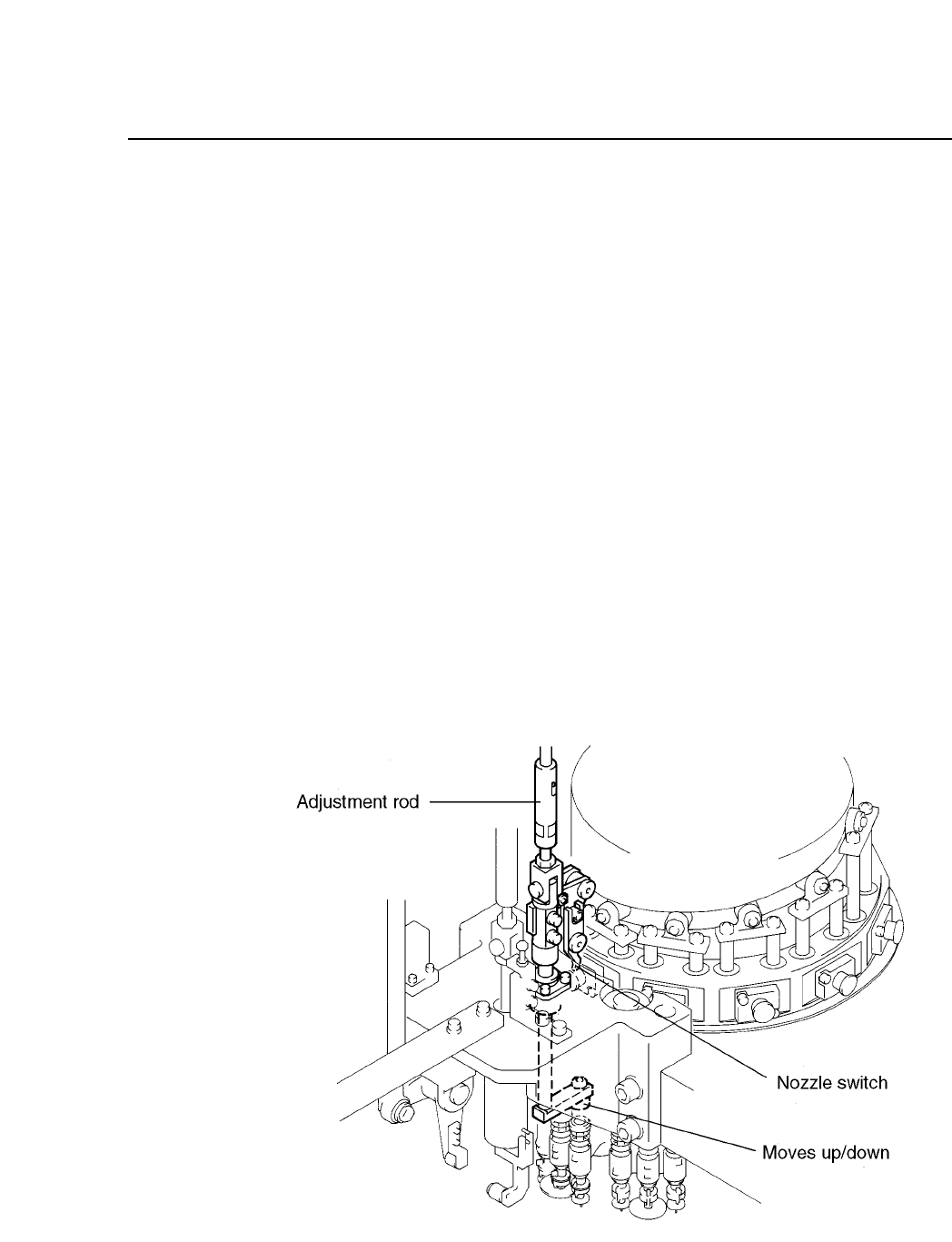
The nozzle's vertical operation is driven by a cam mechanism. The
cam drives a lever, which drives a rod, which drives a lever, which
drives the nozzle.
The stroke of the rod is a fixed value determined by the curve of the
cam.
The adjustment rod, besides driving the nozzle's vertical strokes,
triggers the valve switch (see illustration below). Thus after
adjusting the nozzle's up and down strokes or the valve switch,
confirm that the adjustment made to one of these two settings has
not affected the other setting. If this confirmation is not carried out,
machine damage may result.
Fig. 5-16 Nozzle Vertical Operation Mechanism at Station 1
CP IV-3 Maintenance