MIL- STD-883F 2004 TEST METHOD STANDARD MICROCIRCUITS.pdf - 第388页
MIL-STD-883F METHOD 2025.4 19 August 1994 2 This page i ntenti onally lef t blank

MIL-STD-883F
METHOD 2025.4
19 August 1994
1
METHOD 2025.4
ADHESION OF LEAD FINISH
1. PURPOSE
. This destructive test is intended to determine the integrity of all primary and undercoat lead finishes.
2. APPARATUS
. This test requires suitable clamps and hardware necessary to apply the bending stress through the
specified bend angle. Optical equipment capable of magnification of 10X to 20X.
3. PROCEDURE
. Unless otherwise specified, the bend stress shall be applied to randomly selected leads from each
device selected for test and shall be performed after application of the primary finish and after sealing. Unless otherwise
specified, the sampling shall be sample size number = 15, C = 0 based on the number of leads tested chosen from a
minimum of three devices. The leads shall be bent in the least rigid direction. If there is no least rigid direction, they may be
bent in any direction. The coated lead shall be bent repeatedly in the same direction (or plane) through an angle of at least
90° at a radius of less than four times the lead thickness or diameter at approximately the mid point of the lead lengths until
fracture (i.e., lead breaks off) of the base metal occurs.
3.1 Failure criteria
. No cracking, flaking, peeling, blistering, loosening, or detachment of the coating(s) at the interface(s)
shall result from probing the bend/break area with a sharp instrument. Cracks in the base metal shall not be considered a
failure unless accompanied by cracking, flaking, peeling, blistering, loosening, or detachment of the primary coating(s) or
undercoating(s).
NOTE: In tin lead or heavy tin coatings, the failure criteria listed should not be confused with shearing and tearing
associated with fatigue fractures and slip-planes which develop into cracks and result in rupture.
4. SUMMARY
. The following details shall be specified in the applicable acquisition document:
a. Sampling criteria, if other than specified (see 3).
b. Failure criteria, if other than specified (see 3.1).
MIL-STD-883F
METHOD 2025.4
19 August 1994
2
This page intentionally left blank
MIL-STD-883F
METHOD 2026
25 August 1983
1
METHOD 2026
RANDOM VIBRATION
1. PURPOSE
. This test is conducted for the purpose of determining the ability of the microcircuit; to withstand the
dynamic stress exerted by random vibration applied between upper and lower frequency limits to simulate the vibration
experienced in various service-field environments. Random vibration is more characteristic of modern-field environments
produced by missiles, high-thrust jets, and rocket engines. In these types of environments, the random vibration provides a
more realistic test. For design purposes, however, a swept frequency sinusoidal test may yield more pertinent design
information.
2. APPARATUS
.
2.1 Vibration system
. The vibration system, consisting of the vibration machine, together with its auxiliary equipment
shall be capable of generating a random vibration for which the magnitude has a gaussian (normal) amplitude distribution,
except that the acceleration magnitudes of the peak values may be limited to a minimum of three times the rms (three-sigma
(α) limits). The machine shall be capable of being equalized so that the magnitude of its spectral-density curve will be
between specified limits (for example, see figures 2026-1 and -2). When the test item, or a substitute equivalent mass, is
appropriately secured to the vibration machine. The equalization of an electrodynamic vibration machine system is the
adjustment of the gain of the electrical amplifier and control system so that the ratio of the output-vibration amplitude to the
input-signal amplitude is of a constant value (or given values) throughout the required frequency spectrum.
2.1.1 Control and analysis of vibration
.
a. Spectral-density curves. The output of the vibration machine shall be presented graphically as power-spectral
density versus frequency. 1
/ The spectral-density values shall be within +40 and -30 percent (±1.5 dB) of the
specified values between a lower-specified frequency and 1,000 Hz, and within +100 and -50 percent (±3 dB) of the
specified values between 1,000 and an upper-specified frequency (2,000 Hz). A filter bandwidth will be a maximum
of one-third-octave or a frequency of 25 Hz, whichever is greater.
1
/ Power-spectral density is the mean-square value of an oscillation passed by a narrow-band filter per
unit-filter bandwidth. For this application it is expressed as G
2
/f where G
2
/f is the mean-square value
of acceleration expressed in gravitational units per number of cycles of filter bandwidth. The
spectral-density curves are usually plotted either on a logarithmic scale, or in units of decibels (dB).
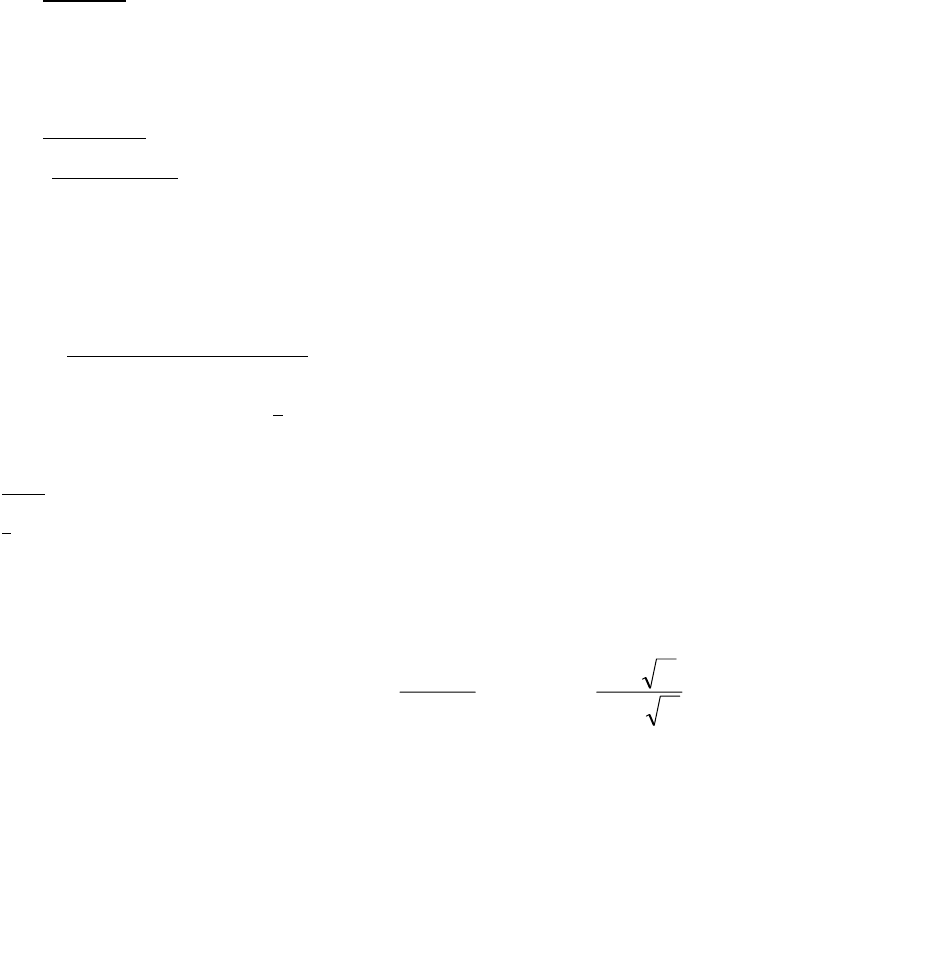
The number of decibels is defined by the equation:
The rms value of acceleration within a frequency band between f
1
and f
2
is:
where G
r
2
/f is a given reference value of power-spectral density, usually the maximum specified value.
dB = 10
G
/f
G/f
= 20
G/ f
G
/f
2
2
r
r
log log
rms
1/2
f
f
G
= G f df
1
2
∫
⎡
⎣
⎢
⎤
⎦
⎥
2
/