00194103-01.pdf - 第203页
User Manual SIPLAC E F5 HM 7 Options Software Vers ion SR.408.xx 03/2006 U S Edition 7. 8 F lip-chip vision module for the Pick&Place head 203 7.8.1 Description of the funct ions The fli p-chip vi sion modul e increa…
7 Options User Manual SIPLACE F5 HM
7.8 Flip-chip vision module for the Pick&Place head Software Version SR.408.xx 03/2006 US Edition
202
7.8 Flip-chip vision module for the Pick&Place head
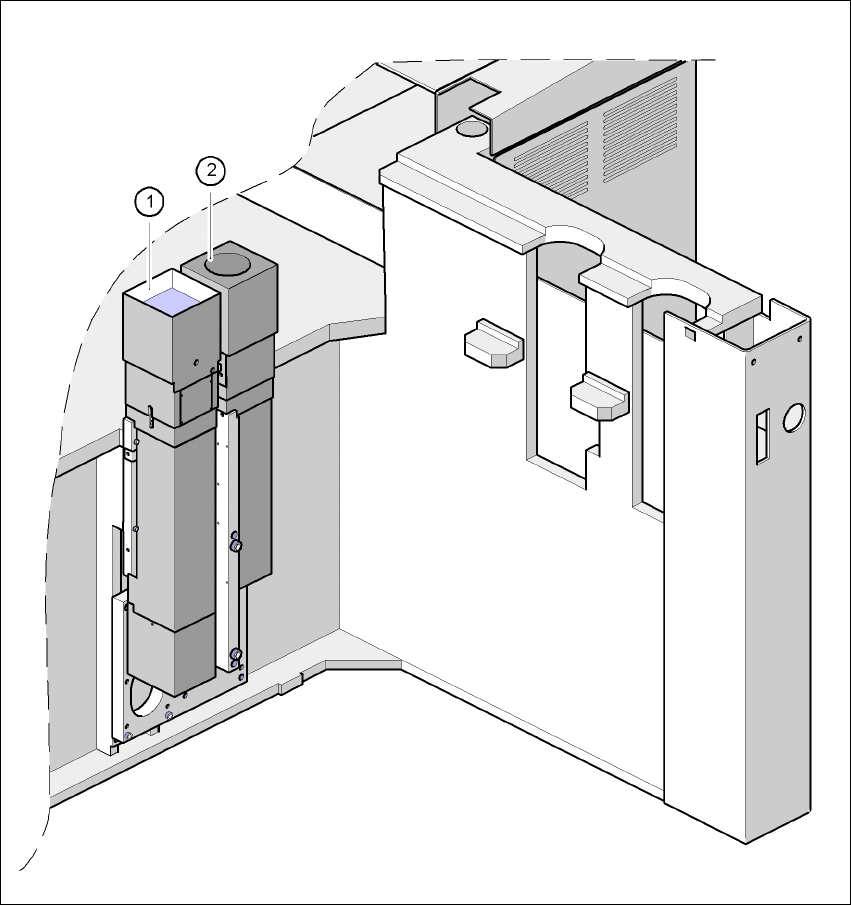
Fig. 7.8 - 1 Vision module for the Pick&Place head
(1) Fine-pitch vision module for the Pick&Place head
(2) Flip-chip vision module for the Pick&Place head

User Manual SIPLACE F5 HM 7 Options
Software Version SR.408.xx 03/2006 US Edition 7.8 Flip-chip vision module for the Pick&Place head
203
7.8.1 Description of the functions
The flip-chip vision module increases the capability for processing fine-pitch and flip-chip compo-
nents with extremely fine lead pitches. This add-on module for the fine-pitch vision module
increases the resolution many times. The lighting layout is fundamentally different. At optimal illu-
mination, the images of bumps are as large as possible, and disruptive orthogonal structures (as
can occur on chip printed conductor tracks, for example) are suppressed. With less pronounced
disruptive structures, enhanced illumination intensity can be achieved by combining lighting fix-
tures resulting in high recognition reliability, even with the generally square connection surfaces
of ‘bumped’ flip-chips as used in conductive adhesive technology. Special search algorithms are
used to recognize the bumps in environments subject to disruption.
7.8.2 Technical data
Flip-chip size
with single measurement
with multiple measurement
1 x 1 mm²
up to 7 x 9 mm²
up to 20 x 20 mm²
Dimensions < 3mmx6mm Special nozzle, feeding tolerance < 0.2 mm edge
length
Min. bump diameter 80µm
Placement cycle minimum 2 sec (depending on the number of bumps)
IC pitch:
Lead pitch
Bump pitch
0.25 mm
0.15 mm
Field of vision 9 x 11.5 mm²
Method of illumination Front lighting (three levels, programmable as
required)
7 Options User Manual SIPLACE F5 HM
7.9 Coplanarity laser module Software Version SR.408.xx 03/2006 US Edition
204
7.9 Coplanarity laser module
7.9.1 Description of the functions
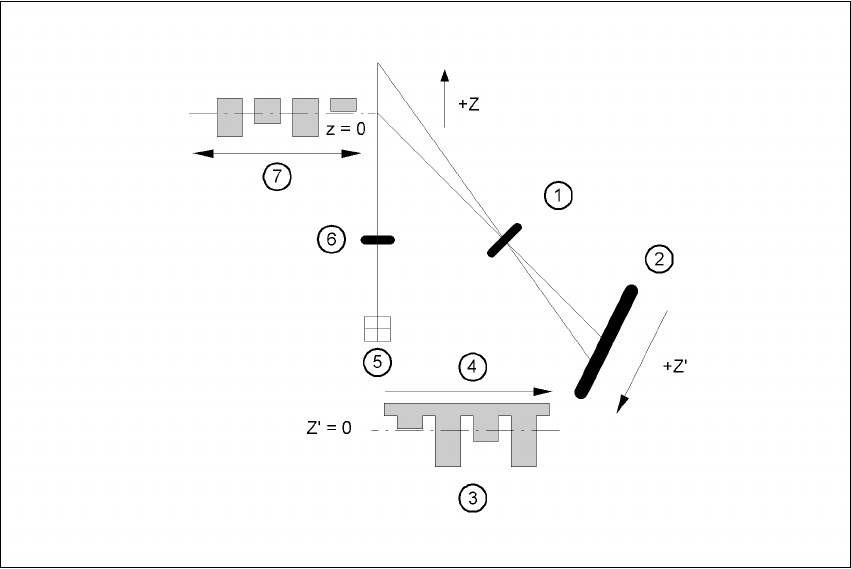
The coplanarity laser module is used to measure vertical bending of the leads. The lead length is
measured without contact using the laser triangulation principle.
The placement head picks up the component to be checked, centers it optically using the IC
camera and moves all four sides one after another over the fixed laser beam of the coplanarity
laser module. In this way, every lead is scanned from below by the laser beam. The laser light
scattered by the underside of the lead is recorded by a sensor, and is then used to calculate the
exact position of the lead with respect to the PCB. The position values thus calculated are com-
pared against the limit value specified by the user. If they exceed this value, the component is
disposed of or returned.
Fig. 7.9 - 1 Laser triangulation measurement principle
(1) Receiver lens (2) Detector
(3) Measuring signal (4) Time t
(5) Laser (6) Transmitter lens
(7) Travel direction