00191657-0102_UM_Luftkissentransportsystem_DE EN.pdf - 第64页
Operating Instruct ions Air cushion transporting system for SIPLACE 5.2 Preparing the load to be transported 10/99 edition 22 : The she ets can al so be but ted toge ther , if necessa ry . : Cover r ough floor s, cabl e …
Air cushion transporting system for SIPLACE Operating Instructions
10/99 edition 5.1 Prepare the route to be taken
21
5 Operating instructions
Air cushion transporting systems are designed to prevent almost all serious errors during use,
provided that the above points such as working load, compressed air supply and surface finish
are observed. 5
The following points will make them even easier to use: 5
5.1 Prepare the route to be taken
DANGER
Do not exceed the load-bearing capacity of the floor. 5
5
: Remove all metal swarf, dirt, etc, from the ground to prevent increased wear of or damage to
the air cushion.
: Check the floor surface:
It should be airtight and smooth (see Tab. 4.3 - 1).
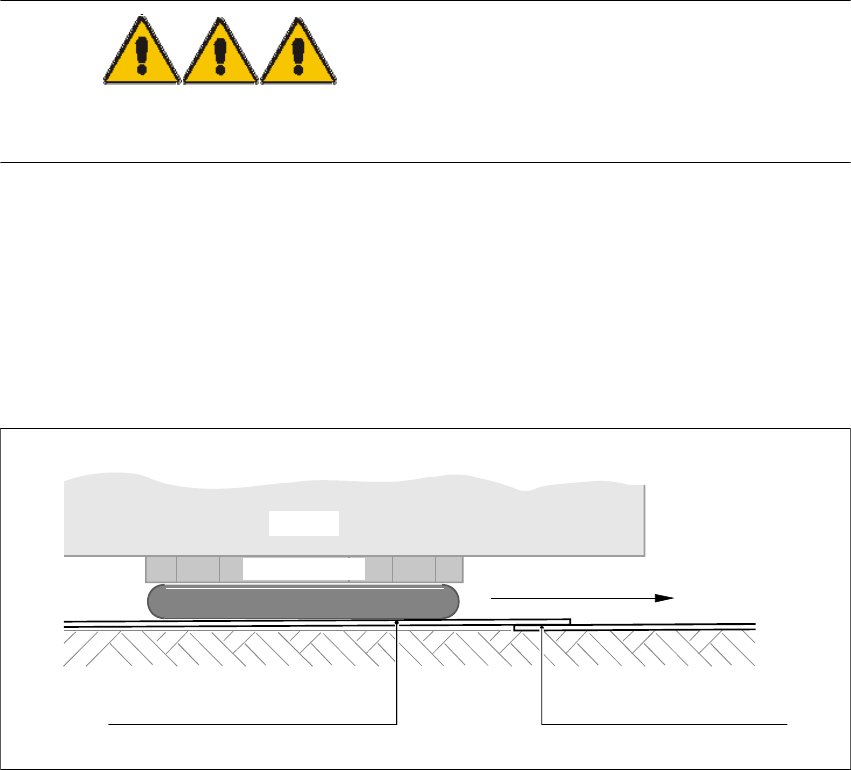
: Cover any cracks with adhesive tape or use metal sheets (no more than 0.5 to 1 mm thick).
5
Fig. 5.1 - 1 Covering the floor with overlapping metal sheets
: Make sure that the sheets always overlap in the transport direction.
Metal sheet 0.5 - 1.0 mm thick
Air cushion
Load
Overlap sheets and attac
h
adhesive tape, if necessa
ry
Transport direction
Operating Instructions Air cushion transporting system for SIPLACE
5.2 Preparing the load to be transported 10/99 edition
22
: The sheets can also be butted together, if necessary.
: Cover rough floors, cable ducts, etc, with 1 mm thick sheets.
: The joints must be clean before the adhesive tape is attached.
: Check for potential obstacles such as narrow or low doors, door sills, etc.
5
If the air cushions can be pushed under the load to be transported: 5
Transport height = Height of load to be transported + inflated height 5
If the load to be transported has to be placed on the air cushions: 5
Transport height = Height of load to be transported + inflated height + height of air cushion
module 5
WARNING RISK OF CRUSHING 5
: If the floor is not horizontal, secure the load well to prevent it slipping off.
5
5.2 Preparing the load to be transported
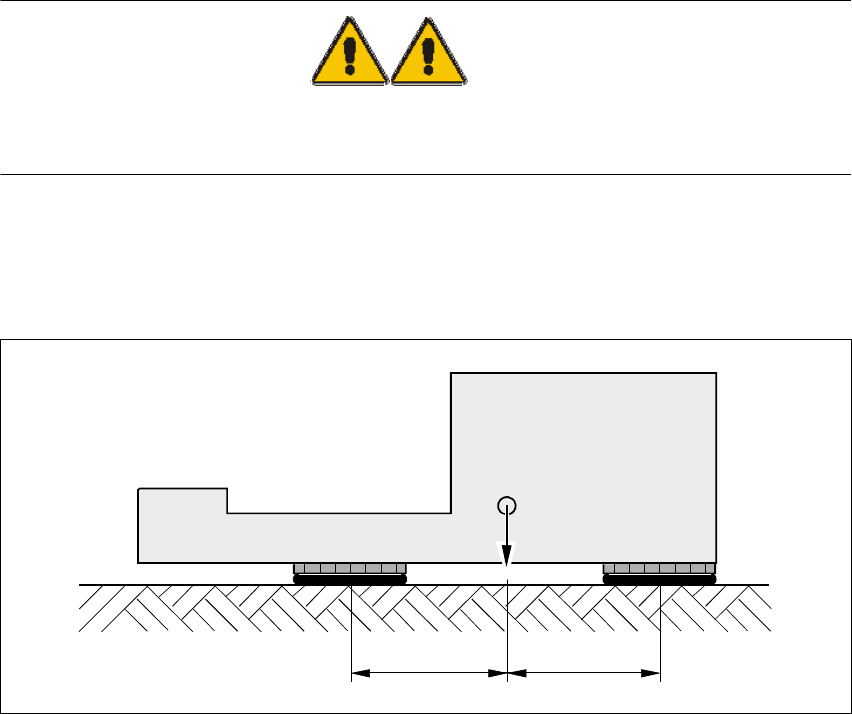
Fig. 5.2 - 1 Distribution of the air cushions about the load’s center of gravity
: To ensure that the load is stable, arrange four (or at least three) air cushion modules as far
apart as possible beneath the load to be transported.
==
Center of gravity of load
Air cushion transporting system for SIPLACE Operating Instructions
10/99 edition 5.2 Preparing the load to be transported
23
: The center of gravity should be as central as possible between the modules.
: Make sure that the air cushions are not tilted.
Warning:
All loose or moving parts on the load to be transported must be secured to prevent people being
injured by parts that fall off or swing out. Sharp or pointed edges and parts must be made safe.
WARNING RISK OF INJURY
Everything on the load to be transported that could represent a hazard if damaged (e.g. glass,
leakage of gas or liquid) must be firmly secured. Any containers filled with liquid must be sealed.5
5
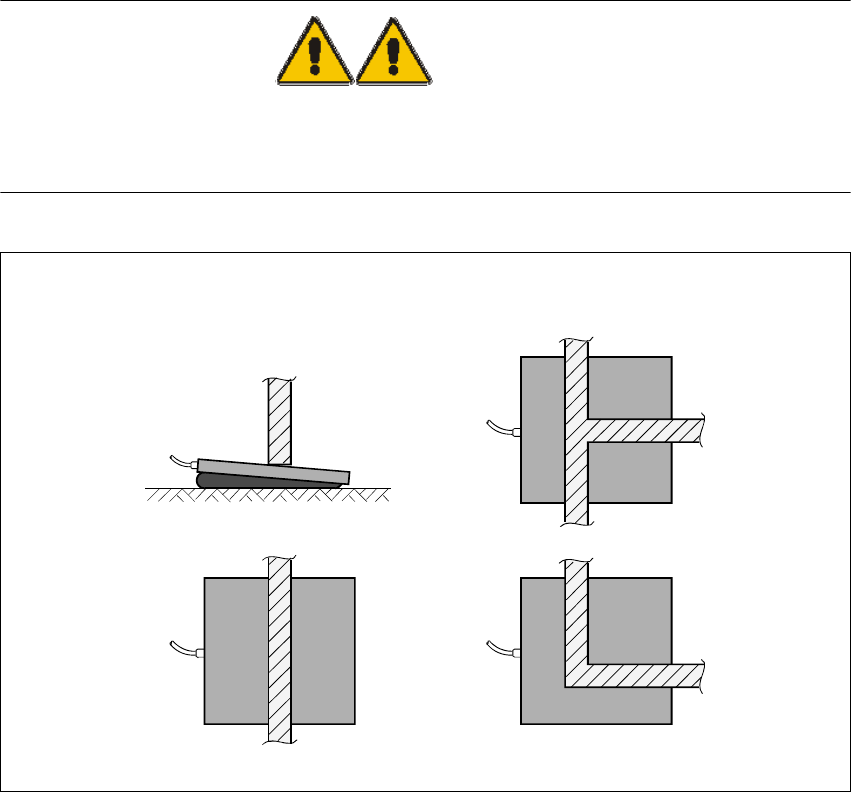
Fig. 5.2 - 2 Possible arrangements / positions
: The contact surface must not be too narrow, otherwise the air cushion could tip over.
: The contact surface of the load to be transported should ideally cover 2/3 of the air cushion
supporting plate.
RightWrong