TRS Advanced WB Intel Issue 02.pdf - 第32页
TRS Advanced Maintenance 32 Issue 2, Nov 14 7. Undo 6 off M5x16 cap head screw s from the rail cap assembly to release the guide rods. NOTE Do not remove the screws from t he rail cap assembly (clamping block). WARNING N…
Issue 2, Nov 14
TRS Advanced Maintenance
31
Removing Rail Cap from the Printer
1. Drive the rising table to print height.
2. Drive print carriage to rear of the machine.
3. Drive rails to minimum width.
4. Turn the power OFF.
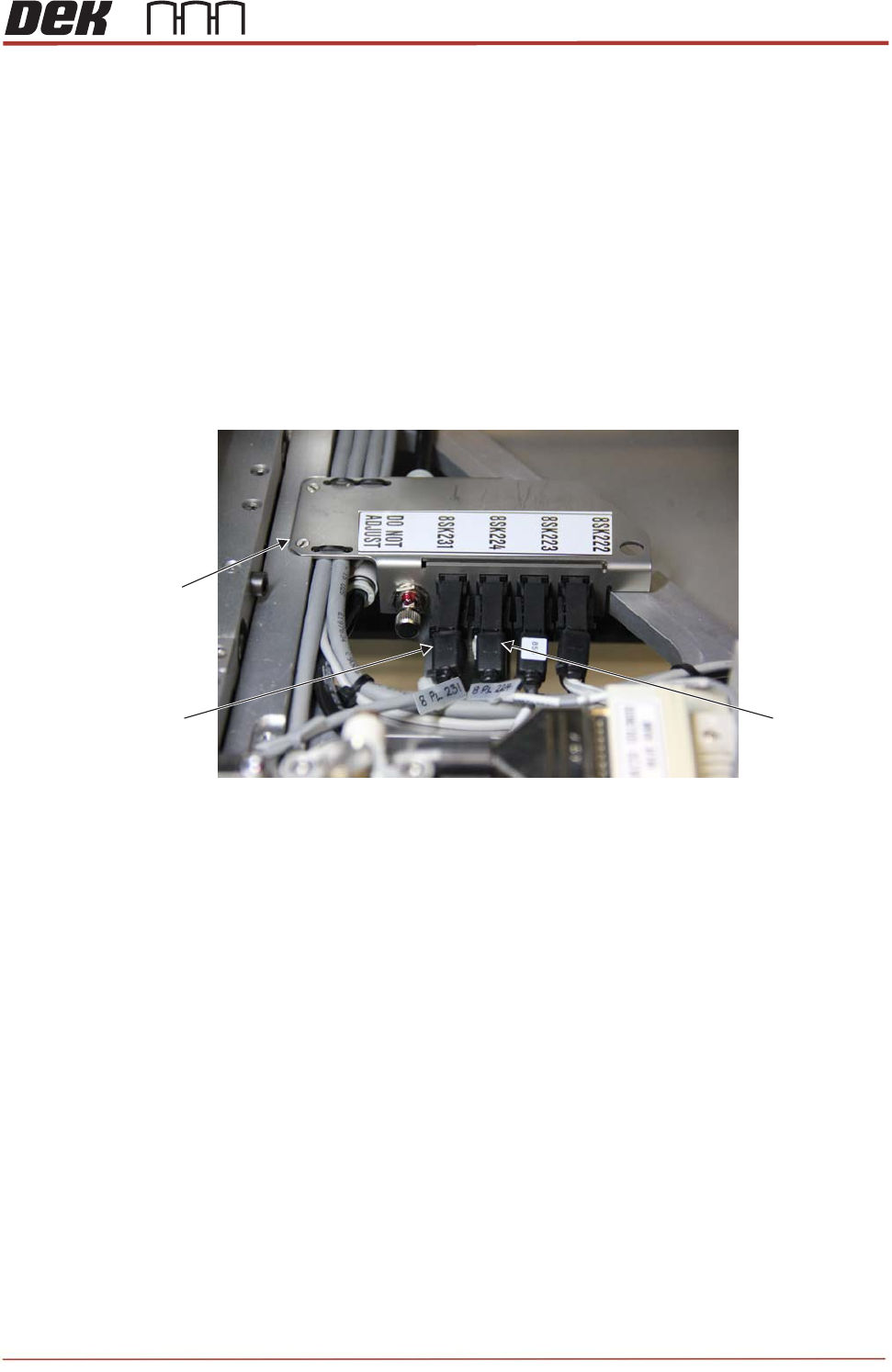
5. Locate looms 215208 and 215210 connected between the rail cap and the interface cover.
Disconnect connectors 8PL231 and 8PL224 from the interface cover. Remove all cable
ties and note the routing of the looms.
6. Disconnect rail cap snugger pipes from Y fitting (behind the rear rail).
8PL231 8PL224
Interface Cover
TRS Advanced Maintenance
32
Issue 2, Nov 14
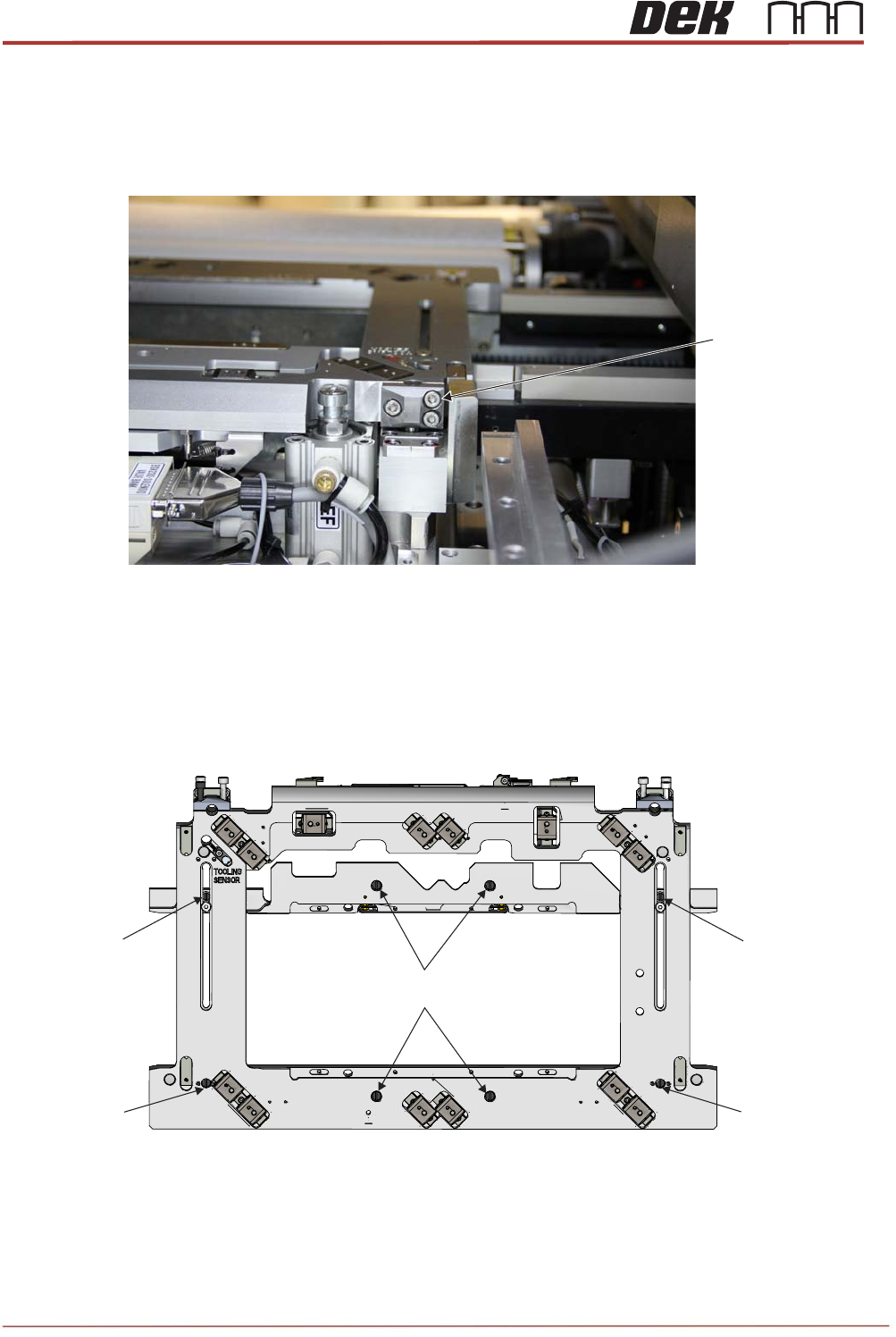
7. Undo 6 off M5x16 cap head screws from the rail cap assembly to release the guide rods.
NOTE Do not remove the screws from the rail cap assembly (clamping block).
WARNING
Never remove the guide rods from the bearing assembly in any circumstance.
8. Remove the current rail cap assembly from the rails by removing 8 off screws as shown
below.
M5x16 Cap
Head screws
Viewed from the Rear of the Machine
M4x8 Countersunk
Screws
M4x8 Countersunk
Screws
M4x25 Pan Head Screws
(4 Positions)
M4x16 Pan
Head Screws
M4x16 Pan
Head Screws
View on Rail Cap Assembly
Issue 2, Nov 14
TRS Advanced Maintenance
33
Fitting the Rail Cap to the Printer
1. Ensure Rising Table is at the print height.
2. Fit the rail cap onto the rails with locating the four locating plates into position and
engage the clamping blocks with the alignment bearing guide rods.
NOTE
Engage the rail width home sensor vane (on the rear rail) into the sensor (on the rail cap)
without damaging it.
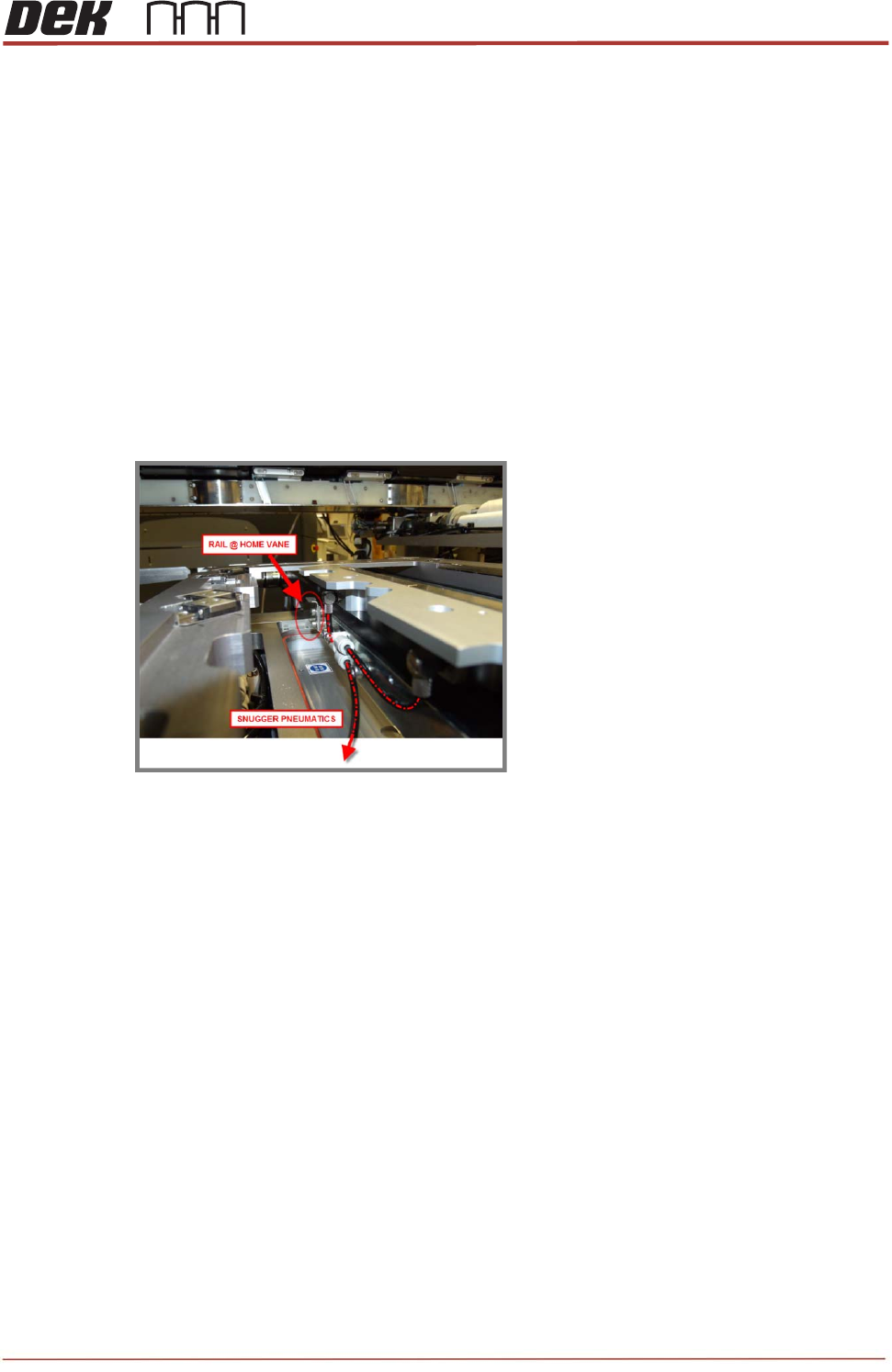
3. Connect the short snugger pipe (on the right side of the rail cap) in to the single inlet of
the “Y” fitting behind the rear rail, as shown below.
4. Connect the other snugger pipe (on the left side of the rail cap) in to the one of the outlet
on the “Y” fitting, as shown above.
NOTE
Make sure they are not stretched or creased.