D-serie level 1 EN.pdf - 第174页
SIPLACE Vision Optical Fiducial Models Inkspot Recognition S tuden t Guide Advanced Level 1 SIPLACE D-Series SIPLACE Vision EN 05/2007 10-8 10.1.3.2 Patterns as Inkspot s Other, non-synthetic shape s and structur es are …
SIPLACE Vision
Inkspot Recognition Optical Fiducial Models
Student Guide Advanced Level 1 SIPLACE D-Series
EN 05/2007 SIPLACE Vision
10-7
10.1.3 Inkspot Recognition
There are various programming options for inkspot recognition.
The following measurement results are issued for the structure found:
10.1.3.1 Synthetic Inkspots
Nine different synthetic shapes can be programmed. Similar to teaching, the shape, dimensions and the
optical impression – light or dark – of the positive inkspot need to be taught. If the shape is recognized,
the inkspot will be accepted as a positive inkspot for placement. If the shape is not found in the search
field, the inkspot is understood to be a negative inkspot (no time loss for missing structure) and will not
be placed or, in the case of global inkspots, the local panel inkspots will be approached in the case of
no recognition.
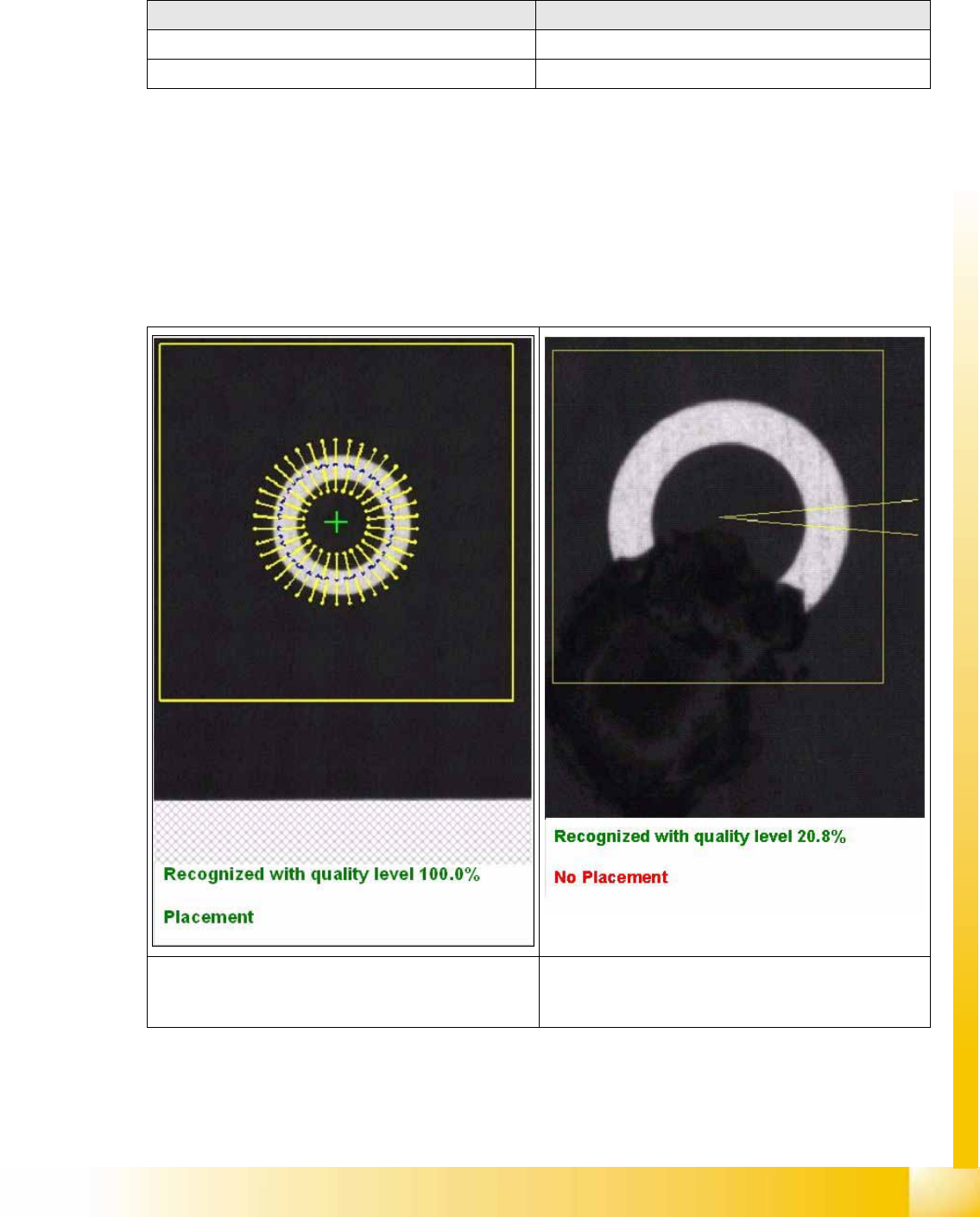
When teaching the fiducial: When centering the fiducial:
=> X/Y position values for approach during teaching => No results shown
=> Placement information:place/omit => Placement information: place/omit
The top diagram shows the fine search procedure for
teaching synthetic inkspots, with the corresponding
results.
This diagram above shows the results for an inkspot
which has been marked as bad.
SIPLACE Vision
Optical Fiducial Models Inkspot Recognition
Student Guide Advanced Level 1 SIPLACE D-Series
SIPLACE Vision EN 05/2007
10-8
10.1.3.2 Patterns as Inkspots
Other, non-synthetic shapes and structures are taught as good or bad cases.
All images which have been taught are shown in separate fields, with their results.
Teaching is possible in two steps, before placement:
The positive inkspot is taught first, followed by the transportation of a PCB with negative inkspot into the
station, so that the negative inkspot can then be taught.
This taught inkspot has three areas:
Positive inkspot for placement
Negative inkspot for omission
If in doubt (if you are unable to assign the inkspot because, for example, the inkspot has not been
correctly struck through). After completion of the teaching procedure, press the Automatic button.
The teaching function/procedure:
Select the inkspot to be taught from the fiducials list.
Place the board (with the various inkspots) into the input conveyor; press the Center fiducial button
to transport the board into the processing conveyor, where it will be clamped into place and the
gantry is positioned over the first inkspot.
Teach the inkspot accordingly, as either positive or negative in the Geometry menu.
Press Move to next fiducial until the second version of the inkspot appears under the camera.
Teach this inkspot with the same fiducial field.
After completion of the teaching procedure, press the Automatic button.
NOTE:
For bad mark teaching (ink spot) the fiducial area center is linked to the camera center.
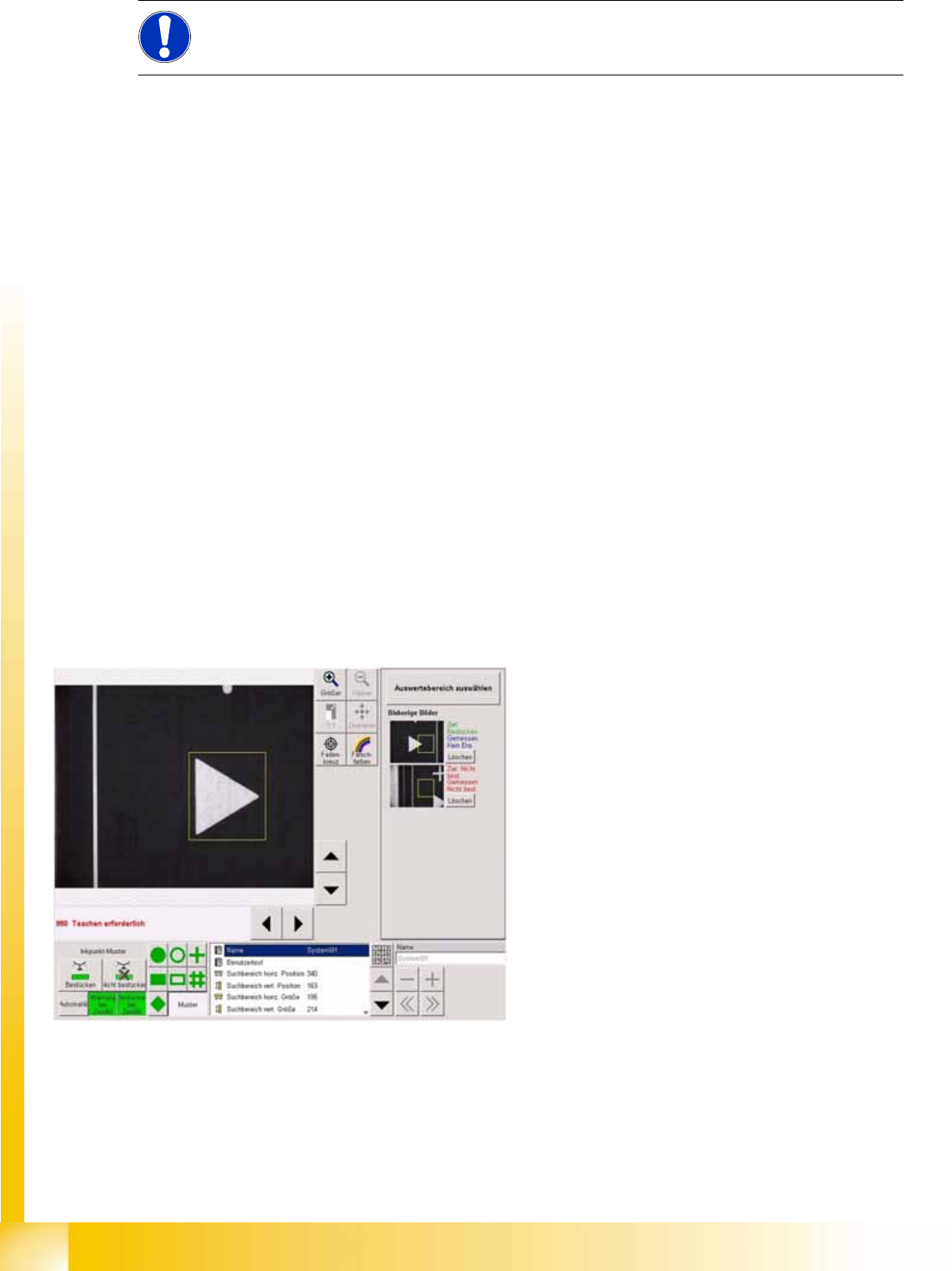
10-2: SC pattern as inkspots 01 0505
The programmed inkspot coordinates position the
camera above the fiducial, so that the evaluation
area can be programmed.
SIPLACE Vision
Inkspot Recognition Optical Fiducial Models
Student Guide Advanced Level 1 SIPLACE D-Series
EN 05/2007 SIPLACE Vision
10-9
10.1.3.3 The Histogram Method
With this method, each teach image is given standardized brightness but not standardized contrast. If
there are multiple teaching images available for a particular class, an average histogram will be
calculated.The model therefore consists of one histogram for the good case and one for the bad
case.During classification, the histogram is calculated for the evaluation area of the current image and
is then compared to the two model histograms, to ascertain whether there is any deviation.The image is
then assigned to the class (good or bad) from which it deviates less.
The following example illustrates this procedure:
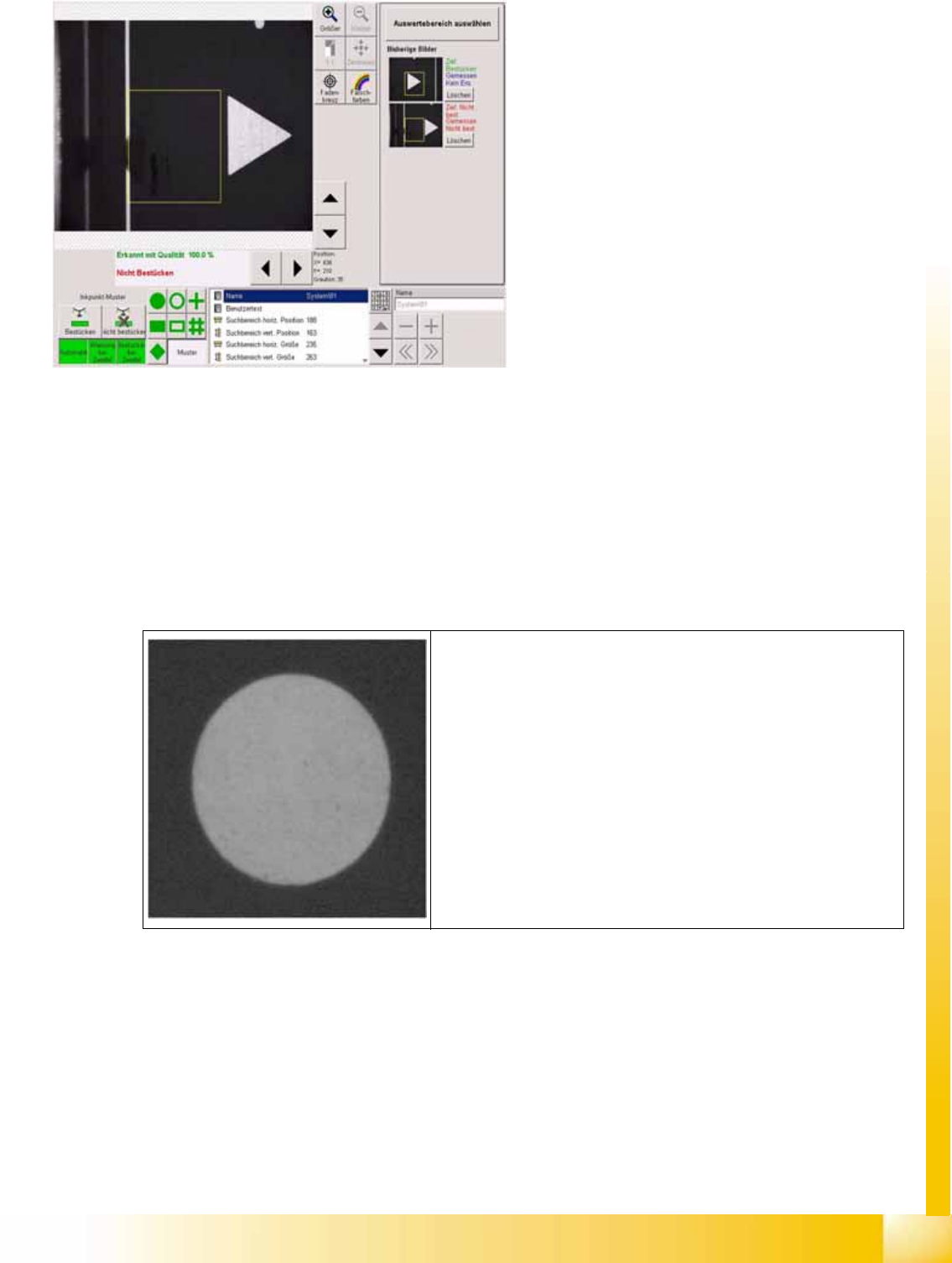
10-3: SC pattern as inkspots 02 0505
For the negative inkspot, either position above
another fiducial or teach manually to the position
of the label. Alternatively, you can mark the
positive inkspot accordingly.
Teaching image place:
Light-colored circular fiducial on dark background