晶圆测试说明书Cascade-11861-6-Manual.pdf - 第68页
44 • Summit 11K/12K Probe Station User’ s Guide C AUTION P ositioners are prec ision instr uments, so handle them car efully . A void bumping or dropping the posit ioners. A void handling t hat scratches or causes b urrs…
Chapter 3: Installing •
43
• If the indicator’s reading was positive, adjust the front setscrews on both sides
a thousandth of an inch past zero.
• If the indicator’s reading was negative, adjust the back setscrews on both sides
a thousandth of an inch past zero.
Note that tightening the 8-32 screws will bring the indicator reading back to
zero.
Recheck and repeat the steps if necessary.
If you have questions about replanarizing the optics bridge, contact your Cascade
Customer Service.
INSTALLING POSITIONERS AND PROBES
You can mount these positioner types on this probe station: magnetic or vacuum-
based DCM positioners and fixed-mount RF style positioners.
To mount positioners and adjust probes, see the following documents:
• Microwave Probe Positioner User Guide (P/N 101-179)
• RF Positioner Installation Instructions (P/N 106-338)
To mount DCM positioners
Except for the rear port that interferes with the microscope, you can mount the
DCM positioner at any seal in the TopHat, if you have a MicroChamber. See
figure 36.
Procedure
1. Lower the Z-lever to lower the platen. This position keeps the probe head
from crashing into the chuck after installation.
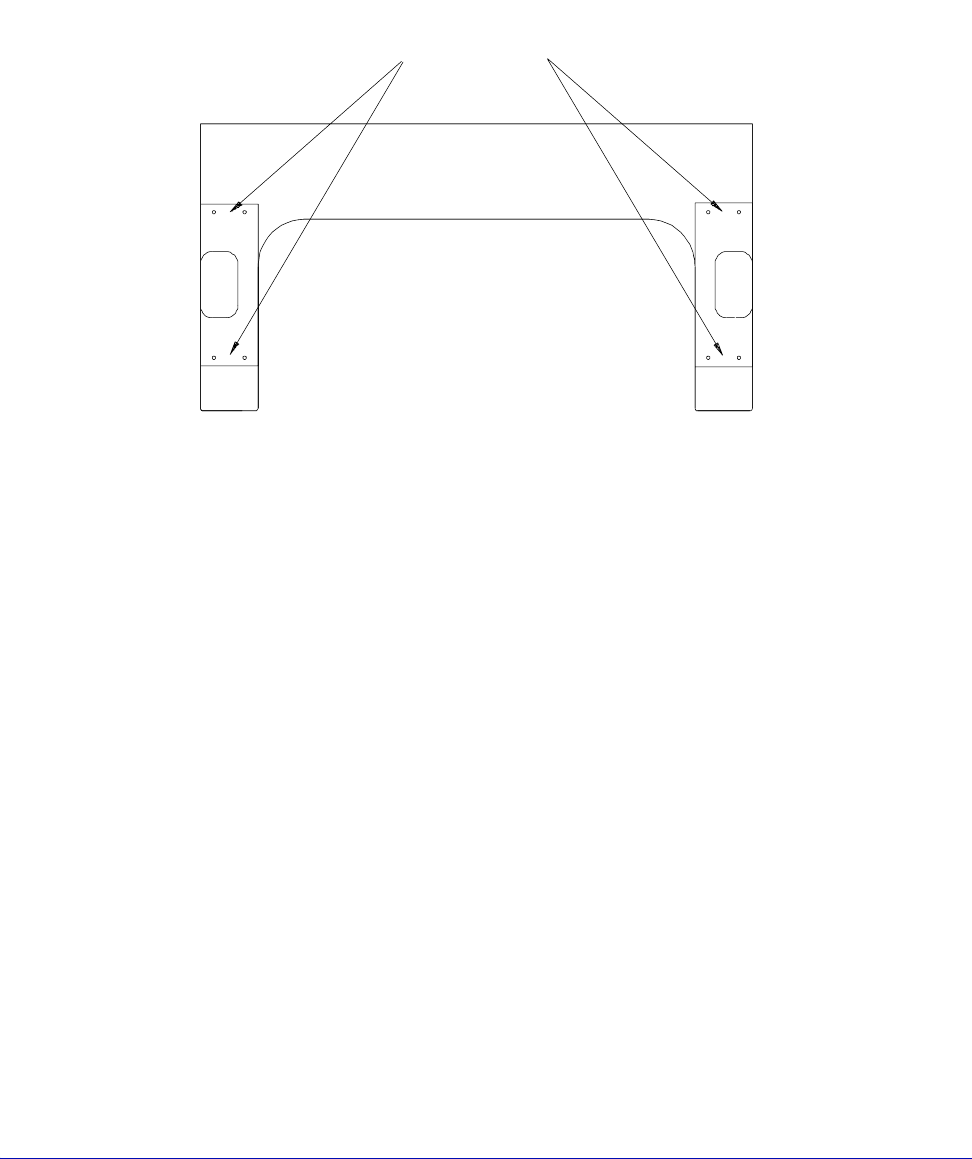
Holes for Adjustment
Screws (8)
Fig. 31. Screw location for planarization.
44
• Summit 11K/12K Probe Station User’s Guide
C
AUTION
Positioners are precision instruments, so handle them carefully. Avoid bumping or
dropping the positioners. Avoid handling that scratches or causes burrs on mating
surfaces.
2. Inspect the surface of the positioner, the positioner mounting plate, and the
platen. They should be free of contaminants.
3. Adjust the Z-axis knob counterclockwise to raise the positioner all the way
up. This ensures clearance between the chuck top and the probe you install.
4. Set the X-axis and Y-axis knobs in the center of their range.
5. Place the positioner close to where you want it once you mount the probe.
6. If this is a vacuum positioner, connect vacuum to one of the vacuum barbs on
the connection panel and flip the switch on (up position).
7. Mount probes and probe cables.
To connect positioner vacuum
The optional vacuum manifold provides six to ten vacuum connectors for
Cascade's vacuum-mounted DC positioners. On the large-area optics bridge,
these vacuum connectors are in the center of the connection panel, on the rear of
the platen. On the high-stability optics bridge, the vacuum connectors are located
on the left and right sides, under the bridge.
1. Attach 1/16-inch (inside diameter) hoses to each DCM positioner vacuum
base.
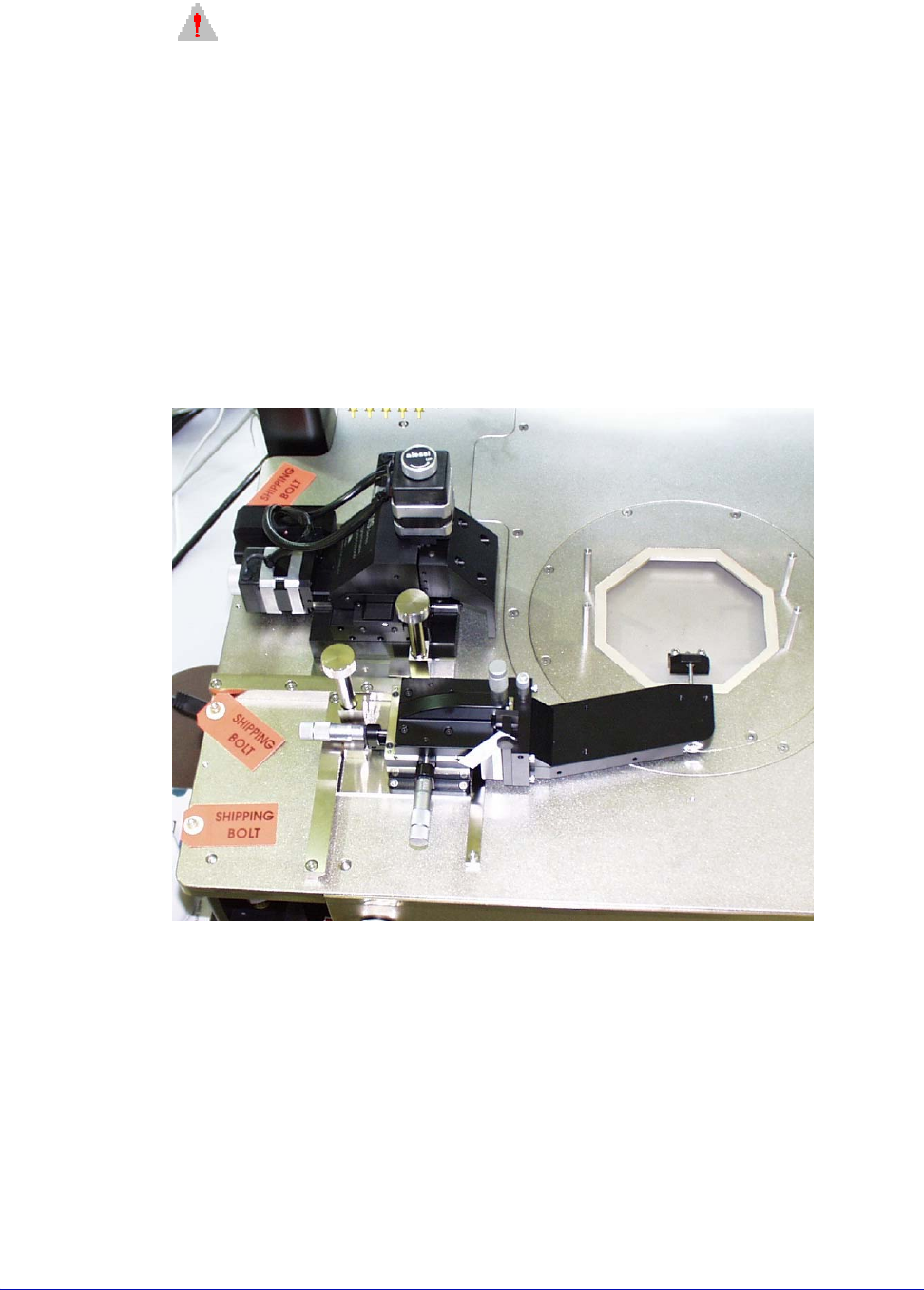
Fig. 32. MS1 positioner (without arm) and a south-positioned mount on platen.

Chapter 3: Installing •
45
2. Attach the other end of each hose to a connector on the connection panel.
3. Attach an 1/8-inch (inside diameter) hose from the connector on the back of
the vacuum manifold to your vacuum pump.
NOTE
With enough capacity, you can use the same vacuum pump for both the chuck
vacuum and the vacuum manifold. Otherwise, use separate vacuum pumps.
To use the same vacuum pump for the chuck vacuum and the vacuum manifold,
use a tee fitting to connect into the vacuum hose attached to the rear of the probe
station.
4. Flip on (“up” position with switch configuration or push-in with valve
configuration) all the vacuum connectors that you are using. Turn off all
unused connectors.
CAUTION
Loss of vacuum can cause probe tips to crash. Be careful not to accidentally turn
off any vacuum connectors or the vacuum pump.
If you are using the same vacuum pump for both the chuck vacuum and the
positioner vacuum, loss of vacuum can cause loss of hold down for your wafer and
positioners.
5. Turn on the vacuum pump.
6. While holding down the vacuum release valve on the positioner base,
position the DCM positioner.
7. Release the vacuum release valve to clamp the DCM positioner in place.
MOUNTING RF POSITIONERS
East-west
positioners are 0°
positioners; north-
south positioners
are 90° positioners.
You can mount up to four RF positioners in the fixed positions on the platen. See
figure 33 on p. 46.
To use four RF probes on the probe station, you need two 0° positioners and two
90° positioners. You mount the 0° positioners on the platen's right and left sides
and the 90° positioners on the platen's front and rear sides.