00198442-04_UM_TX-V2_EN.pdf - 第200页
4 Setting up and commissioning In struction manual SIPLACE TX 4.5 Setting up the placement mac hine From software version 714.0 12/2020 200 4.5.5.1 Safety instructions During transport ation, also obser ve the safety i…
Instruction manual SIPLACE TX 4 Setting up and commissioning
From software version 714.0 12/2020 4.5 Setting up the placement machine
199
4.5.5 Positioning the placement machine in the line
In order to place the placement machine in a line or lift it out of a line, you must be able to lift the
placement machine at the locations. To so this, you MUST use a pallet truck which complies with
the specifications (see section 4.5.5.3
, page 202) (not a fork-lift!). The center of placement ma-
chine gravity is outside the placement machine center (see section 3.3.3
, page 115). Steel spacers
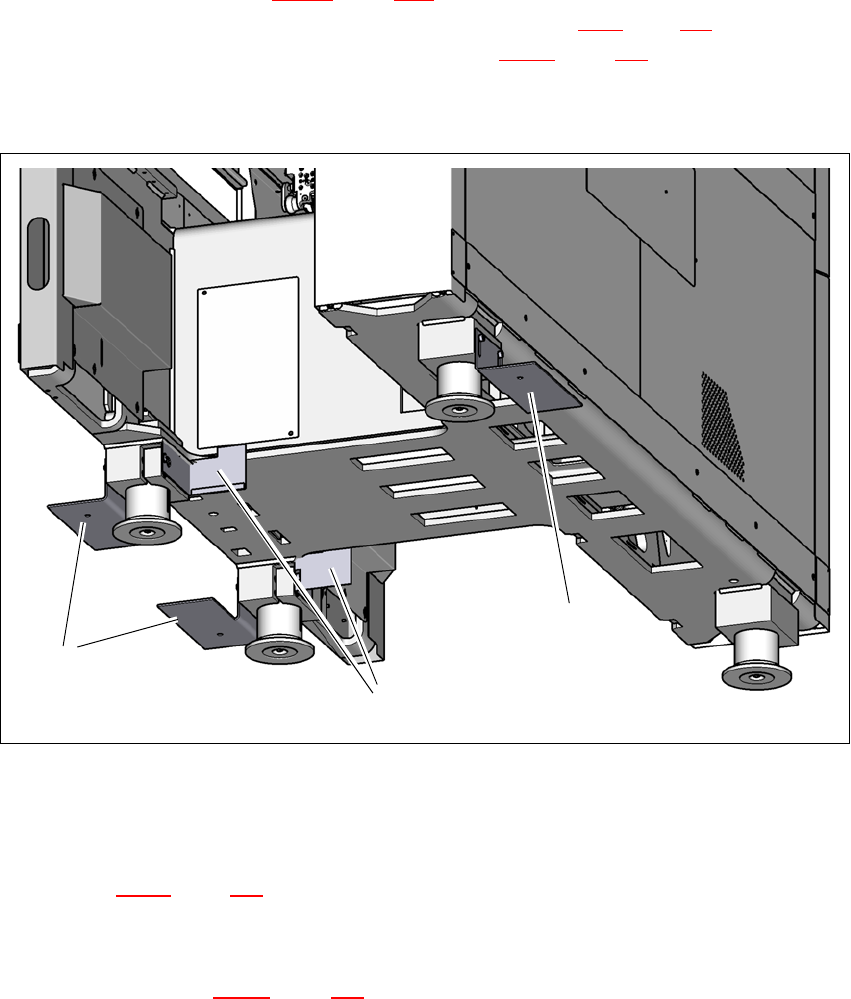
at the locations for limiting the fork position (item 2 in fig. 4.5 - 3
, page 199) ensure that the pallet
truck can be optimally positioned and therefore compensate the eccentric center of placement
machine gravity.
4
Fig. 4.5 - 3 Steel spacers at the locations to limit the fork position
(1) Shipping braces with steel spacer
(2) Steel spacers to limit the fork position of the pallet truck
The diagram 4.5 - 4
, page 201 shows the fork-lift attachment points on the placement machine for
placing the placement machine in a line or lifting it out of a line.
If not present, now remove the shipping braces and steel spacers from the placement ma-
chine (item 1 in fig. 4.5 - 3
, page 199).
Keep the shipping braces for later use.
(2)
(1)
(1)
4 Setting up and commissioning Instruction manual SIPLACE TX
4.5 Setting up the placement machine From software version 714.0 12/2020
200
4.5.5.1 Safety instructions
During transportation, also observe the safety instructions in section 4.1, page 171 and in
section 4.3.1
, page 181.
4
4
4
4
DANGER
Risk of placement machine tilting due to eccentric center of gravity!
There is a risk of tilting if the required specifications for the fork-lift and the attachment
points on the placement machine are not observed!
The placement machine may only be lifted at the locations using the specified pallet
truck. The pallet truck must compensate the eccentric center of placement machine
gravity. Observe the specifications of the pallet truck (see section 4.5.5.3
, page 202).
WARNING
Risk of damage due to one-sided loading!
One-sided loading of the machine feet e.g. from tilting the machine, can lead to deforma-
tion of the machine feet.
Make sure that the forks are evenly loaded when you lift the placement machine.
Use a firm support layer between the forks and the placement machine.
Enlist the help of a second person to watch while you lift the placement machine and
make sure that the placement machine does not tip over to one side.
WARNING
Take care of the supply channel!
Lifting the SIPLACE TX over a supply channel which is run under the placement machine
is not permitted. There is a risk that the SIPLACE TX could fall off the pallet truck.
If a supply channel has been run under the placement machine position, before the
SIPLACE TX is positioned in the placement line, then this supply channel must be
removed again.
Instruction manual SIPLACE TX 4 Setting up and commissioning
From software version 714.0 12/2020 4.5 Setting up the placement machine
201
4.5.5.2 Fork-lift attachment points on the placement machine
A pallet truck may be used to lift the placement machine at the locations, to place it in the line or
lift it out of the line.
4
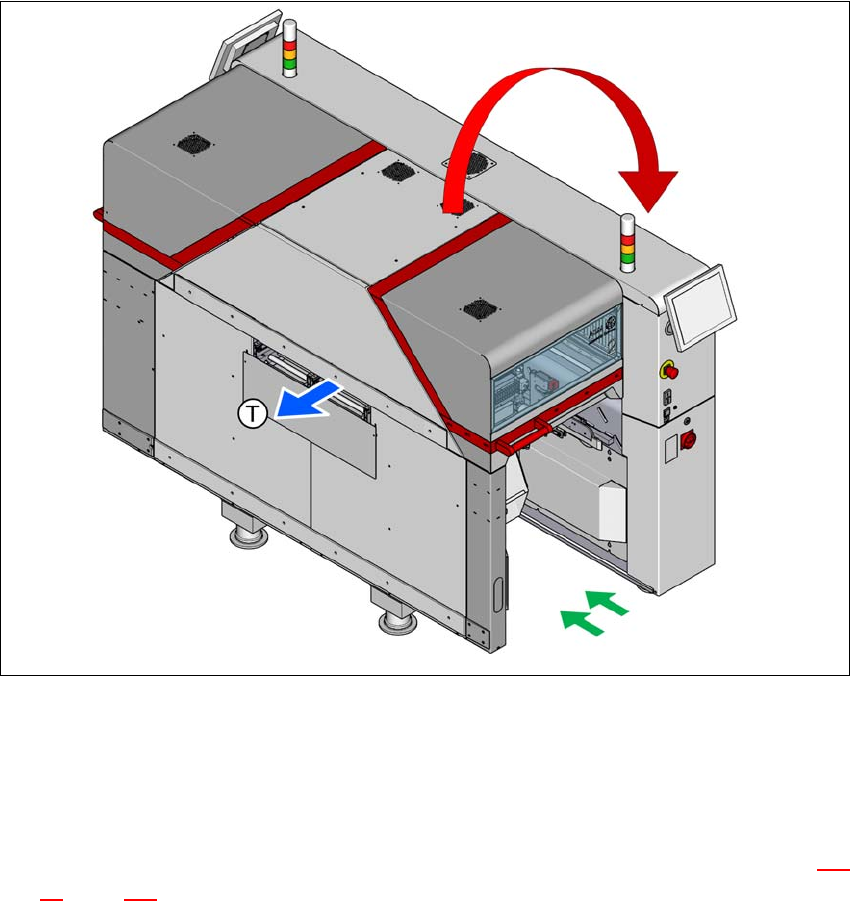
Fig. 4.5 - 4 Placing the machine into a line or lifting it out of a line
(T) Direction of travel for PCB conveyor
(1) Pallet truck forks
(2) Risk of tilting due to eccentric center of gravity.
Position the forks of the pallet truck in the location area. The steel spacers (item 2 in fig. 4.5
- 3, page 199) limit the fork position so that the center of placement machine gravity is com-
pensated.
Open the forks until the forks are up against the metal sheets for limiting the fork positions
and the contact surfaces of the placement machine can lie evenly on the forks.
Push the forks into the location area, so that the placement machine can lie safely along the
whole length of the forks.
Positioning the placement machine in the line.
(2)
(1)