IPC-CM-770D-1996.pdf - 第12页
IPC-CM-770 Januaty 1996 20.0 20.1 20.2 20.3 20.4 21 .o 21.1 21.2 21.3 21.4 21.5 21.6 22.0 22.1 22.2 22.3 22.4 23.0 23.1 23.2 23.3 23.4 24.0 24.1 24.2 24.3 24.4 24.5 24.6 24.7 24.8 25.0 25.1 25.2 25.3 25.4 Table of Conten…
January
1996
IPC-CM-770
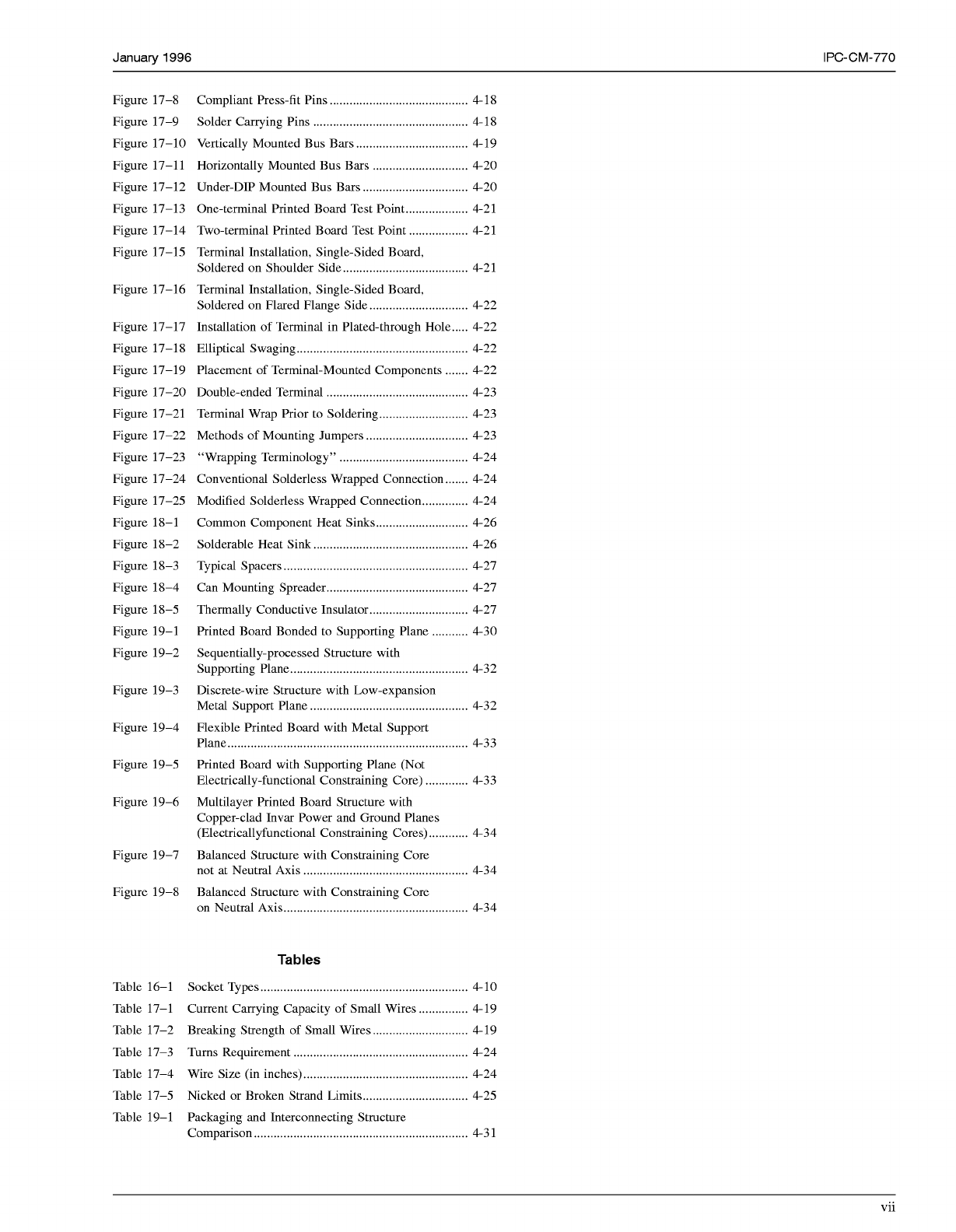
Figure 17-8
Figure 17-9
Figure 17-10
Figure 17-11
Figure 17-12
Figure 17-13
Figure 17-14
Figure 17-15
Figure 17-16
Figure 17-17
Figure 17-18
Figure 17-19
Figure 17-20
Figure 17-21
Figure 17-22
Figure 17-23
Figure 17-24
Figure 17-25
Figure 18-1
Figure 18-2
Figure 18-3
Figure 18-4
Figure 18-5
Figure 19-1
Figure 19-2
Figure 19-3
Figure 19-4
Figure 19-5
Figure 19-6
Figure 19-7
Figure 19-8
Table 16-1
Table 17-1
Table 17-2
Table 17-3
Table 17-4
Table 17-5
Table 19-1
Compliant Press-fit Pins
..........................................
4-18
Solder Carrying Pins
...............................................
4-18
Vertically Mounted Bus Bars
..................................
4-19
Horizontally Mounted Bus Bars
.............................
4-20
Under-DIP Mounted Bus Bars
................................
4-20
One-terminal Printed Board Test Point
...................
4-21
Two-terminal Printed Board Test Point
..................
4-21
Terminal Installation. Single-Sided Board.
Soldered on Shoulder Side
......................................
4-21
Terminal Installation. Single-Sided Board.
Soldered on Flared Flange Side
..............................
4-22
Installation of Terminal in Plated-through Hole
.....
4-22
Elliptical Swaging
....................................................
4-22
Placement of Terminal-Mounted Components
.......
4-22
Double-ended Terminal
...........................................
4-23
Terminal Wrap Prior to Soldering
...........................
4-23
Methods of Mounting Jumpers
...............................
4-23
“Wrapping Terminology”
.......................................
4-24
Conventional Solderless Wrapped Connection
.......
4-24
Modified Solderless Wrapped Connection
..............
4-24
Common Component Heat Sinks
............................
4-26
Solderable Heat Sink
...............................................
4-26
Typical Spacers
........................................................
4-27
Can Mounting Spreader
...........................................
4-27
Thermally Conductive Insulator
..............................
4-27
Printed Board Bonded to Supporting Plane
...........
4-30
Sequentially-processed Structure with
Supporting Plane
......................................................
4-32
Discrete-wire Structure with Low-expansion
Metal Support Plane
................................................
4-32
Flexible Printed Board with Metal Support
Plane
.........................................................................
4-33
Printed Board with Supporting Plane (Not
Electrically-functional Constraining Core)
.............
4-33
Multilayer Printed Board Structure with
Copper-clad Invar Power and Ground Planes
(Electricallyfunctional Constraining Cores)
............
4-34
Balanced Structure with Constraining Core
not at Neutral Axis
..................................................
4-34
Balanced Structure with Constraining Core
on Neutral Axis
........................................................
4-34
Tables
Socket Types
...............................................................
4-10
Current Carrying Capacity of Small Wires
...............
4-19
Breaking Strength of Small Wires
.............................
4-19
Turns Requirement
.....................................................
4-24
Wire Size (in inches)
..................................................
4-24
Nicked or Broken Strand Limits
................................
4-25
Packaging and Interconnecting Structure
Comparison
.................................................................
4-31
vii
COPYRIGHT Association Connecting Electronics Industries
Licensed by Information Handling Services
COPYRIGHT Association Connecting Electronics Industries
Licensed by Information Handling Services
IPC-CM-770
Januaty
1996
20.0
20.1
20.2
20.3
20.4
21
.o
21.1
21.2
21.3
21.4
21.5
21.6
22.0
22.1
22.2
22.3
22.4
23.0
23.1
23.2
23.3
23.4
24.0
24.1
24.2
24.3
24.4
24.5
24.6
24.7
24.8
25.0
25.1
25.2
25.3
25.4
Table
of
Contents
.
Section
5
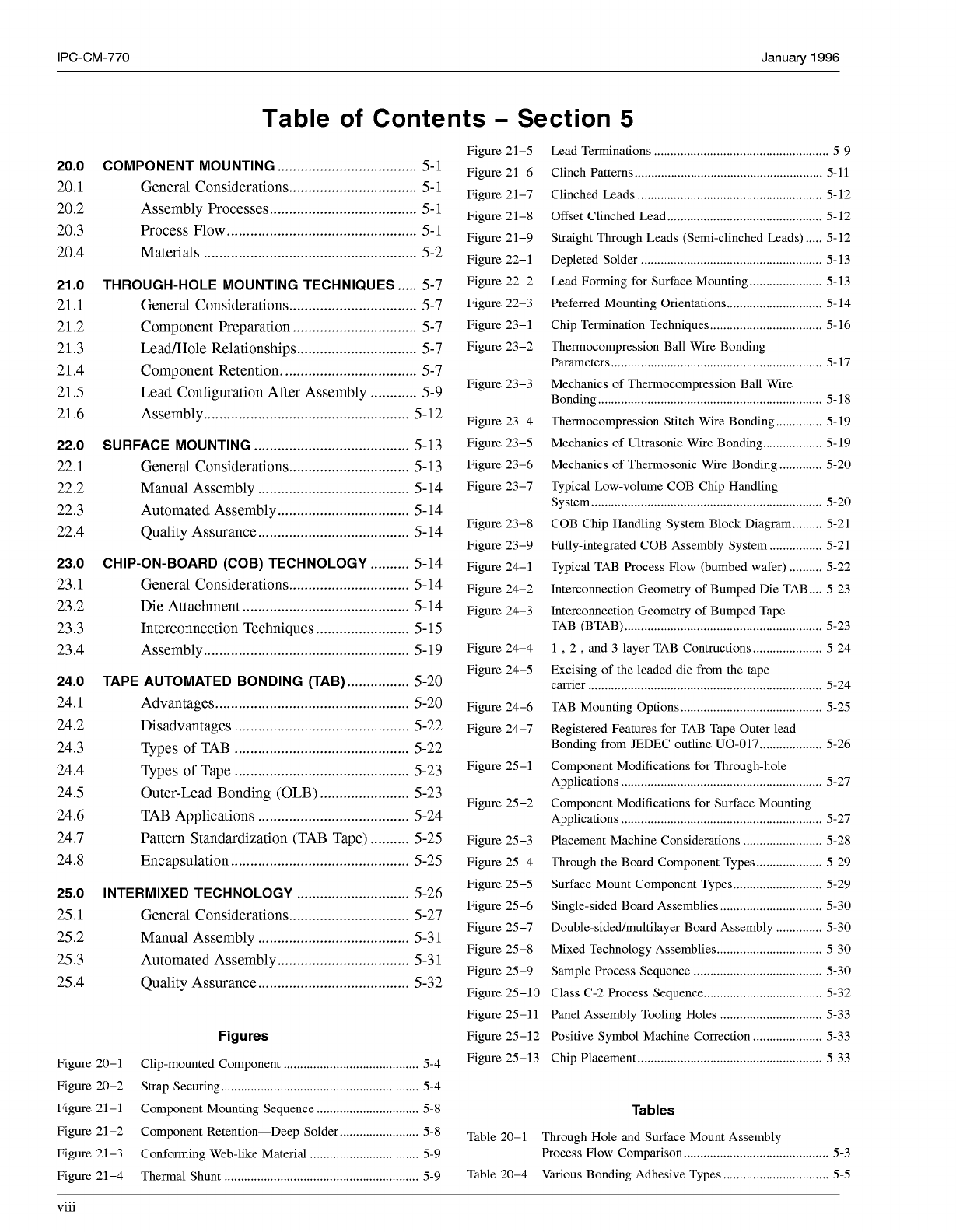
Figure 21-5 Lead Terminations
.....................................................
5-9
v
....................................
5-1
Figure 21-6 Clinch Patterns
.........................................................
5-11
General
Considerations""""""""""""""""'
5-1
Figure 21-7 Clinched Leads
........................................................
5-12
Figure 21-8 Offset Clinched Lead
...............................................
5-12
Figure 21-9 Straight Through Leads (Semi-clinched Leads)
.....
5-12
Figure 22-1 Depleted Solder
.......................................................
5-13
Assembly Processes
......................................
5-
1
Process Flow
.................................................
5-1
Materials
.......................................................
5-2
THROUGH-HOLE
MOUNTING
TECHNIQUES .....
5-7
Figure 22-2 Lead Forming for Surface Mounting
......................
5-13
General Considerations
.................................
5-7
Figure 22-3
Preferred Mounting Orientations
.............................
5-14
Component Preparation
................................
5-7
Figure 23-1
Chip Termination Techniques
..................................
5-16
LeadHole Relationships
...............................
5-7
Figure 23-2 Thermocompression Ball Wire Bonding
Component Retention 5-7
Lead Configuration After Assembly
5-9
................................................................
Parameters 5-17
...................................
Figure 23-3 Mechanics of Thermocompression Ball Wire
............
Bondine
....................................................................
5-18
u
Assembly
.....................................................
5-12
Figure 23-4 Thermocompression Stitch Wire Bonding
..............
5-19
......................................................................
Automated Assembly 5-14
Quality Assurance
.......................................
5-14
System 5-20
Figure 23-8 COB Chip Handling System Block Diagram
.........
5-21
Figure 23-9 Fully-integrated COB Assembly System
................
5-21
..................................
CHIP-oN-BoARD
..........
5-14
Figure 24-1 Typical TAB Process Flow (bumbed wafer)
..........
5-22
General Considerations
...............................
5-14
~i~~~~ 24-2 Interconnection
G~~~~~~
of
B d ~i~
TAB
....
5.23
Die Attachment
...........................................
5-14
~i~~~~ 24-3 Interconnection
G~~~~~~
of
Bumped
Interconnection Techniques
........................
5-15
TAB (BTAB) 5-23
Assembly
.....................................................
5-19
Figure 24-4
l., 2., and 3 layer TAB Contructions
.....................
5-24
............................................................
TAPE AUTOMATED BONDING (TAB)
................
5-20
Figure 24-5 Excising of the leaded die from the tape
carrier
.......................................................................
5-24
Advantages
..................................................
5-20
Figure 24-6 TAB Mounting Options
...........................................
5-25
Disadvantages
.............................................
5-22
Figure 24-7 Registered Features for TAB Tape Outer-lead
...................
Types of TAB 5-22
Types of Tape
.............................................
5-23
Figure
25-1
Modifications
for
Through-ho1e
Bonding from JEDEC outline UO-O17 5-26
.............................................
Applications
.............................................................
5-27
TAB Applications
.......................................
5-24
Applications
.............................................................
5-27
Pattern Standardization (TAB Tape)
..........
5-25
Figure 25-3 Placement Machine Considerations
........................
5-28
Encapsulation
..............................................
5-25
Figure 25-4 Through-the Board Component Types
....................
5-29
Outer-Lead Bonding (OLB)
.......................
5-23
Figure 25-2 Component Modifications for Surface Mounting
INTERMIXED
TECHNOLOGY .............................
5-26
General Considerations
...............................
5-27
Manual Assembly
.......................................
5-3
1
Automated Assembly
..................................
5-3
1
Quality Assurance
.......................................
5-32
Figures
Figure 25-5 Surface Mount Component Types
...........................
5-29
Figure 25-6 Single-sided Board Assemblies
...............................
5-30
Figure 25-7 Double-sided/multilayer Board Assembly
..............
5-30
Figure 25-8 Mixed Technology Assemblies
................................
5-30
Figure 25-9 Sample Process Sequence
.......................................
5-30
Figure 25-10 Class
C-2
Process Sequence
....................................
5-32
Figure 25-11 Panel Assembly Tooling Holes
...............................
5-33
Figure 25-12 Positive Symbol Machine Correction
.....................
5-33
Figure
20-1
Clip-mounted
.........................................
5-4
Figure 25-13 Chip Placement
........................................................
5-33
Figure 20-2 Strap Securing
............................................................
5-4
Figure 21-1 Component Mounting Sequence
...............................
5-8
Tables
Figure 21-2 Component Retention-Deep Solder
........................
5-8
Table
20-1
Through
Hole
and
Mount
Assembly
Figure 21-3 Conforming Web-like Material
.................................
5-9 Process Flow Comparison
............................................
5-3
Figure 21-4 Thermal Shunt
...........................................................
5-9 Table 20-4 Various Bonding Adhesive Types 5-5
................................
...
v111
COPYRIGHT Association Connecting Electronics Industries
Licensed by Information Handling Services
COPYRIGHT Association Connecting Electronics Industries
Licensed by Information Handling Services
January
1996
IPC-CM-770
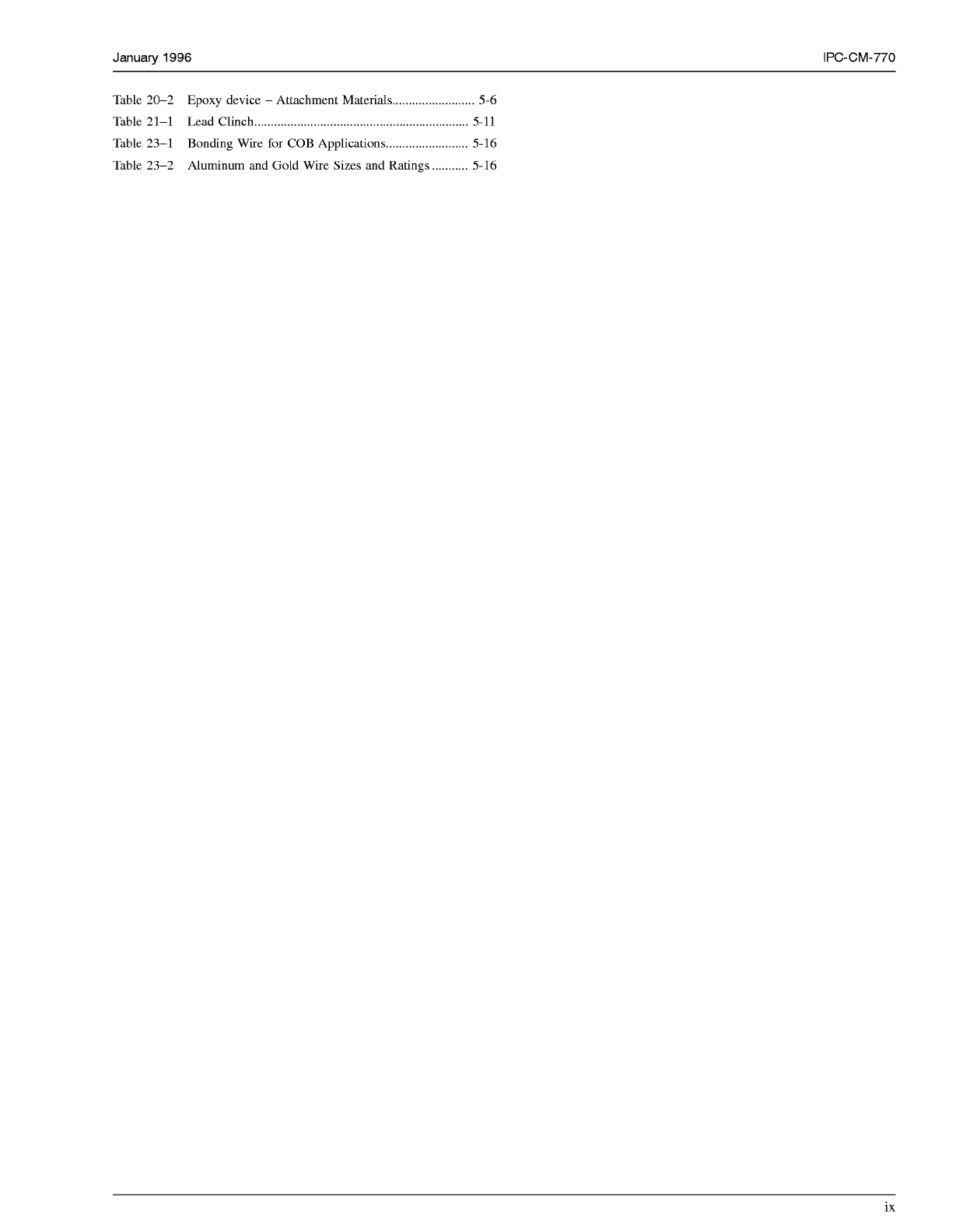
Table 20-2 Epoxy device
.
Attachment Materials
.........................
5-6
Table 21-1 Lead Clinch
.................................................................
5-11
Table 23-1 Bonding Wire for COB Applications
.........................
5-16
Table 23-2 Aluminum and Gold Wire Sizes and Ratings
...........
5-16
ix
COPYRIGHT Association Connecting Electronics Industries
Licensed by Information Handling Services
COPYRIGHT Association Connecting Electronics Industries
Licensed by Information Handling Services