00195760-0102_UM_D3_SR605_EN.pdf - 第266页
5 Tasks for the operating personnel User Manual SIPLACE D3 5.5 Carrying out a walk-through inspection From software version SR.605.xx 07/2008 EN Edition 266 5.5 C arrying out a walk-through inspection 5.5.1 Checking the …
User Manual SIPLACE D3 5 Tasks for the operating personnel
From software version SR.605.xx 07/2008 EN Edition 5.4 Changing shift
265
5.4.2 Safety instructions for emptying the waste tape container
5
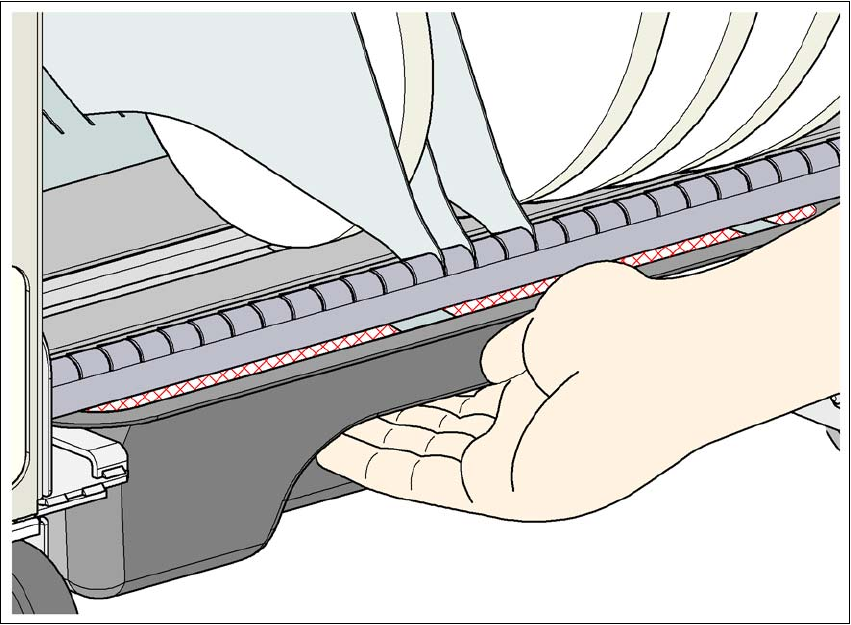
Fig. 5.4 - 1 Safety instructions for emptying the waste tape container
The waste tape container must be pulled out of the component trolley for emptying. There is a risk
of catching your thumbs as you do so.
→ To avoid this risk, hold the waste tape container with your fingers on the underside of the han-
dle and place your thumb on the handle.
→ Do NOT put your thumbs in the gap between the tape container and waste tape container as
you could catch your thumbs if you do.
5 Tasks for the operating personnel User Manual SIPLACE D3
5.5 Carrying out a walk-through inspection From software version SR.605.xx 07/2008 EN Edition
266
5.5 Carrying out a walk-through inspection
5.5.1 Checking the S feeder modules
→ Make sure that the tape is correctly placed in the springs of the S feeder module.
5
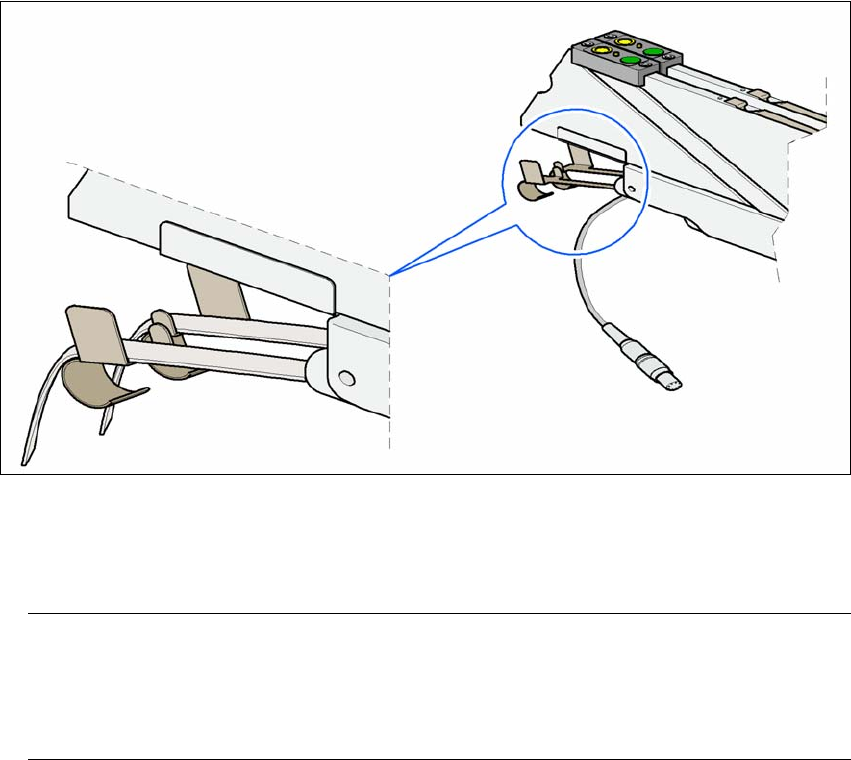
Fig. 5.5 - 1 Placing the tape in the springs of the S feeder module
→ Check to see whether the tape foil removal container for the S feeder module is full.
If it is full, then pull out the foil and cut it off with scissors.
PLEASE NOTE
Tearing the foil instead of cutting it can lead to problems with the tape removal mechanism.
For this reason the 3 x 8 mm feeder modules are fitted with an integral cutter. This is in the
tape foil removal container at the end of the feeder module under the flaps. 5
→ Check to ensure that the pick-up window on combination feeder modules (24/32 mm) is the
right size for the component.
→ Check to see whether tape guides are inserted on combination feeder modules (24 mm /
32 mm).

User Manual SIPLACE D3 5 Tasks for the operating personnel
From software version SR.605.xx 07/2008 EN Edition 5.5 Carrying out a walk-through inspection
267
5.5.2 Splicing the tapes in good time
PLEASE NOTE:
Splice the tapes early enough so that the feeder modules do not run out of components. Oth-
erwise you will experience prolonged down times.
However, do not splice the tapes too early because if you wind the end of the old tape onto
the new reel after splicing, the reel holding the new tape may become overfilled and the tape
will slip off the reel and become tangled up. This will again result in pick-up errors and pro-
longed down times. 5
5.5.3 Checking the PCB supports
→ Check the position of the magnetic PCB supports on the lifting table:
– Make sure that the PCB supports do not collide with components on the underside of the
PCBs.
– In addition, make sure that the PCB supports do not collide with the PCB conveyor pan-
els.
– Only use PCB supports as described in Section 6.12
, page 328.
5.5.4 Inserting separating plates in the tape container
→ The separating plate has different edges and can be inserted into the tape container in two
ways. If spindles are used, the recesses for the spindles in the separating plate point upwards
(see item 6 in Fig. 5.5 - 2
, page 268). If you do not use spindles, the rounded edge of the
separating plate points up (see item 5 in Fig. 5.5 - 2
, page 268).
→ Insert the separating plates as shown in Fig. 5.5 - 2
on page 268 and remember that the small-
est division of the tape container is a 2x division. This will help avoid placement errors.
→ Check that the separating plates engage in the same positions on the three guide rails. Oth-
erwise the separating plate will be offset or bent.