IPC-D-859.pdf - 第26页
3.8.1.1 Alumina Substrates Alumina substrates are made of polycrystalline A1 2 O 3 with small amounts of metal oxide glasses to achieve certain physical properties. Alumina is the most popular substrate material since it…
F. Differences in thermal coefficients of expansion
G. Variations in electrical characteristics of screened com-
ponents
3.8.1 Substrates The substrate serves as the supporting
structure for the circuitry. It acts as a surface for depositing
the conductive, dielectric, and resistive materials that form
the passive circuit elements. Also, it is a base for mechani-
cal support of all active and passive chip components. It
must be an electrical insulator to isolate the various con-
ductive paths of the circuit, and it must have sufficient
thermal conductivity to remove heat generated by the cir-
cuit components. See Table 3–4 and 3–5 for substrate
selection criteria.
The material most suitable for the particular application
should be determined by examining the following proper-
ties of substrate materials:
A. Thermal conductivity—The ability of the material to
conduct heat away from critical circuit components.
Normally measured as cal–cm/sec–cm
2
–°C. High ther-
mal conductivity is desired.
B. Electrical insulation—The ability of the material to
insulate various circuit components from one another.
Normally measured in ohm/cm. High resistivity is
desired.
C. Mechanical strength—The ability to withstand
mechanical shock. Young’s modulus, flexular strength,
tensile strength, and compressive strength are consid-
ered measures of mechanical strength. High strength is
desired.
D. Refractory property—The ability of the material to
withstand high temperatures. Melting point is an indi-
cator of this property. This property is usually desir-
able, and absolutely mandatory for processes requiring
heat treatment.
E. Thermal expansion—This property is an important
consideration, especially when the structure is placed
into a metal case or mounted to an organic interconnec-
tion substrate.
F. Chemical susceptibility—The ability to withstand
exposure to chemicals. It is very desirable for sub-
strates to be inert to processing chemicals.
G. Weight—Weight may or may not be a consideration
based on the application.
H. Metallizability—The ability of the material to be suc-
cessfully metallized.
I. Cost—There are wide variations in the cost of substrate
materials.
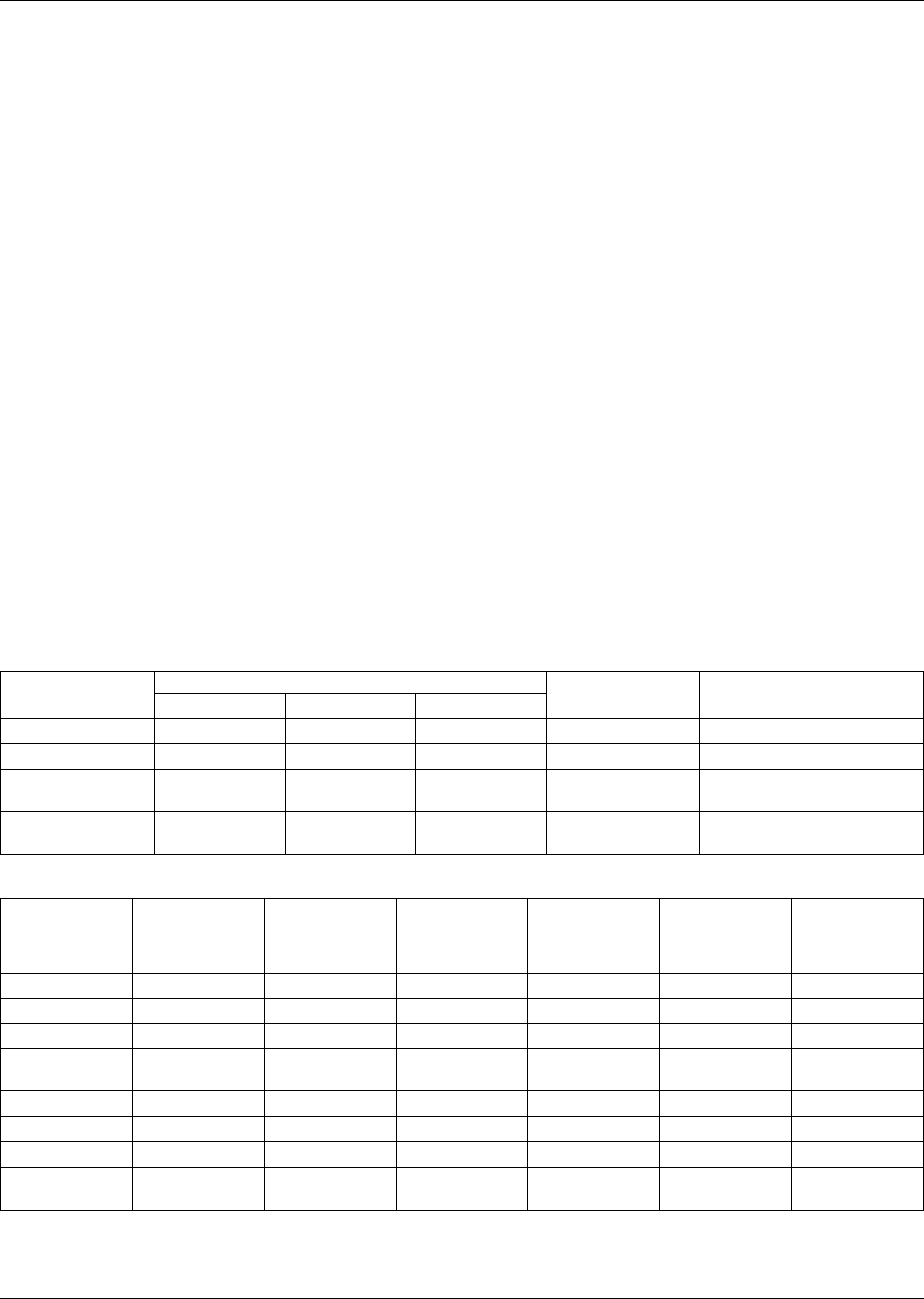
Table 3–4 Nonphysical Substrate Selection Criteria
Material
Cost per 25 x 25 mm [1 x 1-inch] Substrate for
Applications Remarks100 5000 100K
Alumina Medium Medium Very low General Use Very popular
Beryllia High Medium Low Heat dissipating Low thermal resistance
Porcelainized
steel
Medium Low Low Special shapes Becomes cost effective
for large substrates
Cofired multilayer
ceramic
Very high High Medium Package May be cost effective
in large quantities
Table 3–5 Important Characteristics of Substrates
Material
Tensile
Modulus
MPa
Coefficient
of Thermal
Expansion
(ppm/°C)
Tensile
Strength
MPa
Thermal
Conductivity
(W/°C—mm)
Dielectric
Constant
(1 MHz)
Dissipation
Factor
Alumina (90%) 324.07 6.70 317.17 16.74 9.40 *
Alumina (96%) 324.07 7.11 317.17 25.10 9.90 0.0001–0.0002
Alumina (99.6%) 344.75 6.30 448.18 37.40 10.00 0.0001–0.0002
Aluminum
Nitride
291.66 4.30 367.50 170.00 8.80 *
Beryllia 319.93 8.00 * 250.00 7.00 0.0001
Quartz 72.40 0.72 * 0.75 3.80 0.0002
Sapphire 344.75 7.74 0.00 25.00 0.00 0.002
Porcelainized
steel
* 4.40 89.64 1.67 5.50 *
* Indicates data not available
December 1989 IPC-D-859
19

3.8.1.1 Alumina Substrates Alumina substrates are
made of polycrystalline A1
2
O
3
with small amounts of
metal oxide glasses to achieve certain physical properties.
Alumina is the most popular substrate material since it is
readily available in sizes ranging from tiny chips to large
area substrates, in thicknesses ranging from 0.25 mm
[0.010 inch] to 1.25 mm [0.050 inch] or greater, and in a
variety of shapes and designs. It is refractory and the fin-
ished substrate can be drilled or cut with diamond tools or
lasers.
3.8.1.2 Beryllia Substrates Beryllia (polycrystalline
BeO), with impurities for physical properties, is primarily
used in applications requiring rapid heat removal from the
circuit. Like alumina, Beryllia substrates are available in a
large variety of sizes, thicknesses, shapes and designs.
Beryllia is less-widely used than alumina due to its toxic
nature in the powder form and its higher cost.
3.8.1.3 Coated Metal-Core Relatively new as a sub-
strate, porcelainized steel substrates provide strength,
shock resistance, a built-in ground plane, and relatively low
cost for larger sized substrates. Prior to coating, the metal
can be inexpensively shaped and punched to allow it to be
used as a mounting bracket.
As a combination hybrid and discrete component mounting
surface, porcelainized steel substrates can withstand such
harsh environments as automobile engine compartments.
Processing of these substrates requires low temperature fir-
ing and pastes compatible with that condition.
3.8.1.4 Quartz Substrates Quartz is available in two
forms: (1) fused quartz or silica, and (2) single-crystal
quartz.
A. Fused Quartz—Fused quartz is similar to glass and is
used in microwave applications because of its consis-
tent dielectric constant and low RMS surface finish. As
with glass, it is a poor thermal conductor and cannot be
used in high heat dissipation applications. It is very
fragile and extreme care must be exercised when it is
handled. Its cost is moderate and the material is readily
available from many sources.
B. Single-crystal quartz—Single-crystal quartz is used in
applications where an ordered crystal structure is nec-
essary, e.g., in acoustic wave devices. The tensile
strength of quartz varies according to the axis in which
the crystal has been cut. The material is brittle and must
be handled carefully. Its cost is generally considered to
be exorbitant and, as with most crystals, its thermal
conductivity is poor. However, single-crystal quartz
does offer a very low RMS surface finish and it exhib-
its little or no camber.
3.8.1.5 Sapphire Substrates Sapphire is used in micro-
wave applications as a replacement for alumina substrates
when a superior surface finish and low camber are
required. Sapphire is an expensive single-crystal material
(Al
2
O
3
) and is limited in size to the diameter of the boule
from which it is cut.
The material is relatively strong but is a poor conductor of
heat. The dielectric constant, as well as other mechanical
and physical properties, will vary depending upon the crys-
tal orientation. Therefore, care must be exercised to specify
the proper crystal orientation.
3.8.1.6 Ferrite Substrates Ferrites are typically used in
microwave applications where a magnetic material is
required. Circulators are one example of this application.
The material maintains a uniformity of substrate properties,
e.g., dielectric constant and dissipation factor. Ferrites can
be obtained with good surface finish qualities and low cam-
ber. However, ferrites are brittle and highly susceptible to
impact shock breakage.
3.8.2 Conductive Materials The conductor, analogous to
the wire in older technologies, is fabricated from materials
of very low resistivity that is used to advance the signal
(information to be processed or used) to the desired loca-
tion with minimal losses.
3.8.2.1 Thick-Film Metallizations Thick-film conductors
are typically silver, gold and alloys of these materials with
either platinum or palladium. Glass frits and other additives
are used which will affect the electrical characteristic of
these materials. Copper-and nickel-based thick-film pastes
are emerging as a new low-cost thick film conductor.
(These materials are, however, in the development stage.)
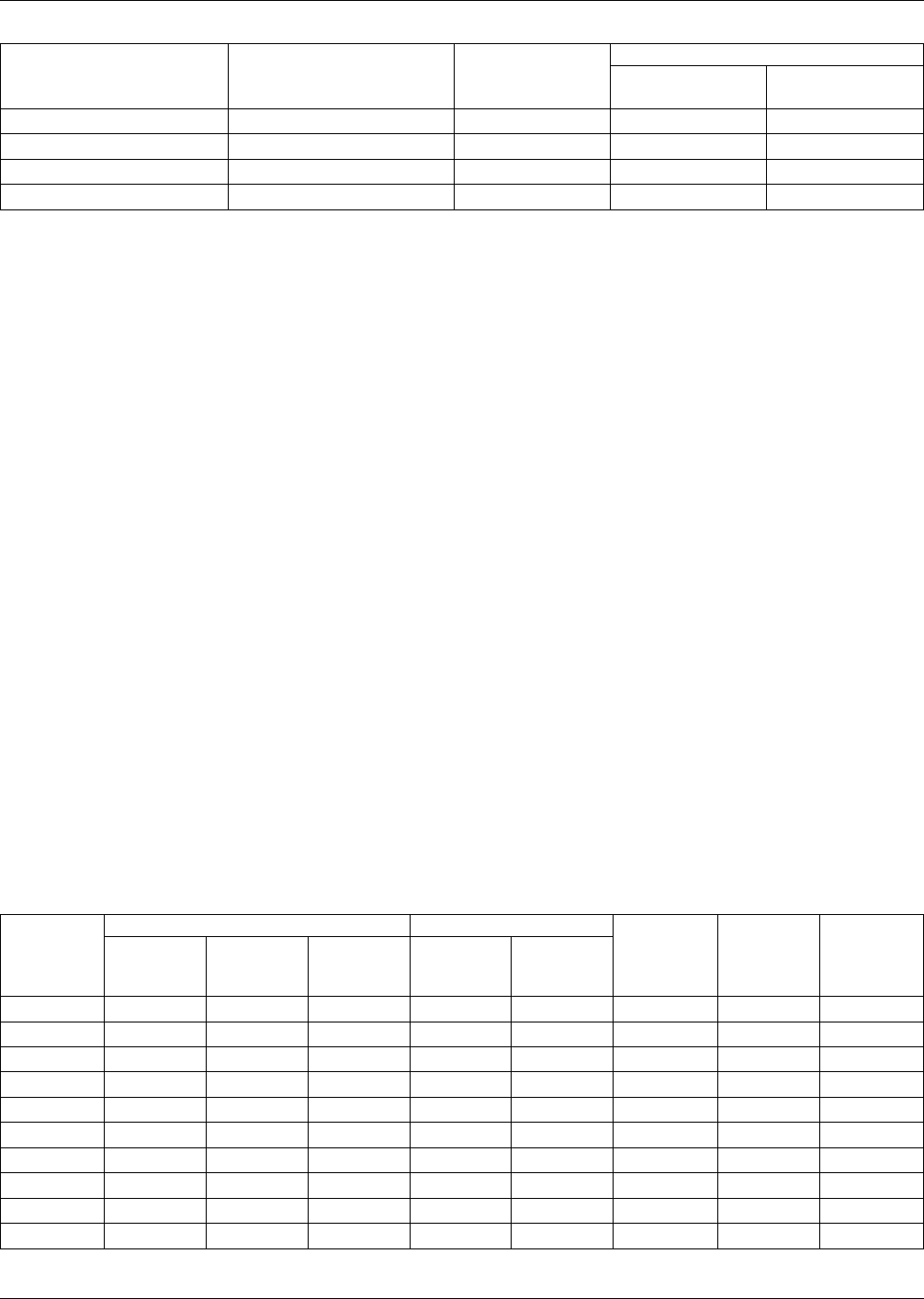
3.8.2.1.1 Sheet Resistivity and TCR Table 3–6 lists
nominal sheet resistivities and temperature coefficient of
resistance (TCR’s) of various thick-film conductor metalli-
zations.
3.8.2.1.2 Thick-Film Conductors
A. Gold (Au) conductors are used where high conductiv-
ity combined with long-term reliability are required.
B. Platinum gold (PtAu) conductors are used where sol-
dering is the only viable means of component attach-
ment.
C. Palladium gold (PdAu) is limited to use in those areas
discussed under PtAu and where cost is to be kept as
low as possible. PdAu is a relatively low cost alterna-
tive to PtAu.
D. Silver (Ag) is used primarily in commercial applica-
tions where low cost is essential. Typical applications
are in microcircuit displays and polymeric composites,
adhesives, and sealants.
IPC-D-859 December 1989
20
E. Platinum silver (PtAg) is used where soldering of com-
ponent is employed. Its application is limited presently
to nonmilitary applications.
F. Palladium Silver (PdAg) is a low-cost solderable con-
ductor designed for good solder-leach resistance.
G. Palladium platinum silver (PdPtAg) is a ternary metal
composition which attempts to reduce the silver migra-
tion which has limited the utilization of silver-bearing
inks in military applications. It provides a solderable
conductor with good solder-leach resistance.
H. Copper (Cu) was developed primarily for high conduc-
tivity and to reduce costs associated with noble conduc-
tors. The use of this material must be carefully evalu-
ated, as the process employs tighter controls than those
associated with noble metals.
I. Nickel (Ni) is another low-cost substitute for noble
metals. It finds its greatest use in display applications.
J. Tungsten/molybdenum manganese (W/MoMn) materi-
als require reducing atmospheres. The firing conditions
requireconsiderably greater controls which are gener-
ally not available in small laboratories. The inks are not
readily available.
3.8.2.2 Attributes Table 3–7 lists typical attributes for
thick- film conductors.
3.8.3 Resistive Materials A variety of characteristics are
provided by materials that impede signal flow in a circuit
and these entities are considered separately as passive ele-
ments in the circuitry. Table 3–8 lists the properties of
thick-film resistors.
3.8.3.1 Ceramic Thick-Film Resistors Ceramic thick-
film resistors have sheet resistivities in a large range of
values and are available in a range from a very few ohms/
square to high megohms/square. The resistivity is con-
trolled by varying the metal-to-glass content which causes
large variations in all mechanical and physical properties.
After screen printing, the pastes are dried and fired. Firing
temperatures range from 750° to 900°C.
Most thick-film resistor systems are based on the use of
ruthenium-oxide or lead/bismuth ruthenate metallurgies.
These are relatively inexpensive systems which can be for-
mulated in a range of sheet resistivities from 10 ohms/
square to 1 Mohm/square.
Temperature coefficients as low as +50 PPM/°C are readily
achievable in the mid-range of from 100 ohms/square to
100 Kohms/square. In the extended ranges, TCR’s of +100
PPM/°C are available in resistors as low as 10 ohms/square
and as high as 1 Mohm/square.
Table 3–6 Typical Film Conductor Resistivities and TCR’s
Line Resistance
Conductor compositions Sheet Resistivity (Ο/square) TCR PPM/°C
25.4 x 0.5 mm
[1 x 0.020]
25.4 x 0.13 mm
[1 x 0.005]
Platinum gold 0.100 +800 5 ohms 20 ohms
Gold 0.003 +1250 0.15 ohms 0.6 ohms
Palladium silver 0.035 +1400 1.75 ohms 7 ohms
Silver 0.002 +1800 0.1 ohm 4 ohms
Table 3-7 Conductor System Attributes
Die Bondability Methods Wire Bondability
Thick films Eutectic Solder Organic Gold Aluminum
Solder
Wetting
Solder
Leach
Resistance
Corrosion
Resistance
Au Good Poor Excellent Excellent Good Excellent Poor Excellent
PtAu NG Good Excellent Fair to poor Fair Excellent Good Excellent
PdAu NG Fair Excellent Fair to poor Fair Good Good Excellent
Ag NG Poor Excellent Good NG Excellent Poor Poor
PtAg — Good Excellent Good NG Excellent Fair to Good Good
PdAg — Good Excellent Good Good Good to Exc. Fair to Good Good
PdPtAg — Good Excellent Good Good Good Good Good
Cu NG Good Excellent NG Fair Good Excellent Poor
Ni NG NG Excellent NG NG NG Excellent Excellent
W/MoMn NG NG Excellent NG NG NG NG Good
December 1989 IPC-D-859
21