Dual Simultaneous Programmable Pitch Rev 02.pdf - 第6页
Dual-Simultaneous Pr ogrammable Pitch Owner ’s Manual Introduction 2 © 2024 Nords on Corporation 1.4 System Comp o n ents 1.4.1 Li near Table The linear table is th e bracket that gets insta lled onto t he dispense he ad…
© 2024 Nordson Corporation 1
1 Introduction
1.1 Overview
The Dual-Simultaneous Programmable Pitch (DSPP) is a programmable valve pitch system that can be
mounted onto the Select Coat SL-1040 Conformal Coating System. The DSPP allows two of the same
coating applicators to be installed and operated simultaneously, coating two parts at the same time. The
pitch, or distance between coating applicators, is programmed and adjusts automatically at changeover,
greatly reducing the setup time due to adjustments and validation.
The DSPP is ideal for applications with the following requirements:
• High product mix with different widths (e.g., multiple different boards with different widths)
• High frequency of width changing
• Labor reduction (e.g., Some of the products require 0.5-hour changeover. The DSPP can
change every several seconds, which dramatically reduces cost on staff, shifts, and labor.)
1.2 Safety First
Operation of the Dual-Simultaneous Programmable Pitch involves mechanical devices and electrical
power. It is essential that every person servicing or operating the DSPP fully understands all hazards,
risks, and safety precautions. See Section 2 - Safety for additional information.
1.3 System Description
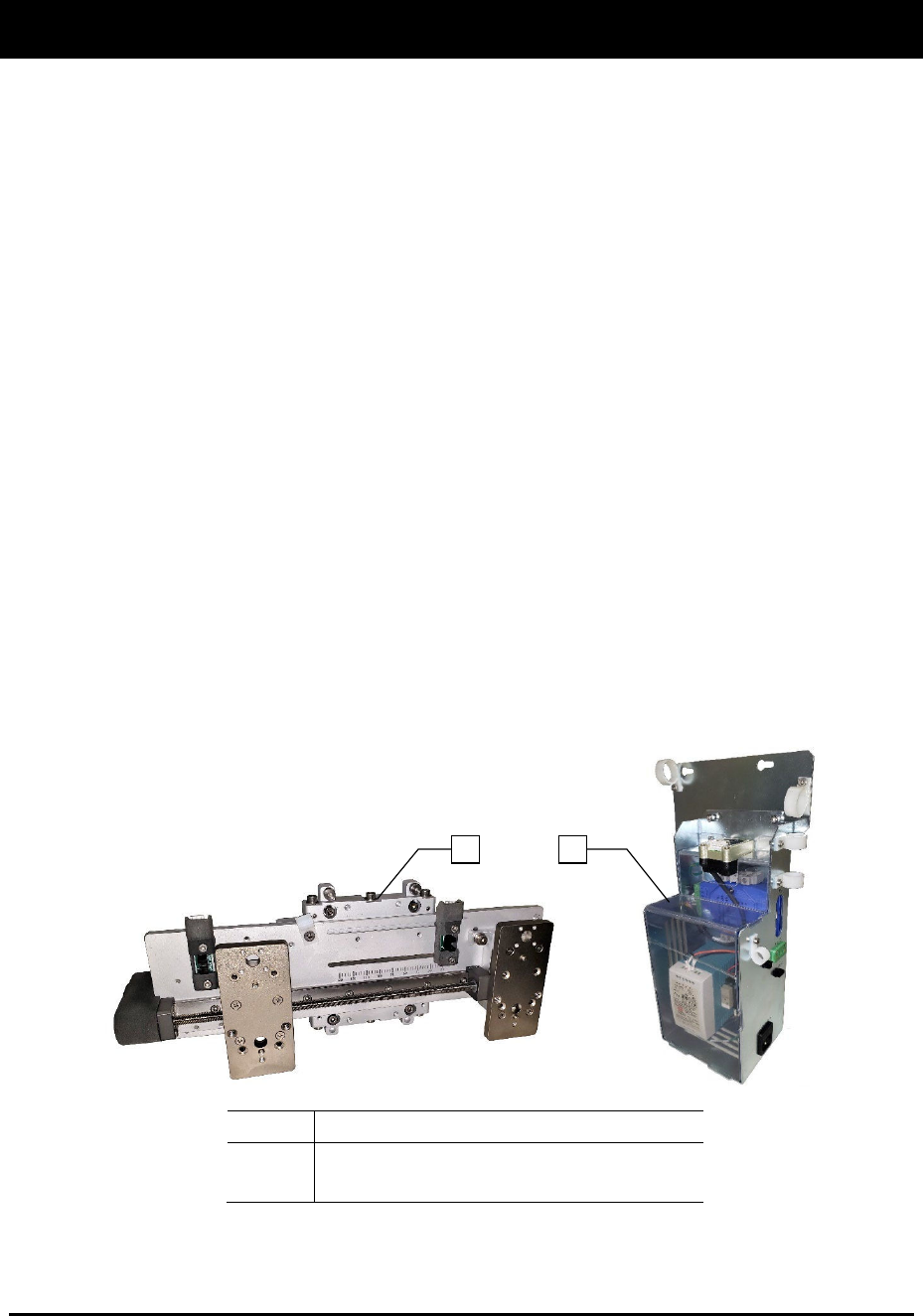
The DSPP consists of the following:
• Linear Table
• Pitch Control Module
Item Description
1 Linear Table
2 Pitch Control Module
Figure 1-1 Dual-Simultaneous Programmable Pitch
1
2
Dual-Simultaneous Programmable Pitch Owner’s Manual Introduction
2 © 2024 Nordson Corporation
1.4 System Components
1.4.1 Linear Table
The linear table is the bracket that gets installed onto the dispense head. Two of the same conformal
coating applicators can be installed onto the linear table and operated simultaneously. The specifications
for the linear table are as follows:
1.4.2 Pitch Control Module
The pitch control module is installed in the lower cabinet of the coating system and controls the linear
table and the applicators. The pitch control module communicates with the linear table through cables
routed from the dispense head to the lower cabinet. Table 1-1 shows which applicators are compatible
with the DSPP.
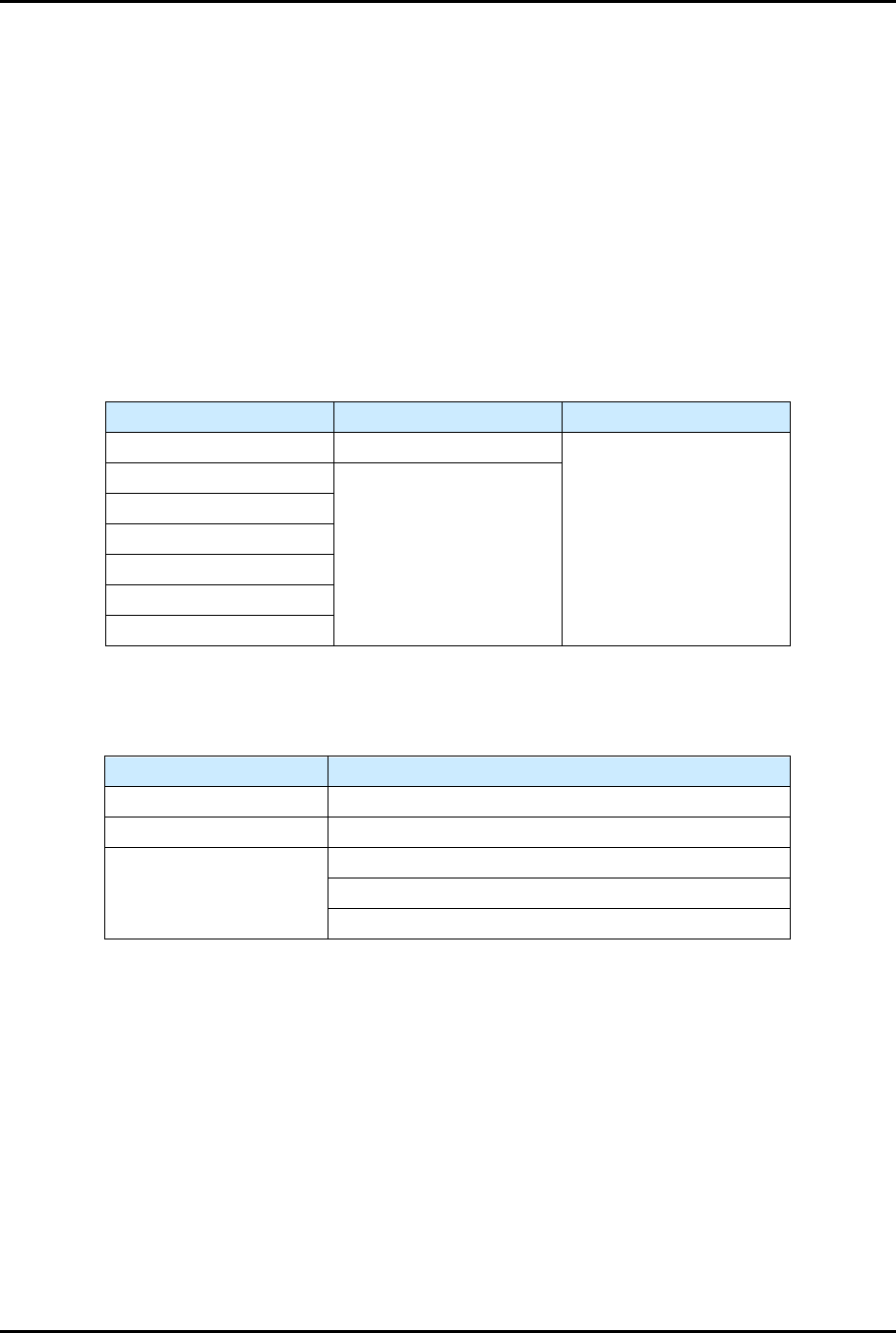
Table 1-1 DSPP - Motorized Adjustments
Dual Applicator Minimum Pitch Maximum Pitch
SC-280 115 mm (4.53 in.)
205 mm (7.87 in.)
SC-300/350
55 mm (2.36 in.)
SC-450
SC-400
DV-01
DV-05
DV-09
1.5 Specifications
Table 1-2 Specifications
Item Description
Speed 30 mm/s (1.18 in./s)
Positional resolution 0.15 mm (0.006 in.)
Positional repeatability
(with 200 mm pitch)
X-Axis: 0.15 mm (0.006 in.) @ 3σ
Y-Axis:0.60mm(0.024in.)@3σ
Z-Axis: 0.60 mm (0.024 in.) @ 3σ

© 2024 Nordson Corporation 3
2 Safety
2.1 Overview
This section is intended to provide basic safety information necessary for operating and servicing the
Dual-Simultaneous Programmable Pitch. This section covers the following topics:
•
Safety First
•
Disposa
l
•
Basic Safety Precautions and Practices
•
Emergency Shutdown
•
Decommis
sioning
•
Safety Warning Labels
To further optimize safe operation, precautions and recommended practices are included with the
procedures throughout this manual.
WARNING!
Failure to comply with any of the safety recommendations could cause serious
injury to the user or damage to the coating system.
?
NOTE
Safety is considered a joint responsibility between the original equipment
manufacturer (Nordson) and the end-user (owner). All safety precautions and
practices should be in accordance with local regulations and facility policy.
2.2 Safety First
Operation of the Dual-Simultaneous Programmable Pitch involves mechanical devices and electrical
power. It is essential that every person servicing or operating the DSPP fully understands all hazards,
risks, and safety precautions.
2.2.1 Intended Use
Use of Nordson equipment in ways other than those described in the documentation supplied with the
equipment may result in injury to persons or damage to property. Some examples of misuse include:
• Making unauthorized modifications
• Removing or bypassing safety guards or interlocks
• Using incompatible or damaged parts
• Using unapproved auxiliary equipment
• Operating equipment in excess of maximum ratings