BM料架治具使用手册.pdf - 第5页
Feeder Inspection Unit 2 DX1OEC−02−010−A0 5.2 Routine Check Item 5.2−1 .......................................... 5.2.1 Gauge Jig Precision Check 5.2−2 ............................................ 5.2.2 Replacing LED in …

Feeder Inspection Unit
1
DX1OEC−02−010−A0
DX1OEC−02−010−A0
Sentence No.
Table of Contents
1. SAFETY 1.0−2.......................................
1.1 Positions of Warning Labels 1.1−1...................................
1.2 Safety Standards 1.2−1............................................
2. GENERAL DESCRIPTION 2.0−2.......................
2.1 Overview 2.1−1...................................................
2.1.1 Features 2.1−1............................................................
2.1.2 Specifications 2.1−1........................................................
2.1.3 Available Check Items 2.1−1................................................
2.2 Configuration 2.2−1...............................................
2.3 Gauge Jig Specifications 2.3−1.....................................
2.4 Dimension Gauges for OHP 2.4−1...................................
2.4.1 Overview 2.4−1............................................................
2.4.2 Dimension Gauges for 9−inch Monitor 2.4−2...................................
3. INSTALLATION 3.0−2.................................
3.1 Environmental Requirements 3.1−1..................................
3.2 Connecting Method 3.2−1..........................................
4. USING THE ADJUST UNIT 4.0−2......................
4.1 Adjusting Wheel Position 4.1−1.....................................
4.1.1 Inspection Procedure 4.1−1.................................................
4.1.2 Checking Component Status at the Pickup Position (Reference) 4.1−2............
4.1.3 Preparations for Inspection 4.1−3............................................
4.1.4 Removing Tape Retainer 4.1−7..............................................
4.1.5 Checking the Wheel Position in Tape Feed Direction (Y Direction) 4.1−8...........
4.1.6 Checking the Wheel Position in Tape Width Direction 4.1−14......................
4.1.7 Checking Component Status at the Pickup Position 4.1−15.......................
4.2 Tape Feeder Operation Check 4.2−1................................
4.2.1 Control Panel Layout and Function 4.2−1......................................
4.2.2 Preparations 4.2−3.........................................................
4.2.3 Pneumatic Feeder 4.2−4....................................................
4.2.4 Pneumatic Double Feeder 4.2−7.............................................
4.2.5 Motorized Feeder 4.2−9....................................................
5. INSPECTION 5.0−2..................................
5.1 Daily Check Items 5.1−1...........................................
5.1.1 Adjusting the Camera Position 5.1−2.........................................

Feeder Inspection Unit
2
DX1OEC−02−010−A0
5.2 Routine Check Item 5.2−1..........................................
5.2.1 Gauge Jig Precision Check 5.2−2............................................
5.2.2 Replacing LED in the Camera 5.2−3..........................................
5.3 Lubrication 5.3−1..................................................
5.3.1 Guide to Lubrication Table 5.3−1.............................................
5.3.2 Recommended Lubricants 5.3−2.............................................
5.3.3 XYZ Stage 5.3−3..........................................................
5.3.4 Clamp Stand 5.3−5.........................................................
6. TROUBLESHOOTING 6.0−2...........................
6.1 Troubleshooting 6.1−1.............................................
7.RECYCLING 7.0−2....................................
7.1 Synthetic Resin Parts 7.1−1........................................
Feeder Inspection Unit
SAFETY−1
DX1OEC−03−010−A0
DX1OEC−03−010−A0
Sentence No.
Safety Precautions
Observe the Instructions
It explains of important precautions that must be observed to help operators prevent possible accidents
during repair and keep productions after operating.
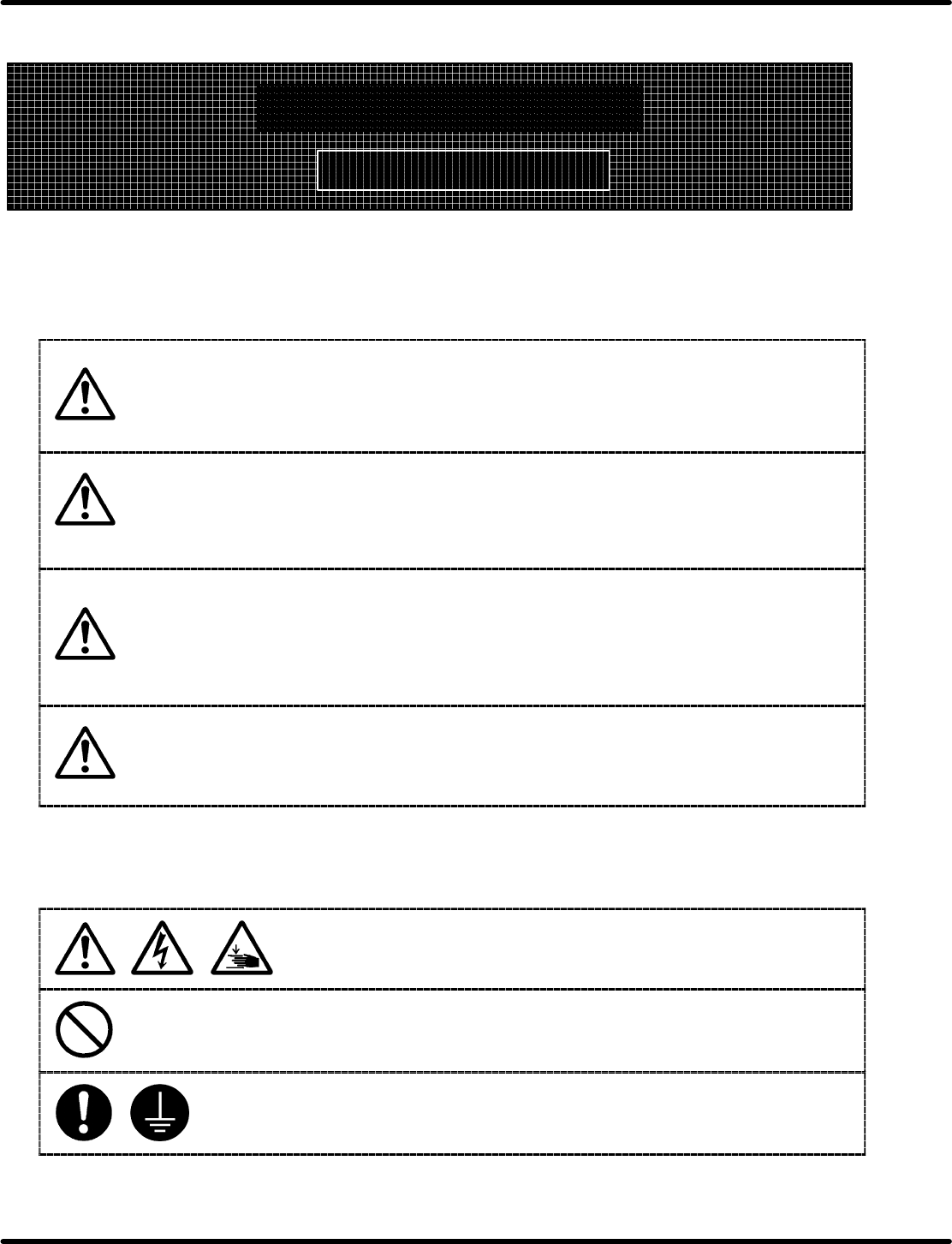
The level of hazard or damage in consequence of ignoring the instructions is classified as follows.
DANGER
DANGER indicates an imminently hazardous
situation which, if not avoided, will result in death
or serious injury.
WARNING
WARNING indicates a potentially hazardous
situation which, if not avoided, may result in death
or serious injury.
CAUTION
CAUTION indicates a potentially hazardous
situation which, if not avoided, may result in minor
or moderate injury or property damage only
accidents.
NOTICE
NOTICE indicates knowledge necessary to have
or point to be noted for the safety work.
Symbols are classified according to the observed contents.
(The following are an example of hazard alert symbols.)
It indicates ATTENTION ALERT contents.
It indicates PROHIBITION contents.
It indicates COMPULSION contents.