Tracker-2800-2800S.pdf - 第69页
69 8. Now that you know that pin 2 of the unknown transistor is the collector. Place the black probe to t he base on pin 1 and move the red probe to the emi tter on pin 3. A base to emitter si gnature will be displayed. …
68
All bipolar junction transistors have essentially the same looking signatures.
Identifying Unknown Transistors
Sometimes, we need to identify unknown transistors. We may need to replace one in a circuit for
which we do not have a schematic. The Tracker 2800 makes this a relatively simple procedure because
each type of junction has a characteristic signature. This makes it possible to identify each of the
terminals and the polarity of the transistor.
Do the following:
1. Select 20V, 10Kand 60Hz.
2. Probe pin 1 with the red probe and pin 2 with the black probe.
3. Identify the signature.
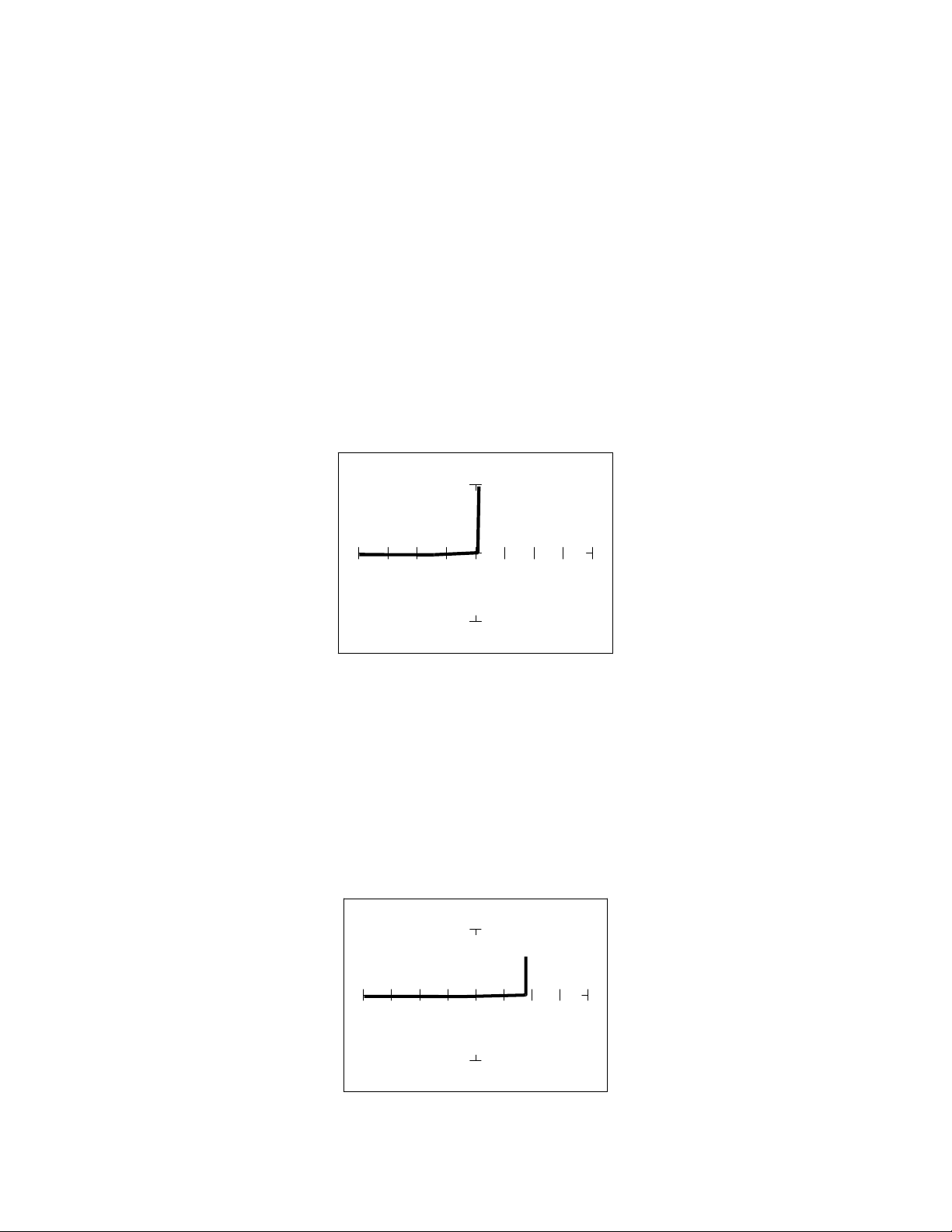
Figure 4-23. Signature of Pins 1 And 2 of an Unknown Transistor.
4. This looks like a collector-base signature. What you do not know yet, is which pin is the collector
and which pin is the base?
5. Probe pin 3 with the red probe and pin 2 with the black probe.
6. Identify the signature.
7. This looks like a collector-emitter signature.
Figure 4-24. Signature of Pins 3 and 2 of an Unknown Transistor.
69
8. Now that you know that pin 2 of the unknown transistor is the collector. Place the black probe to the
base on pin 1 and move the red probe to the emitter on pin 3. A base to emitter signature will be
displayed. This transistor is a NPN type since the base-emitter signature matches a NPN transistor.
Figure 4-25. Signature of Pins 1 and 3 of an Unknown Transistor.
Darlington Bipolar Transistor Signatures
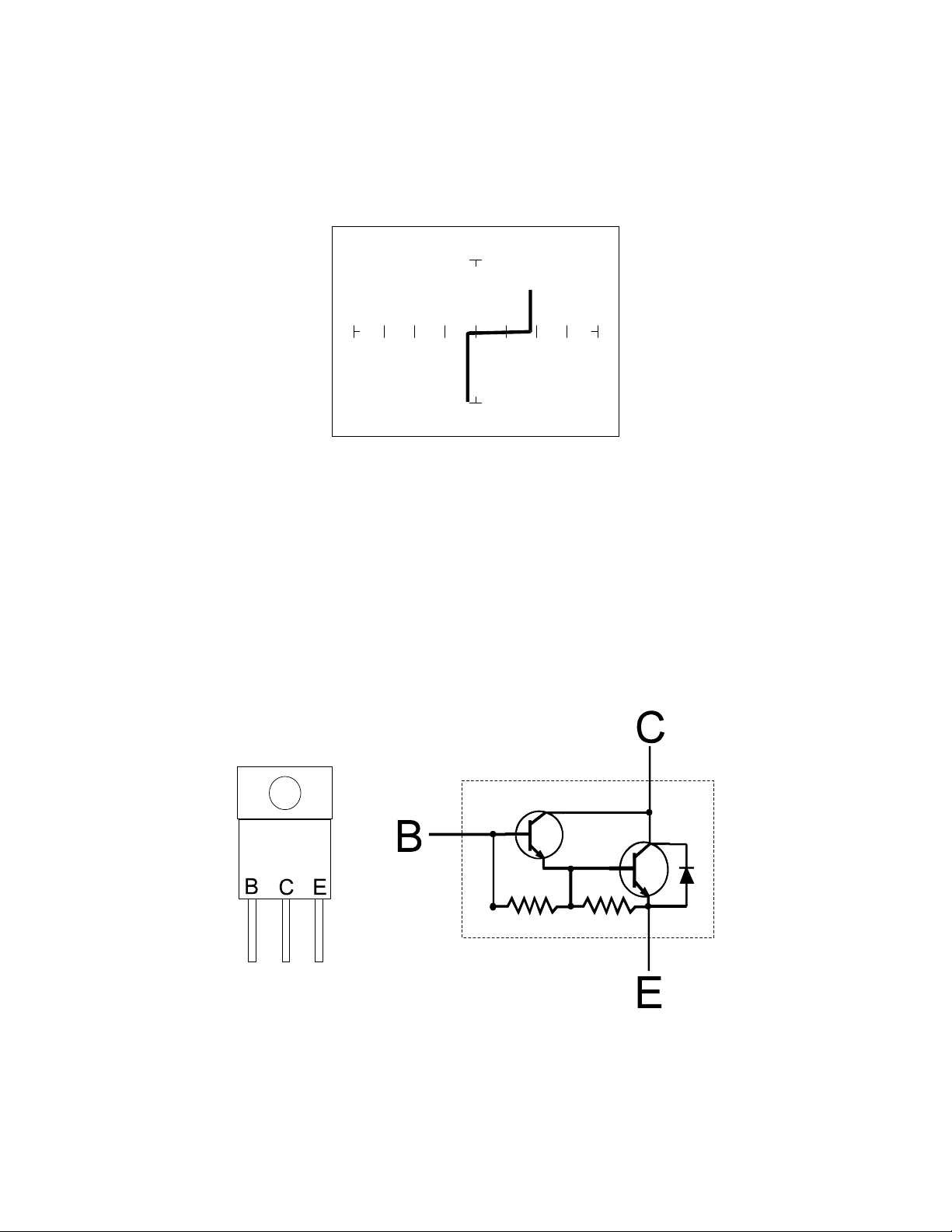
The Darlington transistor is basically two transistors paired together in a special configuration. The
emitter of the first transistor is connected to the base of the second transistor. The collectors of both
transistors are connected together. The base of the first transistor serves as the external base lead and
the emitter of the second transistor serves as the external emitter lead. A block diagram of a Darlington
transistor and its analog signature are shown in the following figures.
Figure 4-26. Diagram of a Darlington Transistor.

70
B-E Junction C-E Junction C-B Junction
Figure 4-27. Signature of a Darlington Transistor, TIP112 NPN Type at 20V and 20K.
Note that the B-E junction has a sloped leg bend in its signature caused by internal resistors R1 and R2.
Review
A PNP bipolar transistor consists of a layer of N-type silicon sandwiched between two layers of P-
type silicon.
A NPN bipolar transistor consists of a layer of P-type silicon sandwiched between two layers of N-
type silicon.
To test a transistor, the base-emitter (B-E), collector-base (C-B) and collector-emitter (C-E)
junctions all need to be examined.
The transistor signature resembles the diode signatures previously examined. They have polarity
and may exhibit the Zener effect.
Applying What We Have Learned
Transistors will display the same type of faulty signature as diodes, with a rounded “knee” and
non-linear or resistive current and voltage legs.
The Tracker 2800 can be used to determine the type of transistor; bipolar, Darlington, FET, etc.
The Tracker 2800 can be used to identify the polarity of a transistor (PNP or NPN).
The Tracker 2800 can be used to determine the base, collector and emitter on an unknown
transistor.
The Tracker 2800 can be used to match the gain (beta) of two transistors.
The above techniques of identification are invaluable when repairing foreign electronics and
systems without schematics.