DFD6361-Maintenance.pdf - 第218页
C-6 2-1. Movement in Conditioning Summary of this sectio n This section explains the axis movement in the conditioning operation, the shape of the end face of the flange/hub mount after conditioning and the purpose of th…
C-5
2. Hub Mount/Flange Conditioning
About conditioning
The term "conditioning" refers to the operations performed to dress a blade
contact surface of a hub mount or flange.
The contact surface accuracy of the flange A (rear flange) is particularly
important. The low accuracy of this surface gives an adverse effect on the
machining precision, which results in a tapered shaped cutting slot, an
excessive kerf width or a blade breakage.
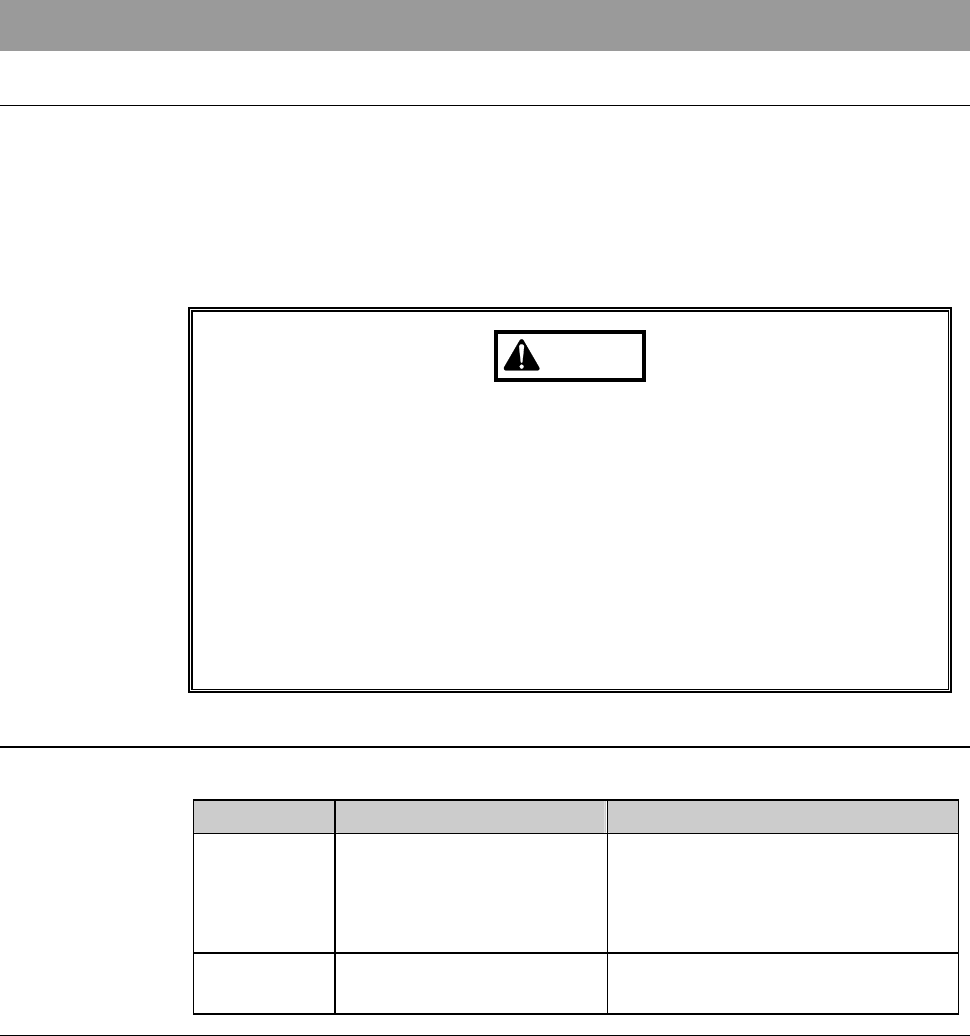
WARNING
- For conditioning purposes, you have to operate the X-, Y- and Z-
axes while the cover is open with its interlock disabled by the
maintenance switch.
Conditioning must be carried out by the qualified maintenance
personnel who have a good understanding of safety precautions.
- If any unexpected machine operation is inadvertently invoked
during conditioning, the maintenance personnel may be injured.
While you don't use the touch panel, press the Disco's logo button
located at the upper left of the screen in order to lock up and
deactivate the touch panel.
Summary of this section
This section describes the conditioning operation in the following sub-sections.
Section No. Title Contents
2-1 Movement in
Conditioning
- Movement in conditioning of
flange and hub mount
- Shape of the end face after
conditioning
2-2 Executing Conditioning - Procedures for executing the
conditioning

C-6
2-1. Movement in Conditioning
Summary of this section
This section explains the axis movement in the conditioning operation, the
shape of the end face of the flange/hub mount after conditioning and the
purpose of this operation.
Section No. Title Contents
2-1-1 Flange conditioning - Axis movement in flange
conditioning
- Shape of the flange end face
after conditioning
2-1-2 Hub mount conditioning - Axis movement in hub mount
conditioning
- Shape of the hub mount end face
after conditioning
C-7
2-1-1. Flange conditioning
Movement in flange A conditioning
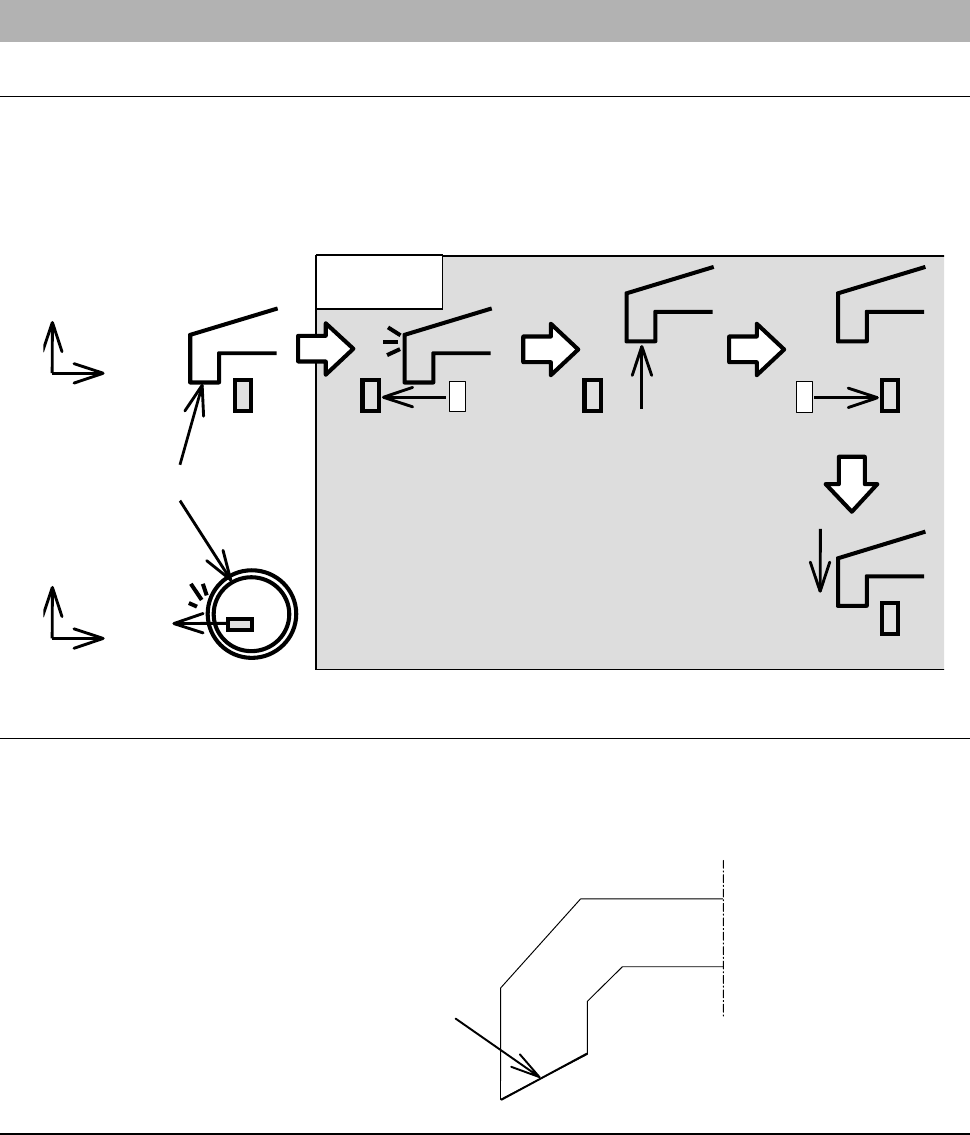
When the flange type blade is used, the axis moves as illustrated below in the
flange A conditioning.
The first spark-out operation performed after Y-axis indexing always starts
from the inside of the flange.
Flange
A
End face
Y
X
Z
X
A
Spark-out
A
Flange escape
A
Tip return
A
Flange return
1cycle
Shape of the flange after conditioning
Conditioning is conducted so that the flange A end face will be highest at the
outer end and enclose the blade.
The shape of the flange after conditioning should be as illustrated below.
End face
Flange (A)