instruction-manual-product-monitoring-data-acquisition-monitouch-V9-hardware-en.pdf - 第89页
3-24 2. Specifications of Components Radio equipment which use the 2.4 GH z frequency band Models that support wireless LAN use the 2.4 GHz frequency band. This frequency band is used for industrial, scientific, and me…
3
2. Specifications of Components 3-23
Names and Specifications of Components
Notes on Wireless LAN
An antenna is built into the V9 series unit for use as a wireless communication antenna. Consider
your usage environment, and if necessary, use Hakko Electronics’ “V9-ANT” external dipole
antenna (optional).
(The built-in antenna of the V9 series unit can be used for wireless LAN communication within 10
meters from the front side of the V9 series unit. For wireless LAN communication around the V9
series unit (360) or more than 10 meters away from the V9 series unit, use of the “V9-ANT” is
recommended.)
Radio waves used by wireless LAN pass through wood and glass, and therefore communication is
possible even if floors and walls are made of wooden or glass material. However, radio waves
cannot penetrate reinforcing rods, metal, or concrete, so if these materials are used
communication is not possible.
Signal intensity can be checked using the Received Signal Strength Indication (RSSI) as a
guideline. Placing the V9 series unit (access point) so that the RSSI value is higher will attain a
more stable communication status.
A low RSSI value, which does not improve by moving the position of the V9 series unit (access
point) or antenna, indicates that the radio wave intensity is weakened due to a long communication
distance or physical obstructions.
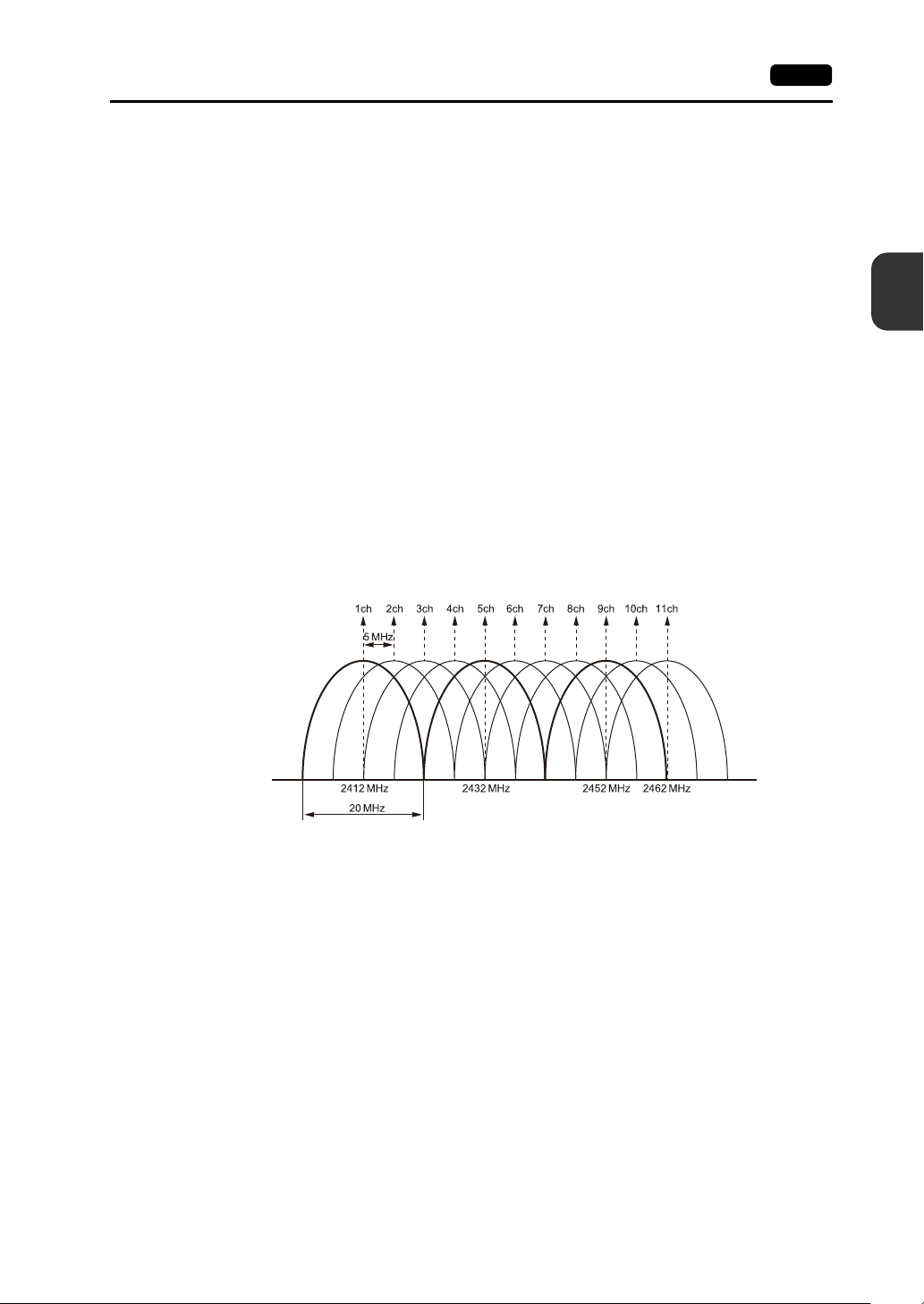
The radio waves used for wireless LAN communication are divided into frequency bands called
channels (ch). The V9 series spaces the 2.4 GHz band into 11 channels (1 to 11 ch) at 5 MHz
intervals. However, if the same channel is used or neighboring channels interfere with each other,
communication speed may be reduced.
We recommend selecting channels for access points so that the frequencies do not overlap, such
as 1 ch, 5 ch and 9 ch (when using MONITOUCH as an access point).
Notes on Radio Waves
The wireless LAN function of the V9 series corresponds to “radio equipment for radio stations
(antenna power: 10 mW/MHz or less) of low-power data communication systems” defined by radio
law, and therefore does not require a radio license.
Depending on the peripheral environment or installation conditions, data transmission via wireless
LAN may be unstable compared to wired connections and result in packet loss.
Be sure to check the connection before actual use.
Do not use the wireless LAN function in the following situations.
1) Near a person who uses a cardiac pacemaker: The function may cause electromagnetic
interference in cardiac pacemakers, leading to malfunctions.
2) Near medical devices: The function may cause electromagnetic interference in medical
devices, leading to malfunctions.
3) Near microwaves: Microwaves may cause electromagnetic interference in wireless
communications of the V9 series unit.
3-24 2. Specifications of Components
Radio equipment which use the 2.4 GHz frequency band
Models that support wireless LAN use the 2.4 GHz frequency band. This frequency band is used
for industrial, scientific, and medical equipment; on-site radio stations (requiring a radio license)
and certain low-power radio stations (no radio license required) for identifying moving objects in
production lines; and amateur radio stations (requiring a radio license).
1) Before using the wireless LAN function, check that there are no on-site radio stations and
certain low-power radio stations for identifying moving objects or amateur radio stations in use
nearby.
2) If ever the V9 series unit causes wave interference to an on-site radio station for identifying
moving objects, immediately stop wireless LAN communication and ensure that waves are no
longer emitted. Then take necessary actions to resolve the interference (e.g. changing
frequencies, relocating, installing partitions).
3) If the V9 series unit causes wave interference to a certain low-power radio station for
identifying moving objects, or if any other problem occurs, contact your distributor.
The product will not conform to radio laws if using any antenna other than the built-in antenna of
the V9 series unit or the external dipole antenna “V9-ANT” (optional).
The wireless LAN function conforms to the radio standards in the following countries *.
Never use the V9 series unit outside of these countries.
Australia, Belgium, Canada, Czech, Denmark, Finland, France, Germany, Great Britain, Greek,
Hungary, Ireland, Italia, Japan, Netherlands, Norway, Poland, Portugal, Slovakia, Slovenia, South
Korea, Spain, Sweden, Switzerland, United States of America
* V9150iXRD, V9120iSRD, V9100iSRD, and V9080iSRD are available for use in Japan only.
Notes on Security
A wireless LAN transmits data between a computer and a wireless LAN access point without using a
LAN cable. Therefore, as long as radio waves are transmitted, LAN connection can be established
whenever desired.
On the other hand, within a certain range, radio waves will pass through all obstructions (such as
walls) and reaches the entire area. If security settings are not made, the following problems may occur.
Transmission contents can be eavesdropped on
A malicious third party can eavesdrop on communication contents and steal identity such as your
ID, password, and credit card numbers, or eavesdrop on email contents.
Unauthorized intrusions
A malicious third party may access personal or corporate networks without authorization and steal
identity or confidential information (information leakage).
An attacker can impersonate you and send out false information (impersonation).
Communication contents can be intercepted and then manipulated before sending (manipulation).
Data and systems can be destroyed using a computer virus (destruction).
Principally, models that support wireless LAN have security functions. If such functions are properly
configured before use, any risks of sustaining the above attacks can be reduced.
We recommend configuring security functions before use at your own judgment and responsibility, and
fully understand the problems that may occur if the V9 series unit is used without configuring security
functions.
Applications
* Configurations in Local mode of the V9 series unit are required to use wireless LAN.
For details, refer to the V9 Series Troubleshooting/Maintenance Manual.
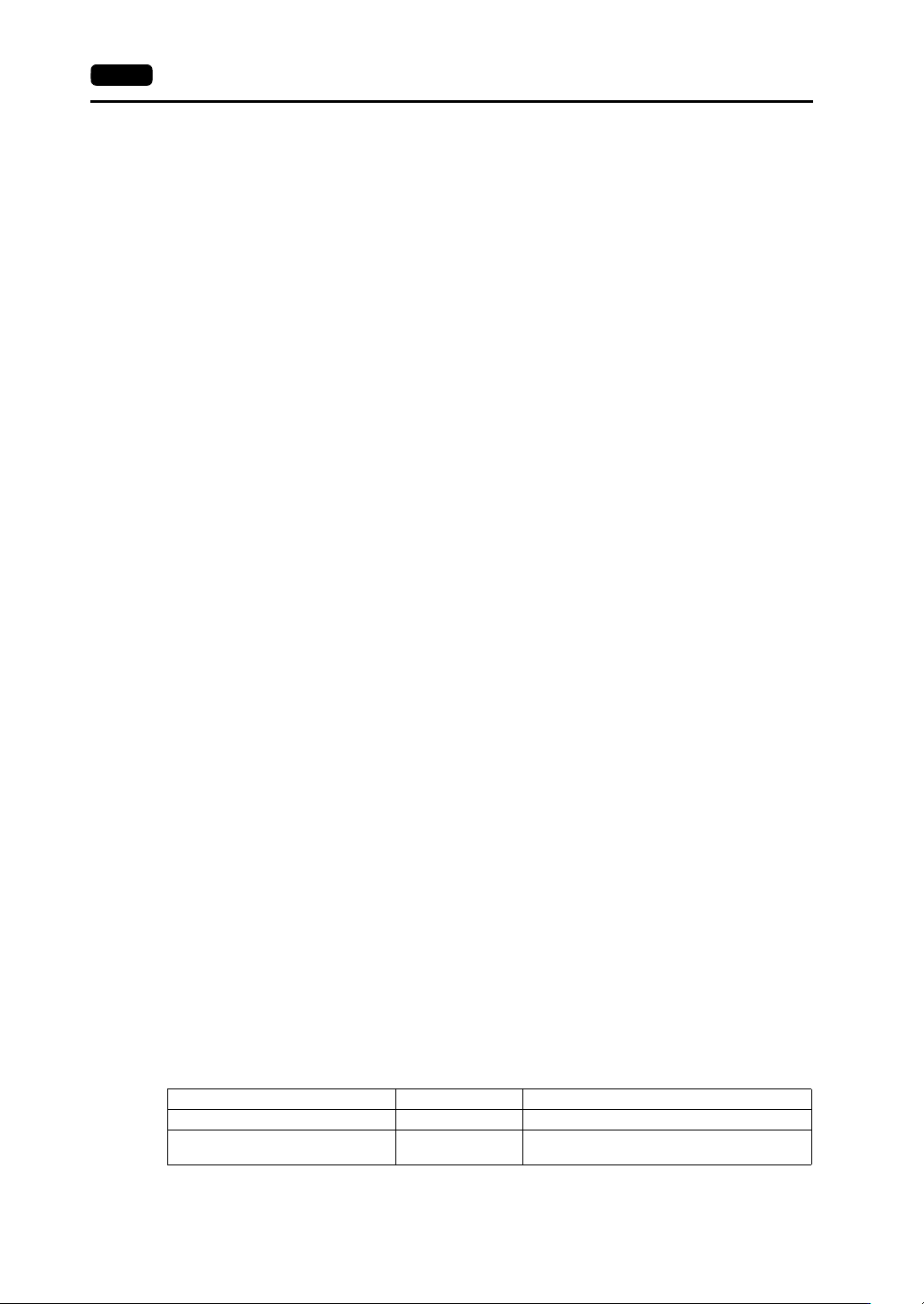
Application V-SFT-6 Setting Refer to
Screen program transfer Not required V9 Series Operation Manual
Ethernet communication function
(excluding PLC 8WAY communication)
Depends on
function
V9 Series Reference Manual 2
3
2. Specifications of Components 3-25
Names and Specifications of Components
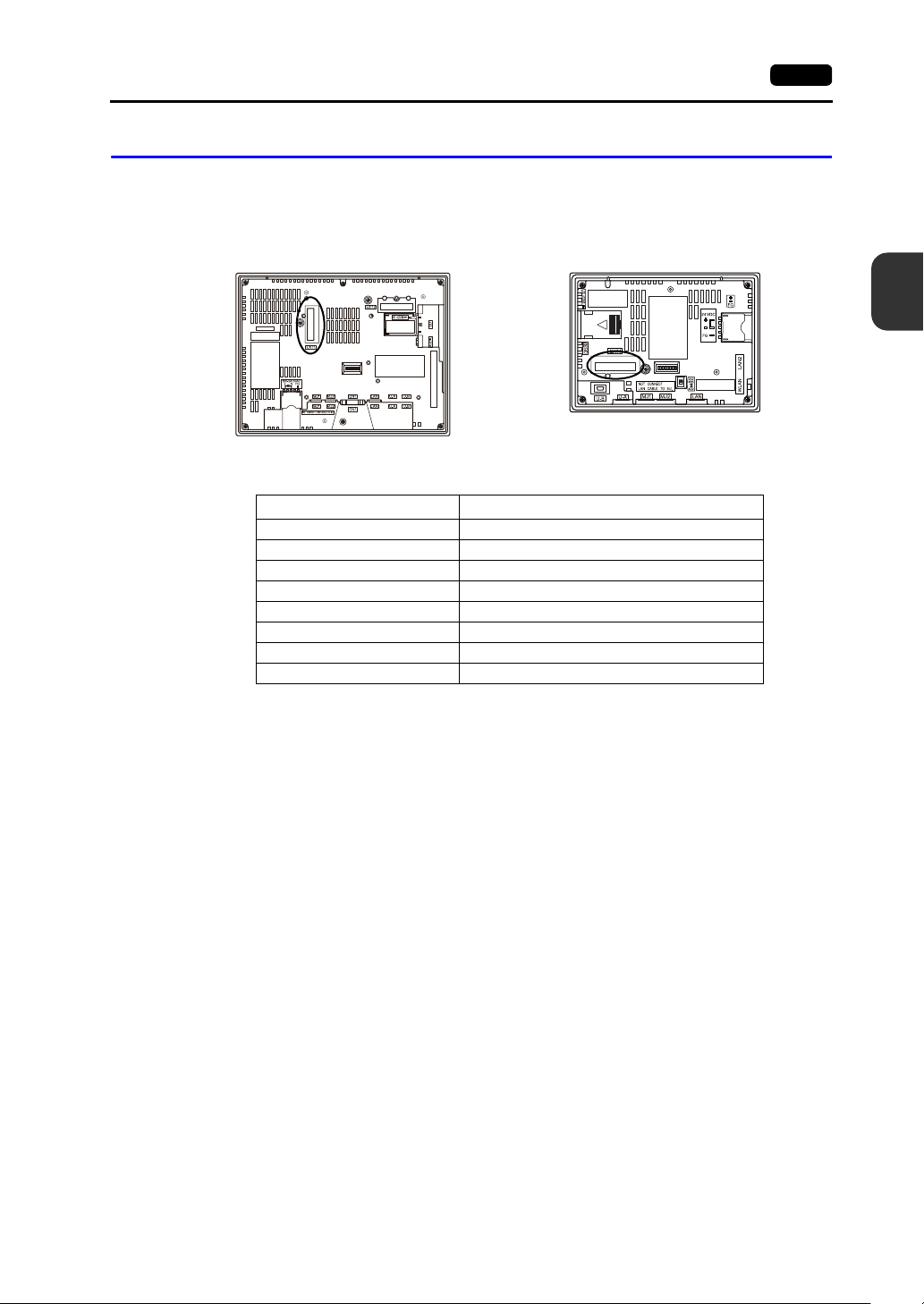
Communication Interface Unit Connector (EXT1)
This is a connector for attaching the communication interface unit “CUR-xx”.
The connector on the V907xiW, V9060iTD can also be used for attaching the optional “DUR-00” unit.
The types of communication interface units are shown below.
* For details on specifications and how to attach a communication interface unit, refer to the
respective V9 Series Communication Unit Specifications.
Type Communication Specification
CUR-00 OPCN-1
CUR-01 T-Link
CUR-02 CC-Link
CUR-03 Ethernet
CUR-04 PROFIBUS-DP
CUR-06 SX BUS
CUR-07 DeviceNet
CUR-08 FL-net
Rear view Rear view
V9100 V907xiW