00197088-03_AI_Barcode_SICK620_SX12_X-S_TX_DE_EN.pdf - 第121页
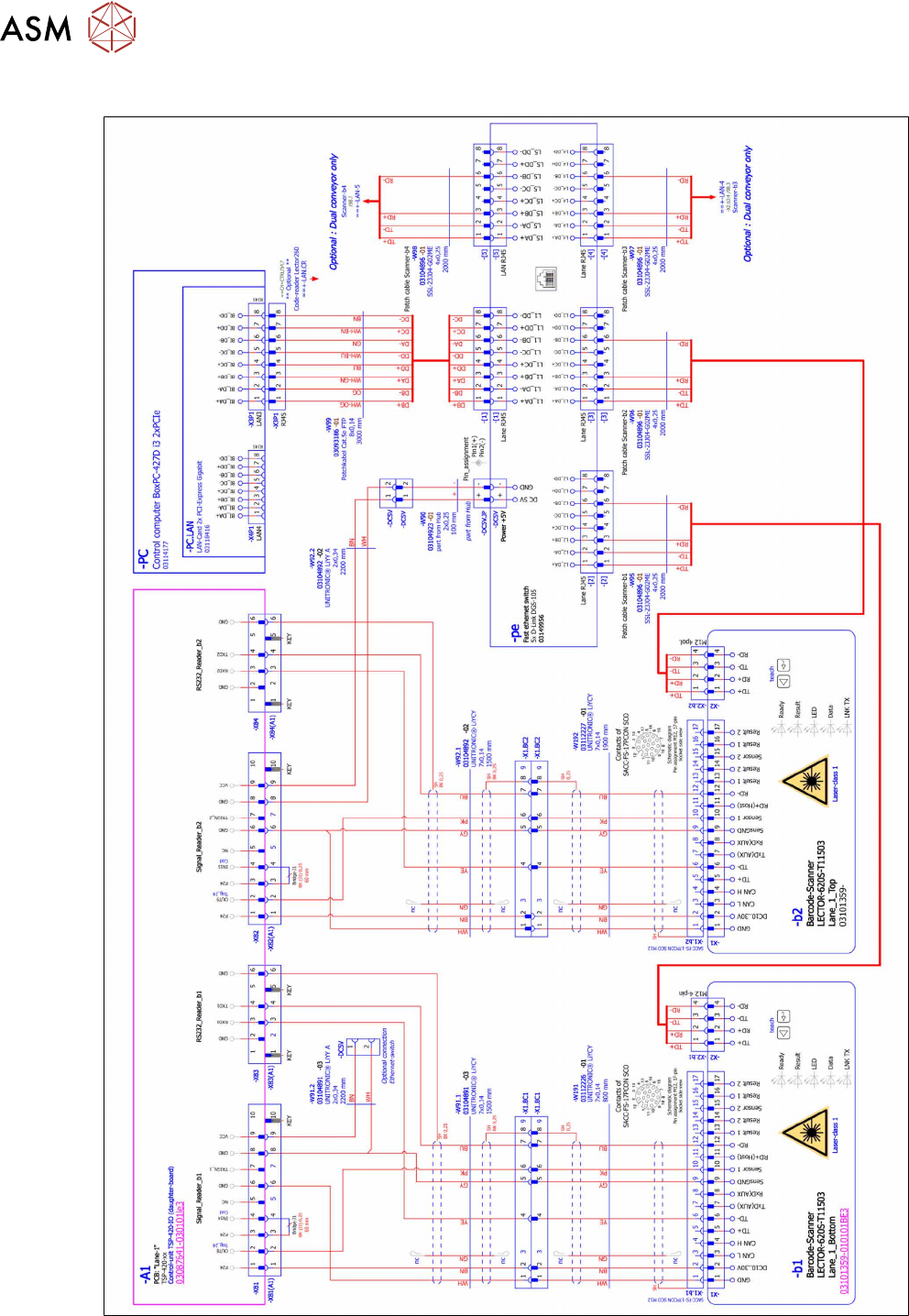
5 Appendix 5.1 Circuit Diagrams Assembly Instructions / Montageanleitung SIPLACE TX-Series, X-Series S, SX1/SX2 V2 Option PCB Barcode / LP-Barcode (Lector 620) 05/2019 121 Fig.80: Lector 620 at SIPLACE TX-Series - 2
5 Appendix
5.1 Circuit Diagrams
120 Assembly Instructions / Montageanleitung SIPLACE TX-Series, X-Series S, SX1/SX2 V2
Option PCB Barcode / LP-Barcode (Lector 620) 05/2019
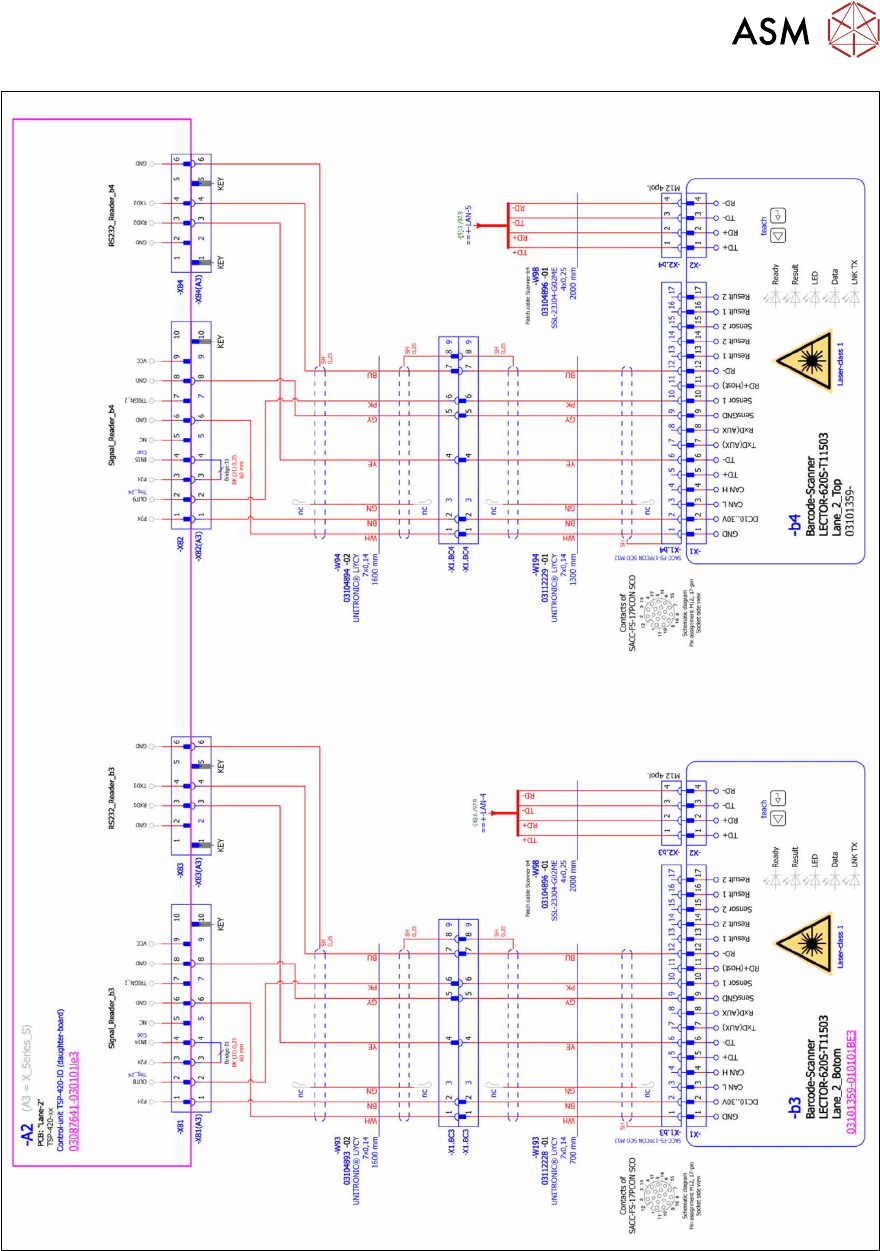
5.1.3 SIPLACE TX-Series Circuit Diagrams
Fig.79: Lector 620 at SIPLACE TX-Series - 1
5 Appendix
5.1 Circuit Diagrams
Assembly Instructions / Montageanleitung SIPLACE TX-Series, X-Series S, SX1/SX2 V2
Option PCB Barcode / LP-Barcode (Lector 620) 05/2019
121
Fig.80: Lector 620 at SIPLACE TX-Series - 2
5 Appendix
5.2 General Notes About the Barcode
122 Assembly Instructions / Montageanleitung SIPLACE TX-Series, X-Series S, SX1/SX2 V2
Option PCB Barcode / LP-Barcode (Lector 620) 05/2019
5.2 General Notes About the Barcode
In this day and age, increasing numbers of components, individual components, semi-finished and
end products are being uniquely identified with a barcode, which makes them easier to check. This,
in turn, makes it easier to control production, stock-keep and to trace components in the event of
errors. Both one-dimensional (1D, e.g. barcodes) and two-dimensional (2D, e.g. data matrix codes)
codes can be used.
NOTICE
Barcode changeover
Before you use a new barcode, we recommend that you contact your SIPLACE Service
team and have the barcode tested in advance.
5.2.1 Structure of 2D Barcodes
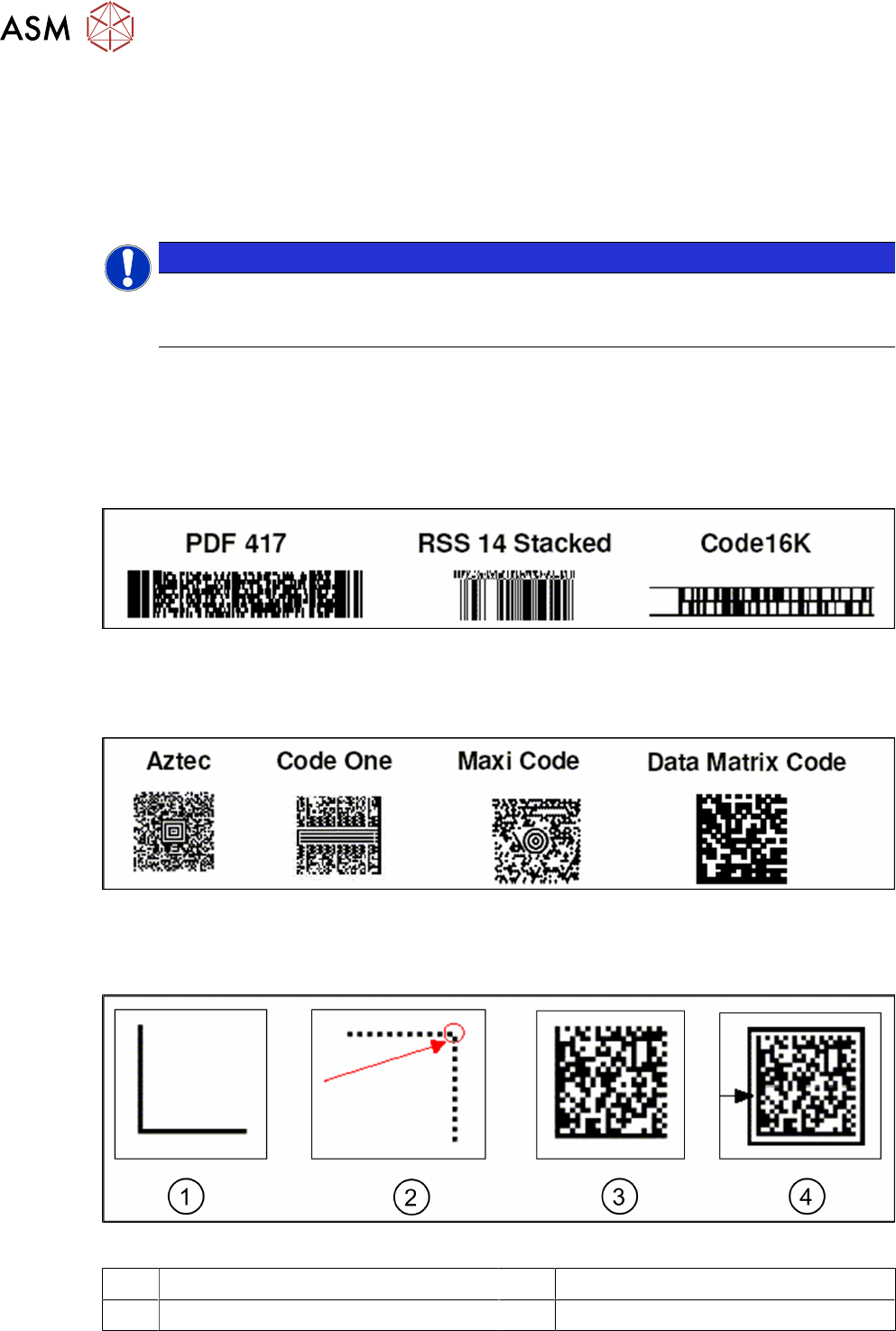
Barcode types:
1. "Stacked" codes, these are essentially one-dimensional barcodes that are printed directly over
one another. Typical stacked barcodes include the PDF 417, RSS-14 Stacked and the 16K
code.
Fig.81: Stacked barcodes
2. 2D barcodes, known as "matrix codes" are another variant of the 2D barcodes. Again there
are various types commonly used, such as Aztec code, Maxi code, Code One and the data
matrix code.
Fig.82: 2D barcodes
Data matrix code:
The data matrix code consists of 4 main components.
Fig.83: Four main components of the data matrix code
1 Corner 2 Opposite corner
3 Storage area 4 Rest zone