00194845-0302_MM_D1_D2_EN.pdf - 第82页
10 Maintain the v alve plungers SIPLA CE D1 / D2 02/2010 EN E dition 82 10 Maint ain the valve p lungers 10
SIPLACE D1 / D2 9 Maintain the sleeves
02/2010 EN Edition
81
a Clean the edge of the sleeve using a lint-free cloth moistened with ethyl alcohol.
9
s Clean the incremental disc of the sleeve using a lint-free cloth moistened with ethyl alcohol.
9
d Clean the sleeve shaft using a lint-free cloth moistened with ethyl alcohol.
9
f Carefully clean the circumference of the ball catch with a lint-free cottonwool bud moistened
with ethyl alcohol.
9
9
10 Maintain the valve plungers SIPLACE D1 / D2
02/2010 EN Edition
82
10 Maintain the valve plungers
10

SIPLACE D1 / D2 10 Maintain the valve plungers
02/2010 EN Edition
83
10
10
You will need to maintain the valve plungers: 10
– Valve plunger C&P 12 (6 in one package) (item no. 00351498-03)
– ISOFLEX TOPAS NCA52 (article no. 00328369-01, 00330850-01 tube 50g)
– Lint-free cloths.
10
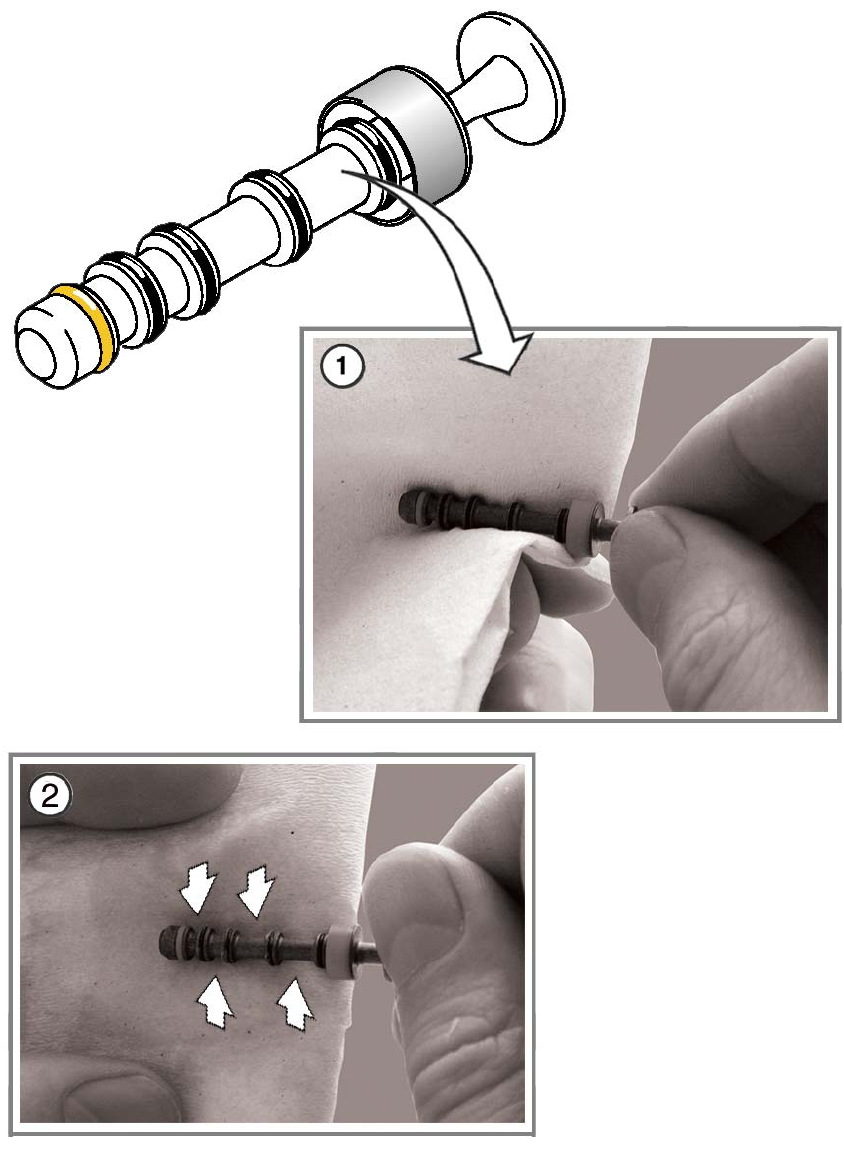
a Wipe the valve plunger using a dry, lint-free cloth.
: Check the sealing lips, the spring O-ring and the sleeve for damage.
If they are damaged, replace the valve plunger.
A loose sleeve that is still intact may be refitted.
Distinguish between the dirty and the clean valve plungers by identifying the packings accordingly,
for example. 10
10
10
10
When inserting:
Test the valve plungers to ensure that they do not move too easily (too loose). 10
10
Replace any plungers that are either too loose or too tight.
Move the valve plungers back and forward several times.
Make sure that the valve plunger is inserted as far as the stop. 10
10
During operation:
The "Segment leaking" error message generally indicates a valve plunger that is too loose. 10
10
10
s Grease the sealing lips extremely sparingly using a lint-free cloth dipped in ISOFLEX TOPAS
NCA 52 No grease residues must be seen.
10
10
The identified grooves must be left grease-free. 10
10
10
10
New valve plungers must also be greased before they are used for the first time.
10
10
10
10