00196749-02_UM_LDU-X_EN.pdf - 第95页
8 Process Technology 8.12 Thixotropy and viscosity Operating Manual SIPLACE LDU-X Linear Dipping Unit 11/2017 95 8.12 Thixotropy and viscosity Some flux types have substances added to influence the viscosity. Some materi…
8 Process Technology
8.11 Cicatrization time
94 Operating Manual SIPLACE LDU-X Linear Dipping Unit 11/2017
8.11 Cicatrization time
Flux can consist of several different components. These are typically:
●
Colophony or resin (solderability, adhesive force, cleanliness, pressure application)
●
Activator (solderability, reliability, product life, cleanliness)
●
Stabilizer (thixotropic stability, pressure application, contour stability)
●
Solvent (resistance behavior, adhesive force, viscosity)
The solvent in flux is water or alcohol based. These substances evaporate with time if the flux is
kept in an open tank.
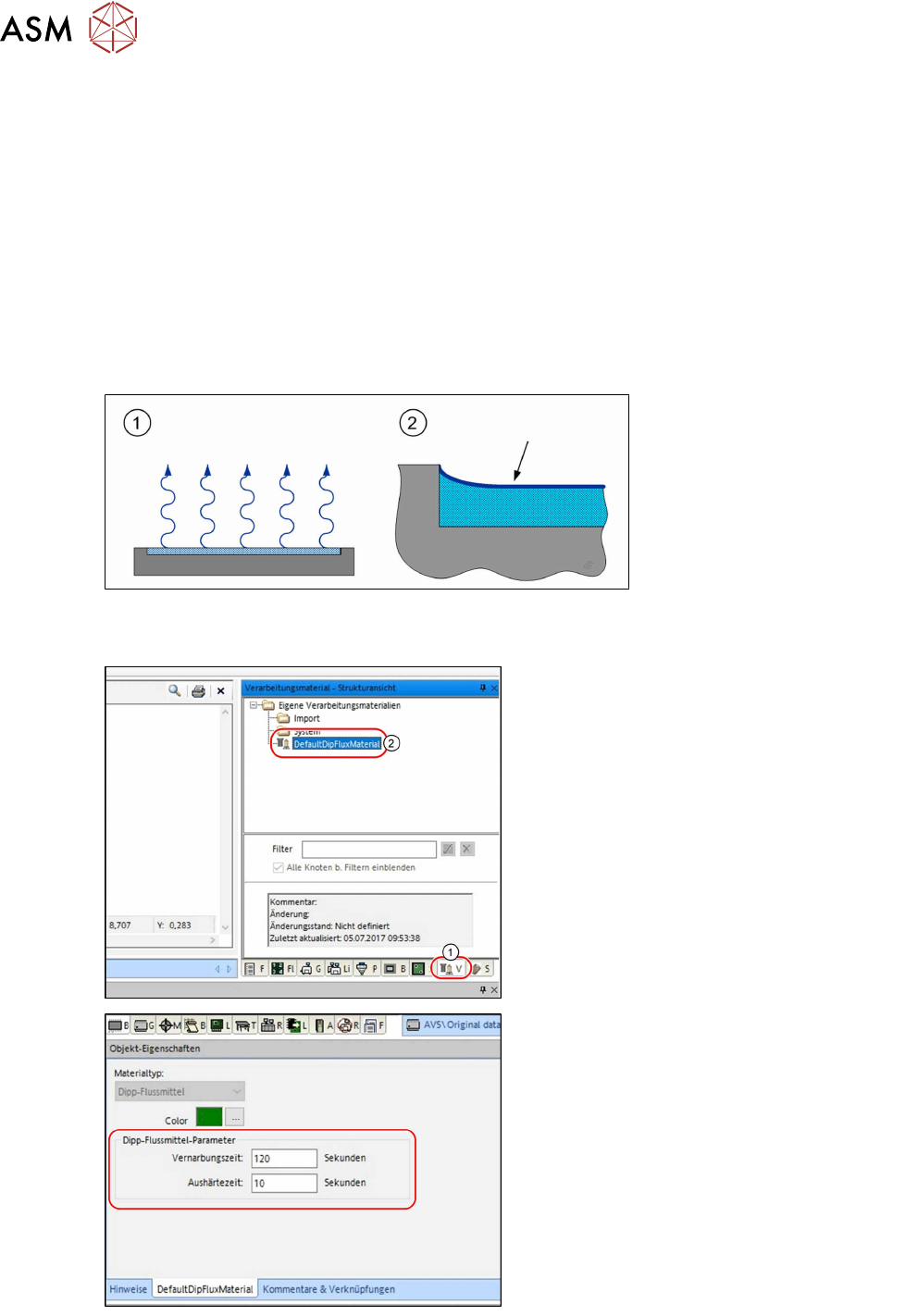
The LDU-X has a very thin layer or flux in the dip plate cavity. This means that the solvent can
evaporate over a large surface (1). A thin skin then forms on the surface of the flux (2). Inside this
skin, the process properties of the flux differ from those in the remaining flux.
If you can reckon with longer standstill (inactive) times during the production run, you can set a ci-
catrization time in SIPLACE Pro. The LDU-X will then perform an application run after this period
has expired.
► In SIPLACE PRO, switch over to the Pro-
cess material(1)view .
► Doubleclick on DefaultDipFluxMater-
ial(2)in the tree structure.
► Go to the Dip flux parameters and specify
a cicatrization time and a curing time for
the flux used. For details, consult the data
sheet for your flux.
8 Process Technology
8.12 Thixotropy and viscosity
Operating Manual SIPLACE LDU-X Linear Dipping Unit 11/2017 95
8.12 Thixotropy and viscosity
Some flux types have substances added to influence the viscosity. Some materials also change
their viscosity under pressure. Examples from everyday life include mayonnaise and ketchup. May-
onnaise is very thick but thins out under pressure. Ketchup pours better from the bottle if it is
shaken first. This means that the viscosity changes after the substance has been moved. These
kinds of substances are known as thixotropic.
Most substances increase their viscosity when cooler and reduce it when warmed.
The LDU-X provides a warming function. This helps to influence the viscosity of flux before it is
used. Once this function is started, the flux tank moves back and forth for a set time. This moves
the flux and "warms" it up.
For details about this function, refer to chapter 4 "Software Description" [}21].
8.13 Checking the layer thickness
There are numerous measuring devices for paintshops and coating specialists on the market,
which are used to measure the layer thicknesses of paints, varnishes, pastes etc. (wet film thick-
ness measurement gauge). Two common means of measuring are explained below. One of the
main advantages of these instruments is their ease of use. Precise measurements are achieved
quickly in the production environment.
These devices are available, for example, from Erichsen GmbH: www.erichsen.de
8.13.1 Flux Layer Height Measuring Device "Comb"
Structure of measuring device
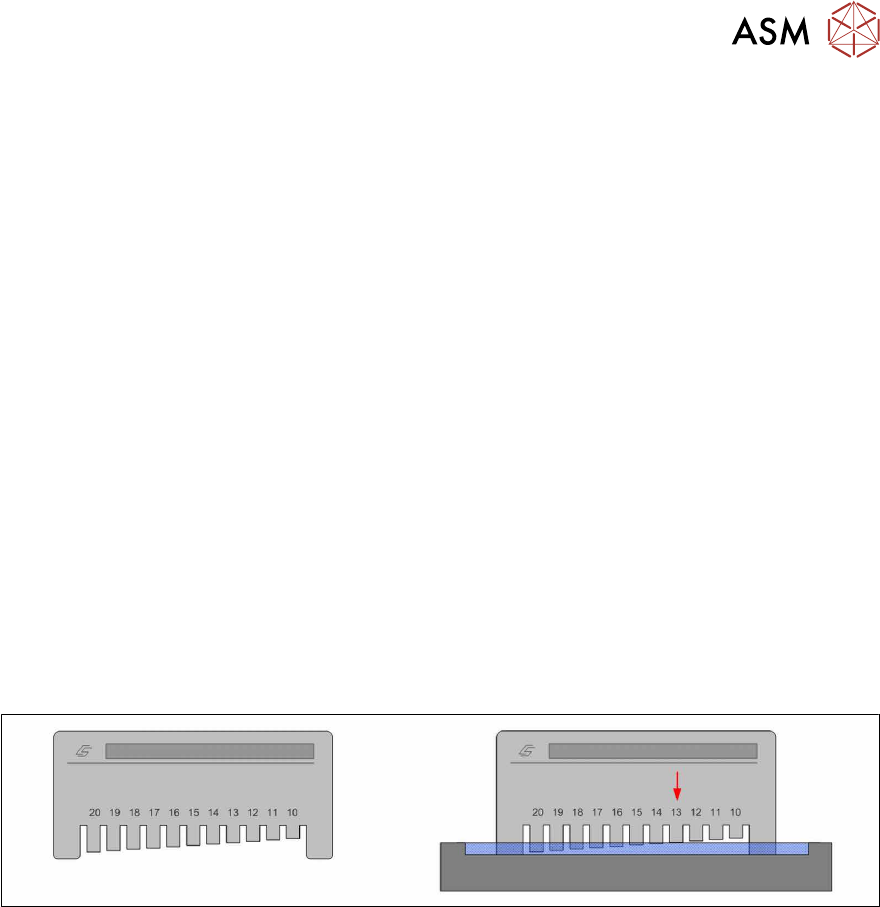
On one side of the rectangular measuring instrument there are engraved teeth with increasing spa-
cing from the contact surface. A scale is marked above the teeth and the engraved numbers indic-
ate the distance from the contact surface in µm. These measuring devices are usually made of
steel so that they can be cleaned with solvents.
Measurement principle
The measuring device is dipped into the layer of flux. The point at which the flux touches a tooth is
the layer thickness measurement (arrow in righthand image).
Performing the measurement
► Place the measuring device vertically onto the flux surface and press down to the base of the
cavity.
► Perform a brief "combing" movement while applying moderate pressure.
► Take the measuring device vertically up and out of the flux.
► Read the layer thickness on the scale from the first tooth which is coated.
8 Process Technology
8.13 Checking the layer thickness
96 Operating Manual SIPLACE LDU-X Linear Dipping Unit 11/2017
8.13.2 Flux Layer Height Measuring Device "Reel"
Structure of measuring device
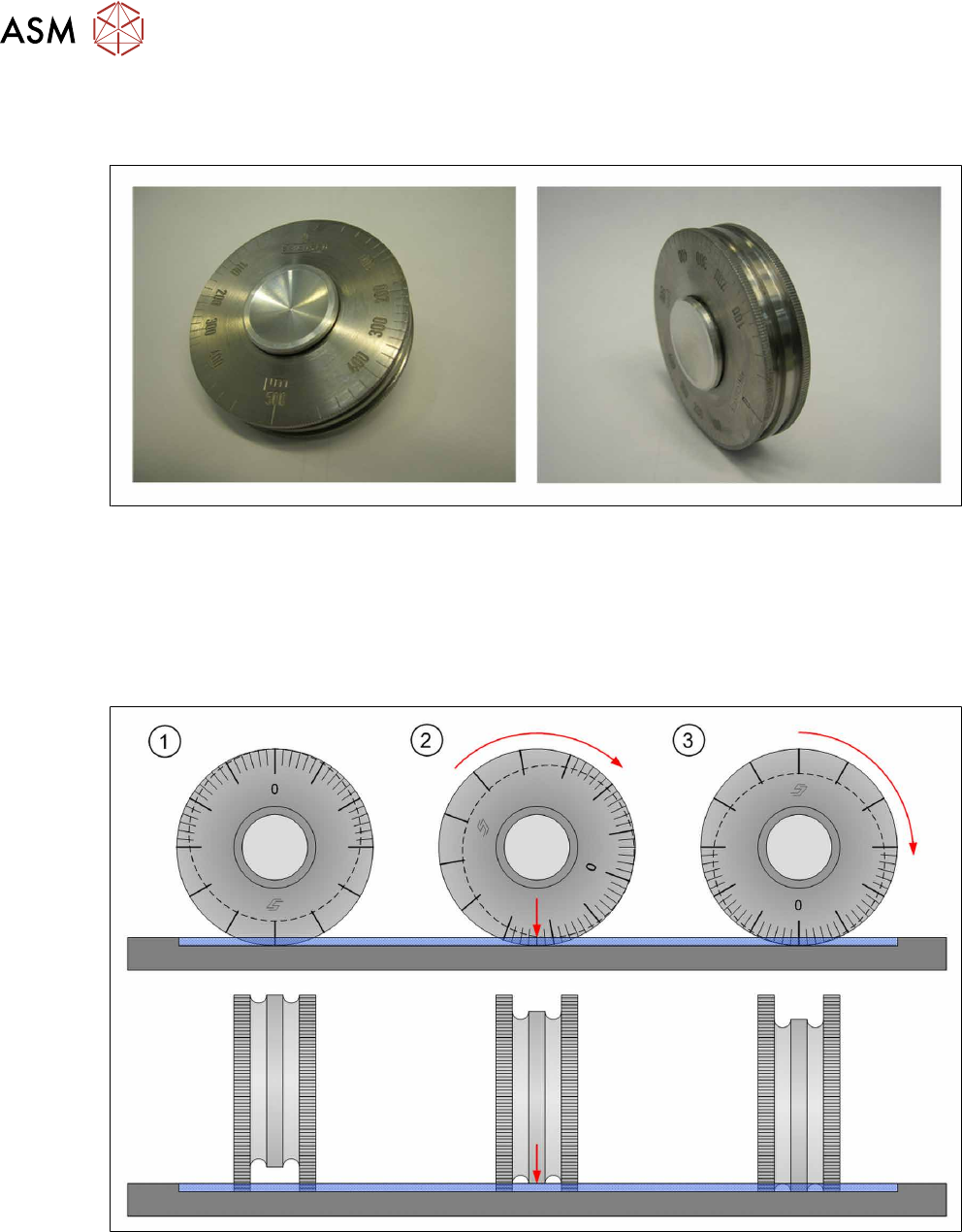
The measuring device consists of three rollers. The innermost roller has a small diameter and runs
eccentrically to the other two outer rollers. A scale is marked on the outside. These measuring
devices are usually made of stainless steel so that they can be cleaned with solvents.
Measurement principle
The measuring device is rolled through the layer of flux. The two outer rollers moved on the base of
the cavity. The eccentrically aligned middle roller is rotated and guided towards the surface of the
flux. The point at which the flux touches this middle roller is the layer thickness measurement.