KE-2030使用说明书.pdf - 第433页
6 − 87 The s y stem r e-clam ps a boar d that was located on the PW B transport path when the previous pr oduction was interrupted. W hen this image appear s on the sc reen, norm ally no trouble will occur if the system …
6 − 86
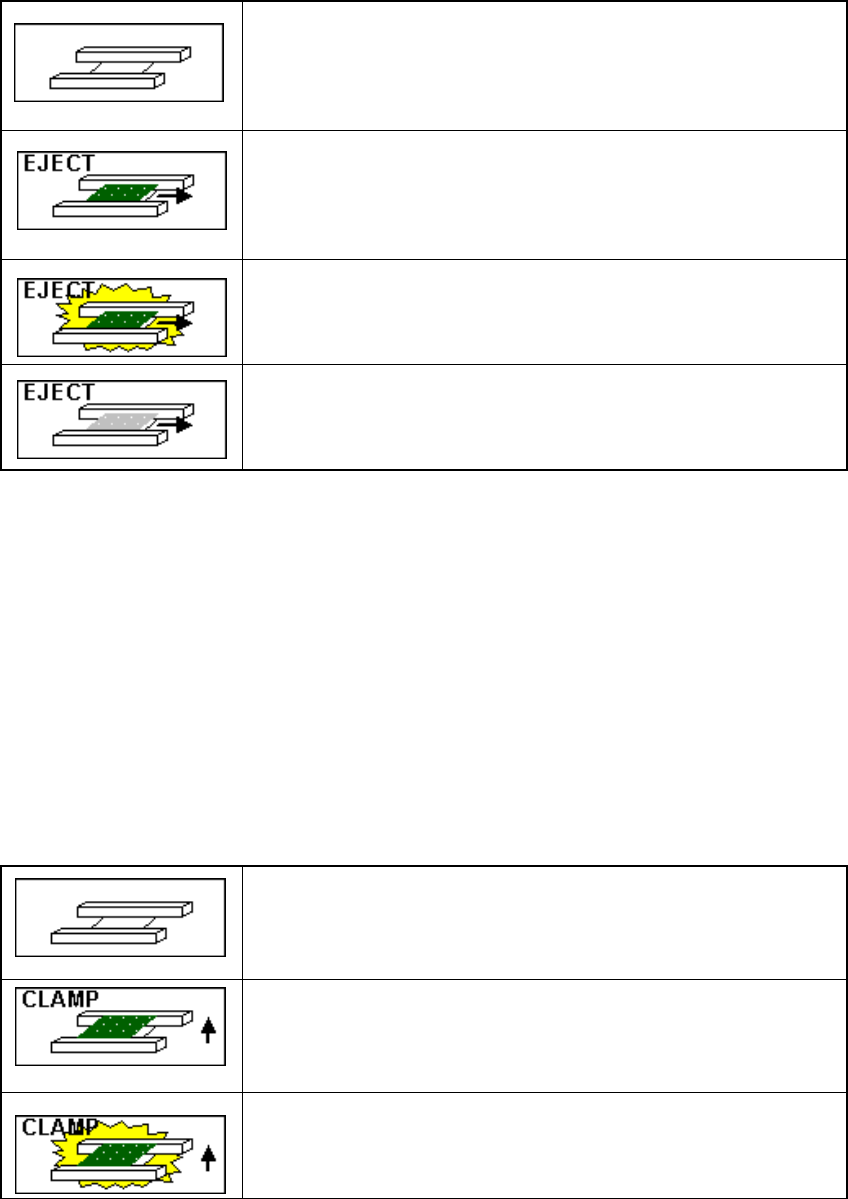
1). When the radio button “Load a new PWB” is selected
The system displays the condition of the PWB transport path detected by the stop
sensor on the screen as the station that is to eject a board.
There is no board on the PWB transport path.
A board is to be ejected from the PWB transport path.
Although a board was detected on the PWB transport path while
production was being interrupted, the system has to eject it since
all of the necessary components are already placed on the
board.
A board is to be ejected from the PWB transport path.
However, some component(s) may not be placed on the board
or may be placed at a wrong position. Be careful to eject the
board.
A board is to be ejected from the PWB transport path.
When this image appears on the screen, normally no trouble will
occur if you eject a board.
However, there is no board on the PWB transport path now.
◇ When you click this image, the machine moves a board located on the left or right
center station to a position where the machine can re-clamp it.
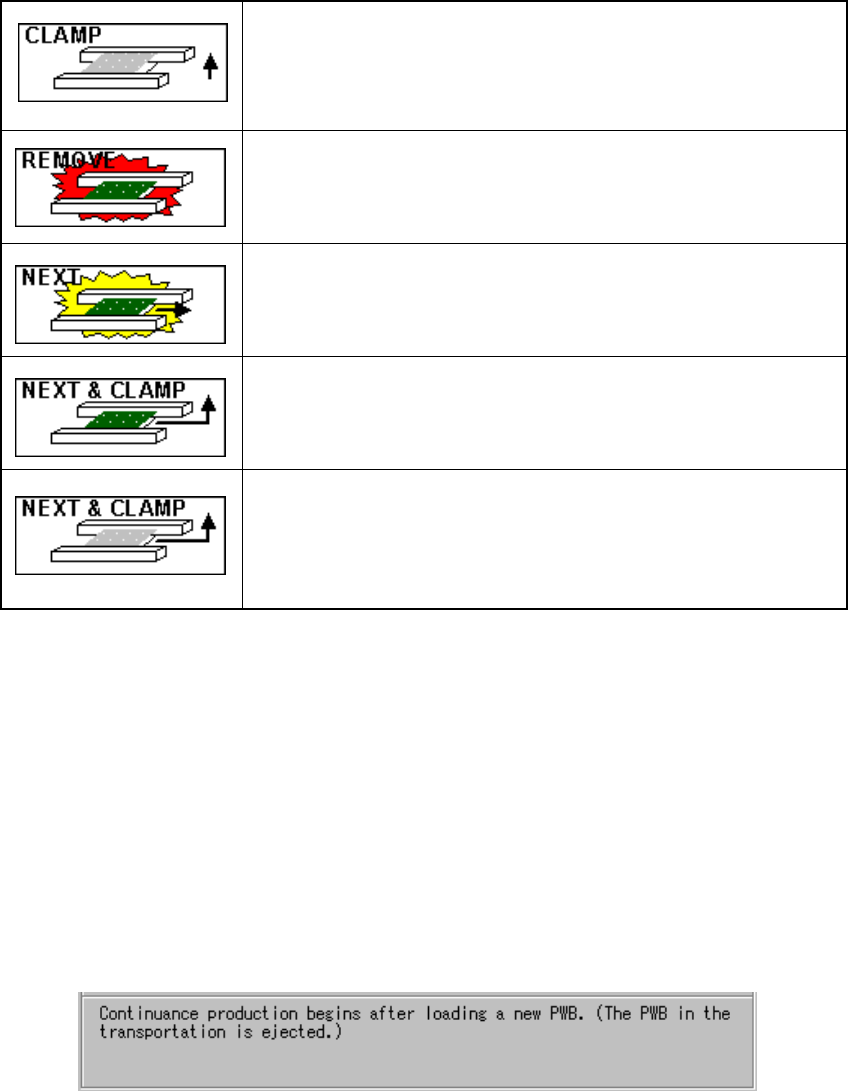
2). When the radio button “Re-clamp current PWB” is selected
The system displays the condition of the PWB transport path detected by the stop
sensor on the screen as the station that is to clamp the board again. Or, if the
system has the information on the PWB transport path obtained when the
previous production was interrupted (that is, if you have not loaded a production
file and not quitted the “Production” screen before resuming the production after
interrupting it), it displays the same condition of the PWB transport path as the
previous condition on the screen when it clamps a board.
There is no board on the PWB transport path.
The system re-clamps a board that was located on the PWB
transport path when it finished the previous production.
When this image appears on the screen, normally no trouble will
occur if the system clamps a board.
The system clamps a board on the PWB transport path again.
However, some component(s) may not be placed on a board or
placed at a wrong position of a board. Be careful to clamp a
board again.
6 − 87
The system re-clamps a board that was located on the PWB
transport path when the previous production was interrupted.
When this image appears on the screen, normally no trouble will
occur if the system clamps a board. However, there is no board
on the PWB transport path.
Remove a board from the PWB transport path.
Move a board located on the PWB transport path from the IN
station to the OUT station.
The system moves a board that is located on the PWB transport
path from the IN station to the OUT station, and clamps it again.
When this image appears on the screen, normally no trouble will
occur if the system clamps a board.
The system re-clamps on the OUT station a board that was
located on the IN station when the previous production finished.
When this image appears on the screen, normally no trouble will
occur if the system clamps a board. However, there is no board
on the PWB transport path now.
◇ When you click this image, the machine moves a board located on the left or right
center station to a position where the machine can re-clamp it.
④ Operation information displayed when the system ejects a board or clamps it
again
The system displays the various notes on your selection of the radio button “Load
a new PWB” or “Produce after re-clamp.” and actual operation to be performed
depending on the continuous production information and the condition of the PWB
transport path.
Figure 6.4.15.1.4 Operation information when you are to eject a board or clamp it
again
6 − 88
The actual operation to be performed according to your selecting
each item on the “Processing before production begins” dialog box
is described below.
Ⅰ
ⅠⅠ
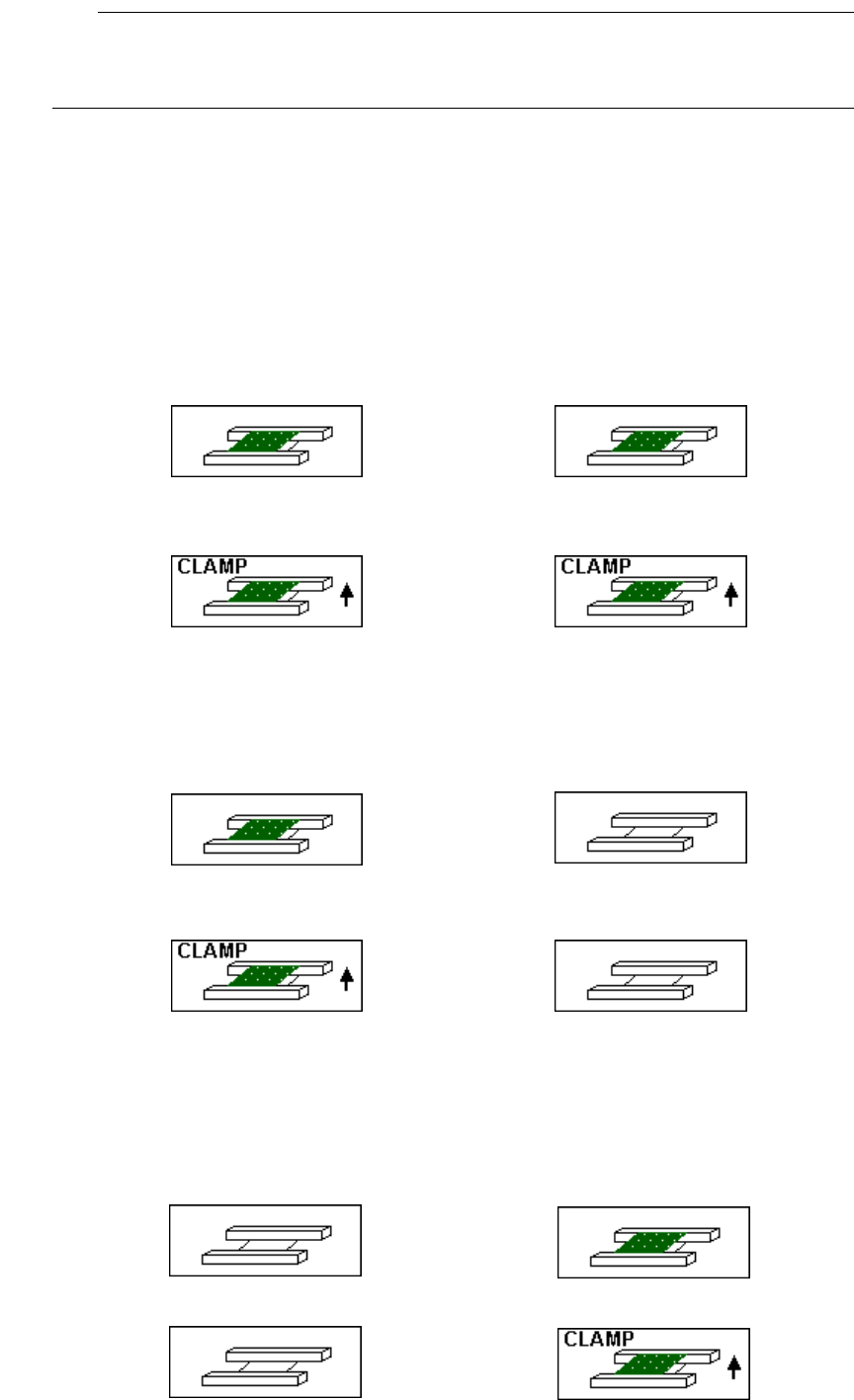
Ⅰ When there is a continuous production file
(1) When the system re-clamps a board (When the system resumes the suspended
production)
◇ If you have interrupted the current production
① When the system performs PWB production in Simultaneous Production mode,
you select “Sequential and Mix Mode” as the placement mode, and boards are
located on both of the stations
IN station (during production) OUT station (during production)
↓
IN station (re-clamping is available) OUT station (re-clamping is available)
② While the system is producing a PWB with the IN station (Only the IN station is
used for production or the IN station is used for production in “Sequential and Mix”
mode)
IN station (during production) OUT station (no board)
↓
IN station (re-clamping is available) OUT station (no board)
③ While the system is producing a PWB with the OUT station (Only the OUT station
is used for production, the OUT station is used for production in “Sequential and
Mix” mode, or a board load time-out error occurs in Simultaneous Production
mode and so only the OUT station is used for production.)
IN station (no board) OUT station (during production)
↓
IN station (no board) OUT statio(re-clamping is available)n