4OM-1208-011_w.pdf - 第221页
5-B AIVEMT -ID 0606-009

5-A
AIVEMT-ID
0606-009
Chapter 5
Troubleshooting on Component Picks and Placement
This chapter describes the scope of troubleshooting on
component picks and placement.
•
Classification of Failure Symptoms and Helpful Hints on
Countermeasures against Failure
•
Troubleshooting on Pickup Errors
•
Troubleshooting on Component Placement Errors

5-B
AIVEMT-ID
0606-009
5-1
AIVEMT-ID
0606-009
1. Classification of Failure Symptoms and Helpful Hints on Countermeasures against Failure
1. Classification of Failure Symptoms and Helpful
Hints on Countermeasures against Failure
1.1 Classification of Failure Symptoms
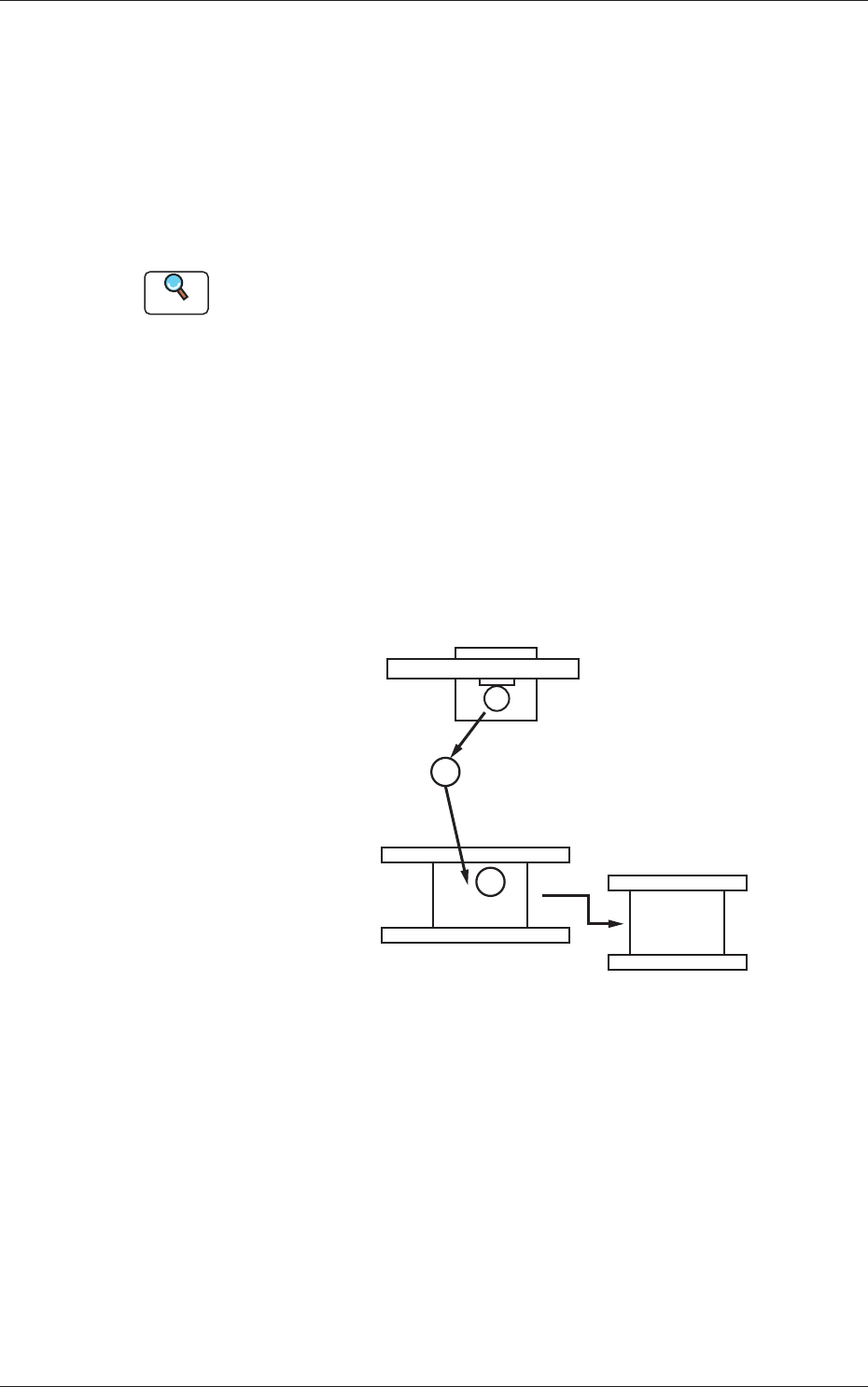
The machine processes can be classified into Processes A, B, C, D, and E as
shown below.
Reference
Refer to "3. Surface Mounting Mechanism" in "Chapter 1 (Vol. 1: Guide)"
for the outline of actions.
Process A : The placement head moves to the feeder base and picks up
a component.
Process B : The head moves to the area where the component
recognition camera is installed and a component
recognition process is taken there.
Process C : The placement angle is corrected while the head is moving
to the PCB positioning section.
Process D : The component is placed on the PCB.
Process E : The component-placed PCB is discharged.
1
2
3
Feeder Base Section
Component Recognition Camera
PCB Positioning Section
Process A
Process B
Process C
Process D
Process E
Fig. 4E1
Based on these processes, failures can be divided roughly into the following
two types.
Failure before Component Placement : This type of failure occurs
mainly in Processes A, B, and
C.
Failure after Component Placement :
This type of failure occurs
mainly at Processes D and E.