4OM-1208-011_w.pdf - 第228页
5-7 AIVEMT -ID 0606-009 Sprocket Dirt and/or Component Adhesion Suppressor Lifting, Deformation, and/or Component Adhesion on Inner Side Front Hook Deformation Cover T ape T ake-Up Gear Dirt and/or Component Adhesion Cle…
5-6
AIVEMT-ID
0606-009
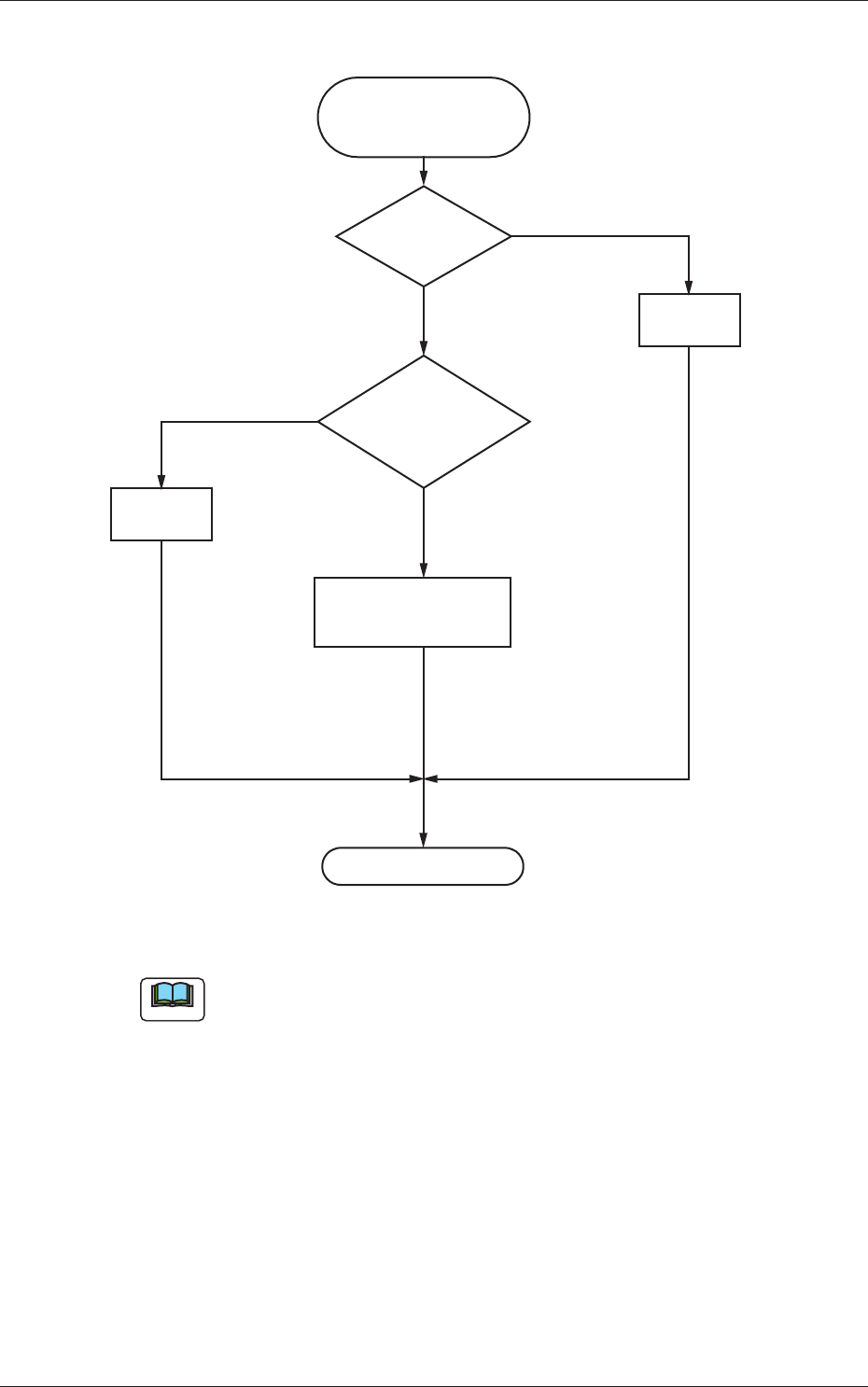
(2) Frequent Pickup Errors on Specific Feeder Slot No.
Frequent Pick-Up Errors
on Specific Feeder Slot No.
Operation Check
Correction
OK
NG
Note (b)
OK
OK
NG
Note (a)
Feeder Check
Collation
with Component
Library Data
Verification of Feeder (B)
Offset Data
Adjustment
Fig. 4E4
Note
(a) See Figs. 4E5 and 4E6 on the next page for the checkpoints on tape
feeders.
(b) When a tape feeder loaded with different components is installed, the
pickup position (data) must be checked and the feeder (B) offset data
must be cleared or modified for the new components after the program
change operation because it is prepared for the previous components.
2.2 Symptom-Based Troubleshooting
5-7
AIVEMT-ID
0606-009
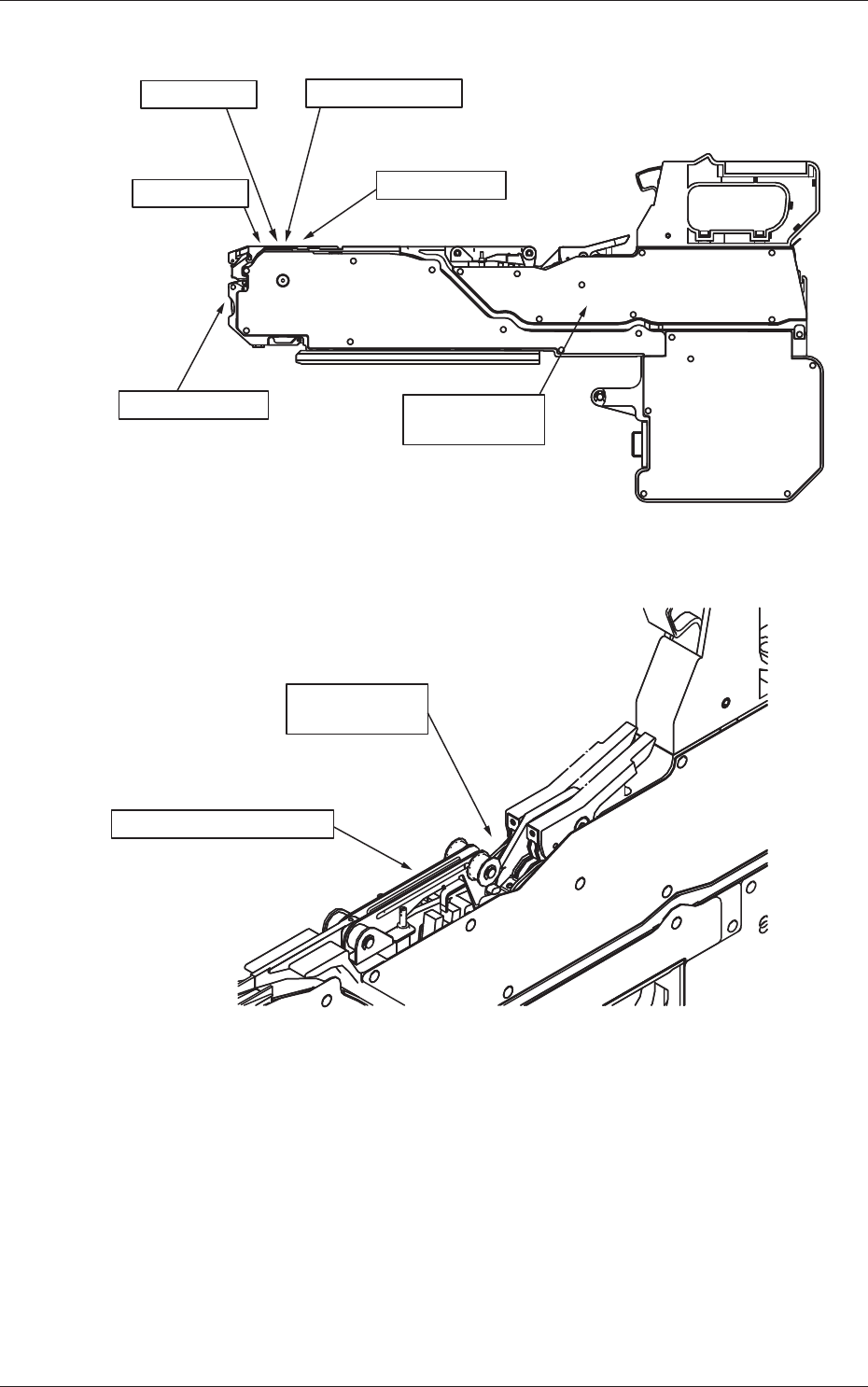
Sprocket
Dirt and/or
Component Adhesion
Suppressor
Lifting, Deformation,
and/or Component
Adhesion on
Inner Side
Front Hook
Deformation
Cover Tape
Take-Up Gear
Dirt and/or
Component Adhesion
Clearance, Deformation,
and/or Dirt
Pickup Position
Peeling Area
Positioning and/or
Elimination of Positional Deviation
Fig. 4E5
Cover Tape
Take-Up Gear
Dirt and/or
Component Adhesion
Threading of Cover Tape
This should be mounted
correctly.
Fig. 4E6
2.2 Symptom-Based Troubleshooting
5-8
AIVEMT-ID
0606-009
3. Troubleshooting on Placement Errors
3.1 Cause and Remedy of Placement Errors
(1) Positional and Angular Deviations of Component Placement
(1-1) Situational Grasp of Error Generation
Positional and angular deviations may be generated in either Process C
or D and E.
See Fig. 4E1.
By placing a component on the PCB where a double-faced adhesive
tape is affixed, it can be checked and determined in which process
positional and angular deviations are generated.
When a positional deviation is generated on the double-faced tape, it
indicates that positional and angular deviations occur in Process C.
When no positional deviation is generated, it means that positional and
angular deviations occur in Process D or E.
(1-2) Positional and Angular Deviations in Process C
When a positional deviation is generated due to the movement of the
head
after component recognition or a rotational deviation by placement
angle correction, the deviation may be caused mainly by the following
two factors.
•
Deterioration of Vacuum Suction Force
•
V
ibration or Shock during Nozzle (Head) Movement
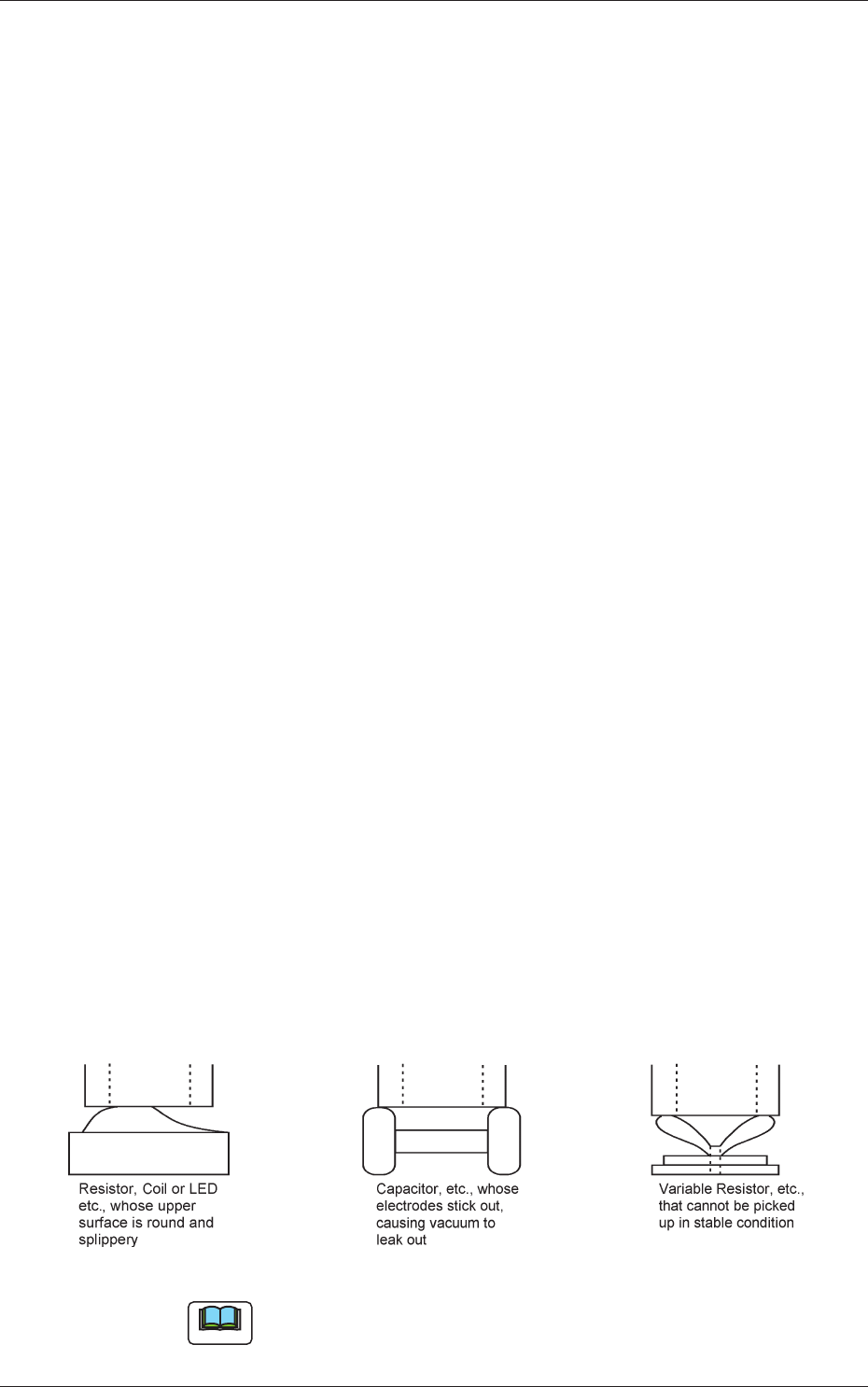
When one of the above factors exists, unstable components (components
that cannot be picked up in stable condition) such as those shown in
Fig. 4E7 are directly affected.
When a positional deviation is generated on the components (the
components of the same type that have been used in the past actual
production), check for the above-described factors.
As for vacuum suction force, check the nozzle and the vacuum line.
As for vibration during nozzle movement, check the related spots in the
range of Process C.
Fig. 4E7 Easily-Dislocated Components during Placement (Example 1)
Note
When there is a protruding portion on the upper surface of a component,
the lower surface of the vacuum nozzle may be worn out, causing an error
during the teaching operation through component recognition lighting.
3. Troubleshooting on Placement Errors