MIL- STD-883F 2004 TEST METHOD STANDARD MICROCIRCUITS.pdf - 第257页
MIL-STD-883F METHOD 2010.11 18 June 2004 47 Condition A Conditi on B Class le vel S Class lev el B f. Cracks or te ars in the effective bonded area of the beam greater than 50 perc ent of t he origi nal beam widt h. g. B…
MIL-STD-883F
METHOD 2010.11
18 June 2004
46
Condition A Condition B
Class level S Class level B
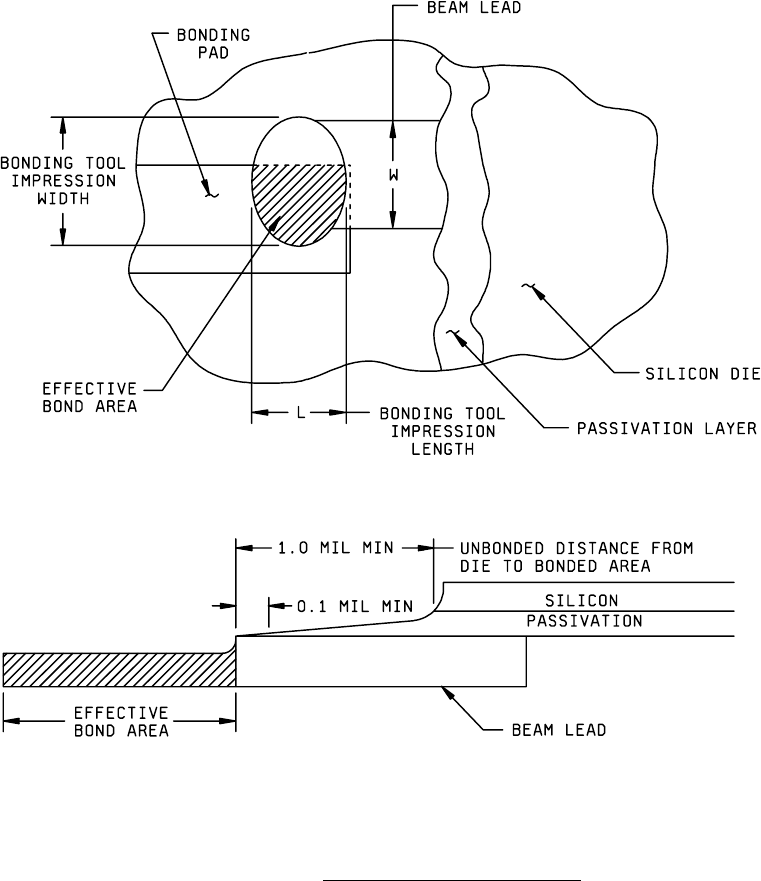
e. Effective bonded area less than 50 percent of that which would be possible for an exactly aligned beam (see
figure 2010-37).
FIGURE 2010-37. Beam lead bond area and location
.

MIL-STD-883F
METHOD 2010.11
18 June 2004
47
Condition A Condition B
Class level S Class level B
f. Cracks or tears in the effective bonded area of the beam greater than 50 percent of the original beam width.
g. Bonds placed so that the separation between bonds and between bonds and operating metallization not
connected to them is less than 0.1 mil.
h. Bonds lifting or peeling.
3.2.4.2 Beam leads
. No device shall be acceptable that exhibits the following:
a. Voids, nicks, depressions, or scratches that leave less than 50 percent of the beam width undisturbed.
b. Beam separation from the die.
c. Missing or partially fabricated beam leads unless by design.
d. Beam leads that are not bonded.
e. Bonded area closer than 0.1 mil to the edge of the passivation layer.
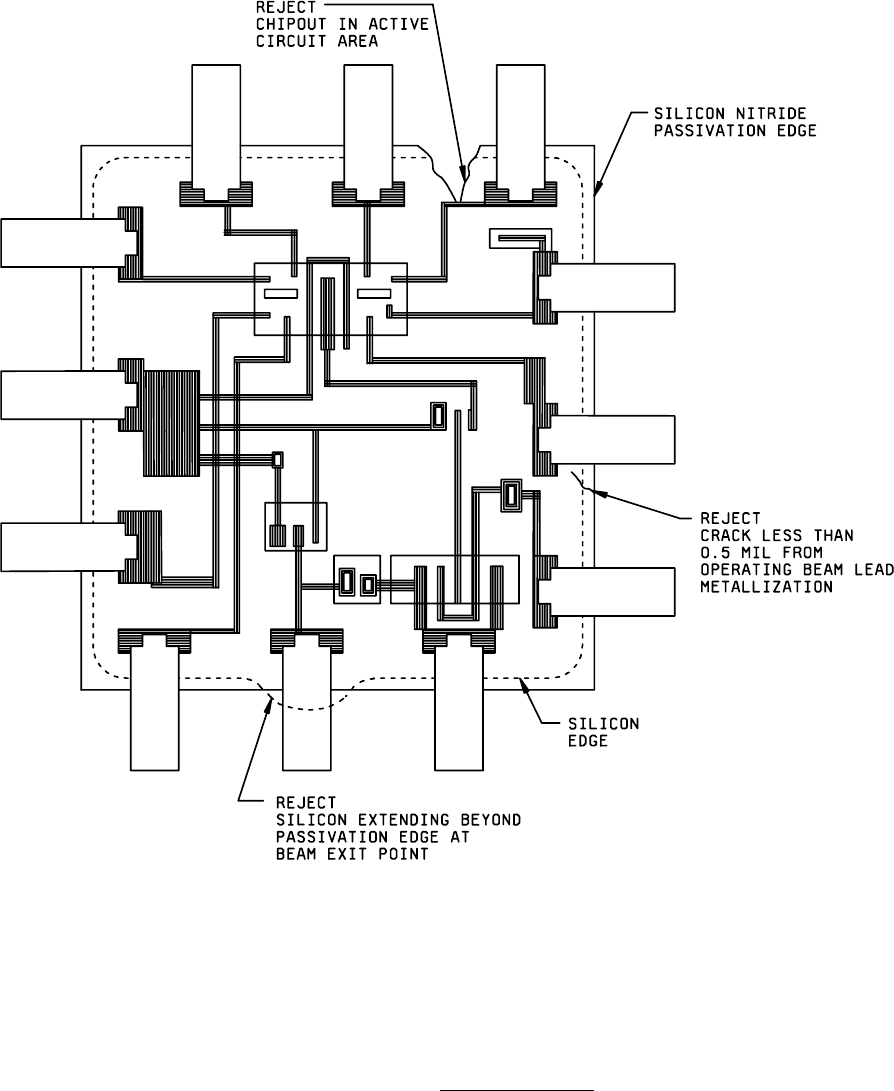
f. Less than 0.1 mil passivation layer between the die and the beam visible at both edges of the beam (see figure
2010-37 and 2010-38).
MIL-STD-883F
METHOD 2010.11
18 June 2004
48
FIGURE 2010-38. Beam lead die faults
.