MIL- STD-883F 2004 TEST METHOD STANDARD MICROCIRCUITS.pdf - 第434页
MIL-STD-883F METHOD 2032.2 18 June 2004 28 C lass H Cla ss K 3.1. 7 a. A ker f width l ess t han 0.1 mil (see 3.1. 7 a. Same as cl ass H. figur e 2032-23h). NOTE: This does not appl y to edge tri mming. FIGURE 2032-23h. …
MIL-STD-883F
METHOD 2032.2
18 June 2004
27
Class H Class K
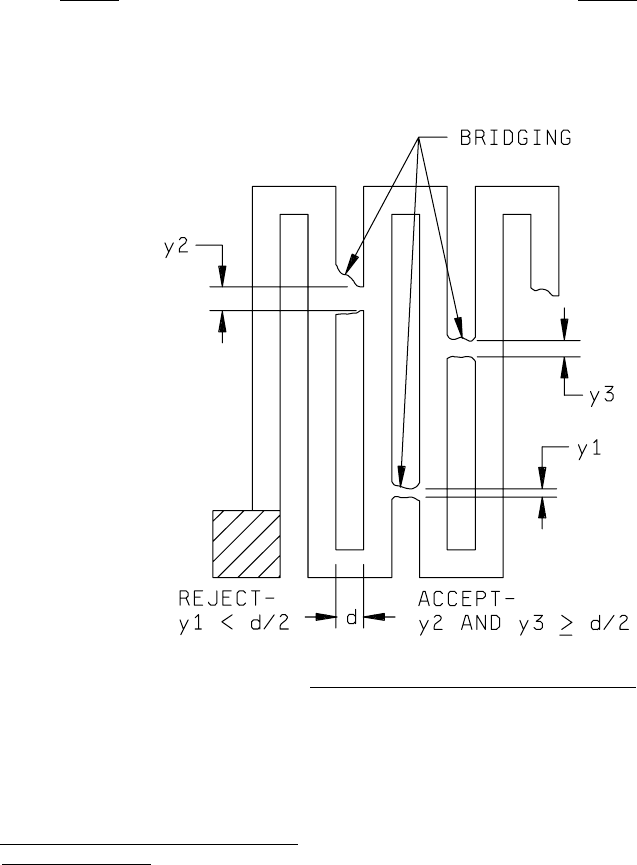
3.1.6 l. Bridging within the same resistor pattern 3.1.6 l. Same as class H.
where the width of the bridge is less than
50 percent of the narrowest line being
bridged (see figure 2032-22h).
FIGURE 2032-22h. Class H bridging of resistor material criteria
.
3.1.7 Laser trimmed thin film resistor defects,
"high magnification"
. No element shall be acceptable
that exhibits:
NOTE: The laser trim defect criteria contained in
this section apply to active resistor areas only.
MIL-STD-883F
METHOD 2032.2
18 June 2004
28
Class H Class K
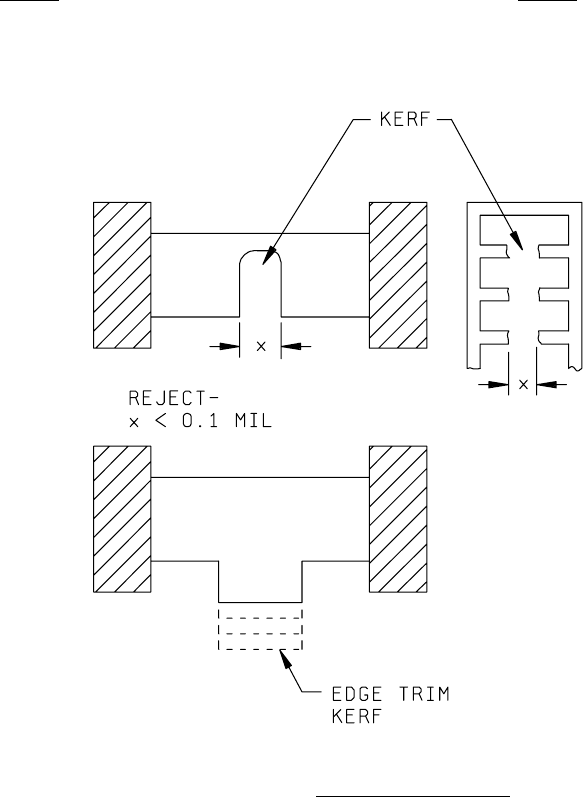
3.1.7 a. A kerf width less than 0.1 mil (see 3.1.7 a. Same as class H.
figure 2032-23h).
NOTE: This does not apply to edge trimming.
FIGURE 2032-23h. Class H kerf width criteria
.
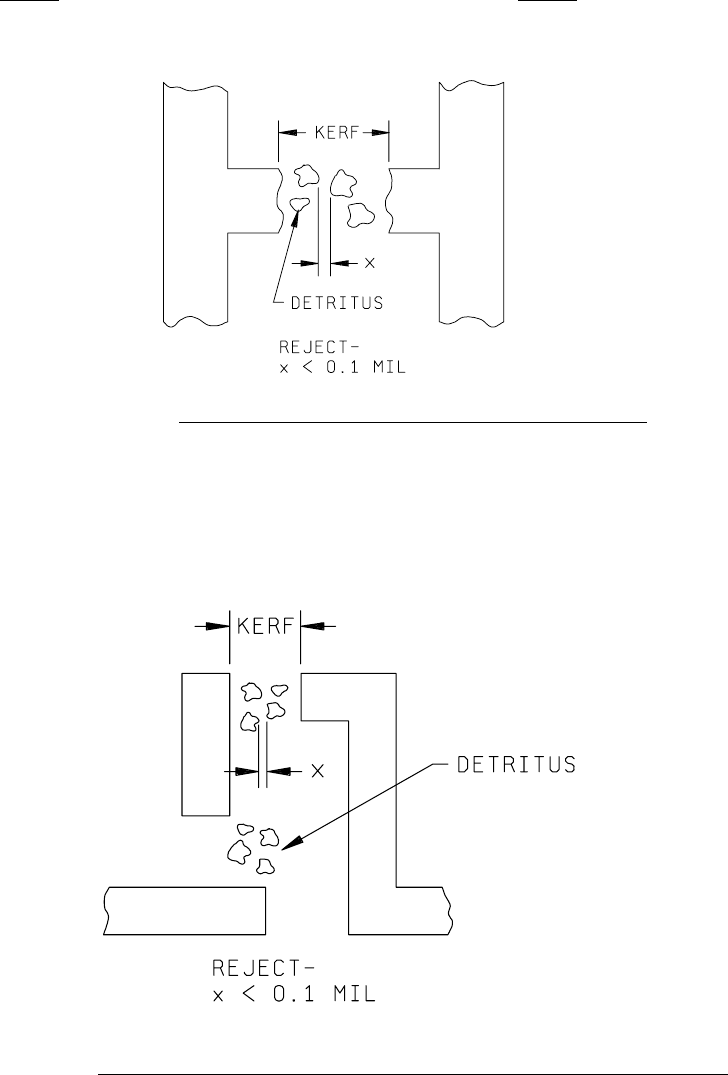
b. A kerf containing particles of detritus. b. Same as class H.
NOTE: For resistor materials that are
self-passivating (such as tantalum nitride),
detritus in the kerf is allowed provided
that a clear path of at least 0.1 mil in
width exists in the kerf. Such detritus
shall be attached. Verification of
attachment shall be accomplished using
the techniques described in 3.1.5a
(see figure 2032-24h).
NOTE: This does not apply to edge
trimming.
MIL-STD-883F
METHOD 2032.2
18 June 2004
29
Class H Class K
3.1.7 b. (Continued.)
FIGURE 2032-24h. Class H detritus criterion for self-passivating resistor materials
.
NOTE: In the case of a resistor loop made with
self-passivating resistor material which is
similar in configuration to the one shown
in figure 2032-25h, there shall be at least
one kerf that contains a clear path of at
least 0.1 mil in width; otherwise, the element
shall be rejected.
FIGURE 2032-25h. Class H resistor loop element detritus criterion for self-passivating resistor materials
.