MDO3000 Programmer Manual.pdf - 第439页
Commands Listed in Alphabetical Order Ta b l e 2 - 5 6 : M a t h expression e lements Element Description Example CH1-CH4 REF1-REF4 Speci fi es an an alog channel or reference waveform as the data source. Referenced as &l…
Commands Listed in Alphabetical Order
MATH[1]:DEFine
This command specifies the current math function as a text string. You must
also specify the type (dual waveform, FFT, advanced math, or spectrum math)
using MATH[1]:TYPe
Dual math expressions are strings of the form
<wfm> <o peration> <wfm>,
where the <wfm>s are any combination of live analog or reference waveforms
in the time domain display, the <operation> is any of +, -, * or /, and the type
has been se
tto
DUAL.
FFT math expressions are strings of the form
FFT(<wfm>), where <wfm> is any
live anal
og or reference waveforms in the time domain display, and the type has
been set to
FFT.
NOTE. You can also use FFT as part of a math expression by setting the type
to
ADVanced
using MATH[1]:TYPe. See examples of advanced type math
expressions below.
Advanced math expressions extend beyond dual math expressions, incorporating
combinations of advanced math functions, measurements, and operators.
Spectrum math (MDO models) expressions are strings of the form
<wfm><operation><wfm>, where the waveforms are any combination of live RF
or reference traces in the frequency domain display, the <operation> is either +
or –, and type has been set to
SPECTRUM.
Group
Math
Syntax
MATH[1]:DEFine <QString>
MATH[1]:DEFine?
Related Commands
MATHVAR:VAR<x>,
MATH[1]:TYPe
Arguments
<QString> quoted string argument is the mathematical expression that defines
the waveform.
2-408 MDO4000/B/C, MSO/DPO4000B and MDO3000 Series Oscilloscopes Programmer Manual
Commands Listed in Alphabetical Order
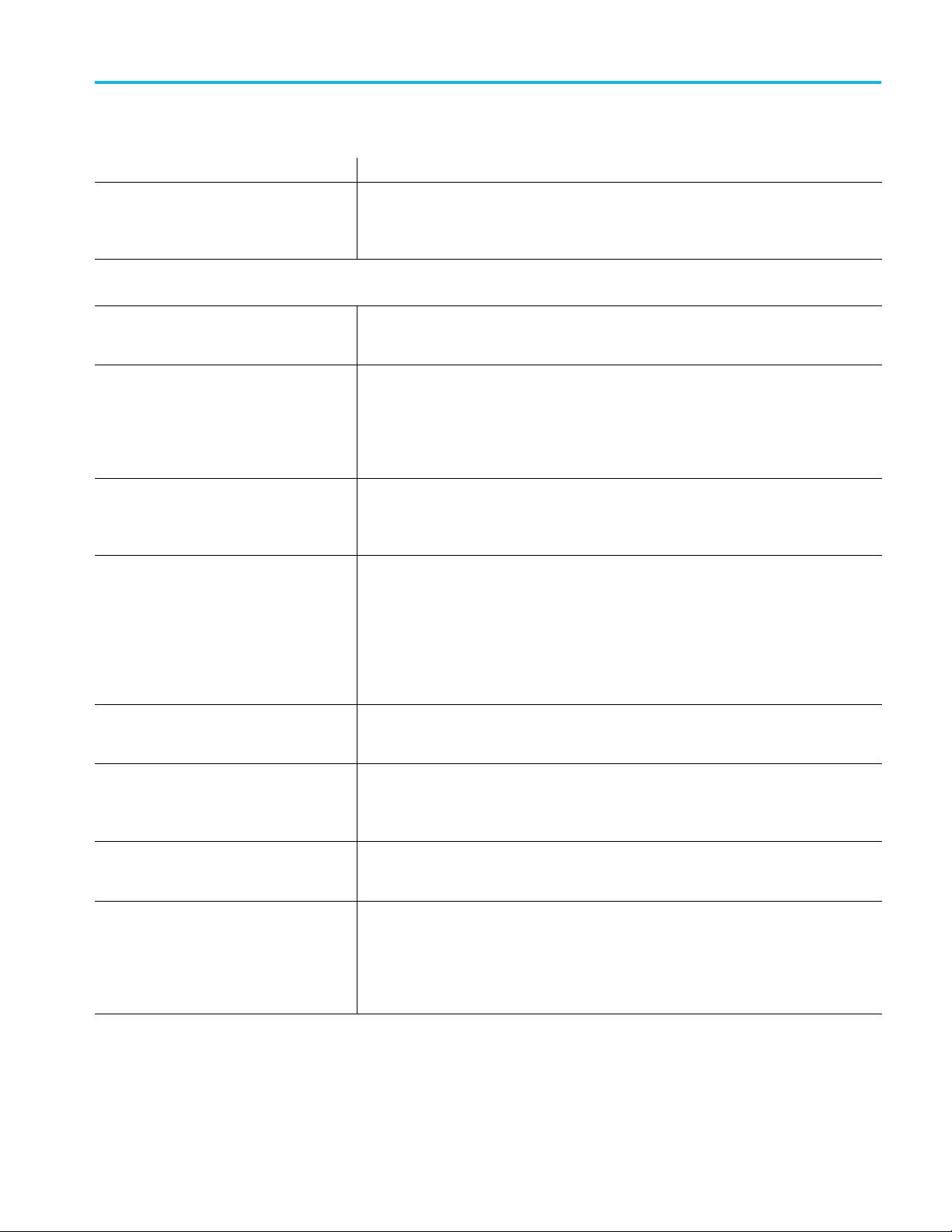
Table 2-56: Mat
h expression elements
Element Description Example
CH1-CH4
REF1-REF4
Specifies an an
alog channel or
reference waveform as the data source.
Referenced as <wfm> in the math
operators de
scriptions.
:MATH:DEFINE "FFT(C H1)"
Automatic m
easurements of waveforms
See also MEASUrement:IMMed:TYPe and MEASUrement:MEAS<x>:TYPe .
AMPlitude(<wfm>)
Thehighval
ue less the low value
measured over the entire waveform or
gated region.
:MATH:DEFI
NE
"AMPlitude(CH1)"
AREa(<wfm>)
Area measurement is a voltage over
time measurement. It returns the area
over the en
tire waveform or gated region
in volt-seconds. Area m easured above
ground is positive; area measured
below gro
und is negative.
:MATH:DEFINE "AREA( CH1)"
BURst(<
wfm>)
Burst wi
dth: the duration of a burst
(a series of transient events) and is
measured over the entire waveform or
gated re
gion.
:MATH:DEFINE "BURST (CH1)"
CARea(
<wfm>)
Cycle a
rea: a voltage over time
measurement. The measurement is the
area over the first cycle in the waveform
or the fi
rst cycle in the gated region
expressed in volt-seconds. The area
above the common reference point
is pos
itive, and the area below the
common reference point is negative.
:MATH:DEFINE "CAREA (CH1)"
CMEan(<wfm>) Cycle mean: the arithmetic mean over
the first c ycle in the w aveform or the
first
cycle in the gated region.
:MATH:DEFINE "CMEAN (CH1)"
CRM
s(<wfm>)
Cyc
le RMS: the true Root Mean Square
voltage o ver the first cycle in the
waveform or the first cycle in the gated
reg
ion.
:MATH:DEFINE "CRMS( CH1)"
DE
Lay(<wfm>,<wfm>)
Th
e time between the mid reference
(default 50%) a mplitude point of two
different waveforms. See also P hase.
:MATH:DEFINE
"D
ELAY(CH1,CH2)"
FA LL(<wfm>) The time required for the falling edge
o
fthefirst pulse in the waveform
or gated region to fall from the high
reference value (default = 90%) to the
l
ow reference value (default = 10% ) of
the final value.
:MATH:DEFINE "FALL( CH1)"
MDO4000/B/C, MSO/DPO4000B and MDO3000 Series Oscilloscopes Programmer Manual 2-409
Commands Listed in Alphabetical Order
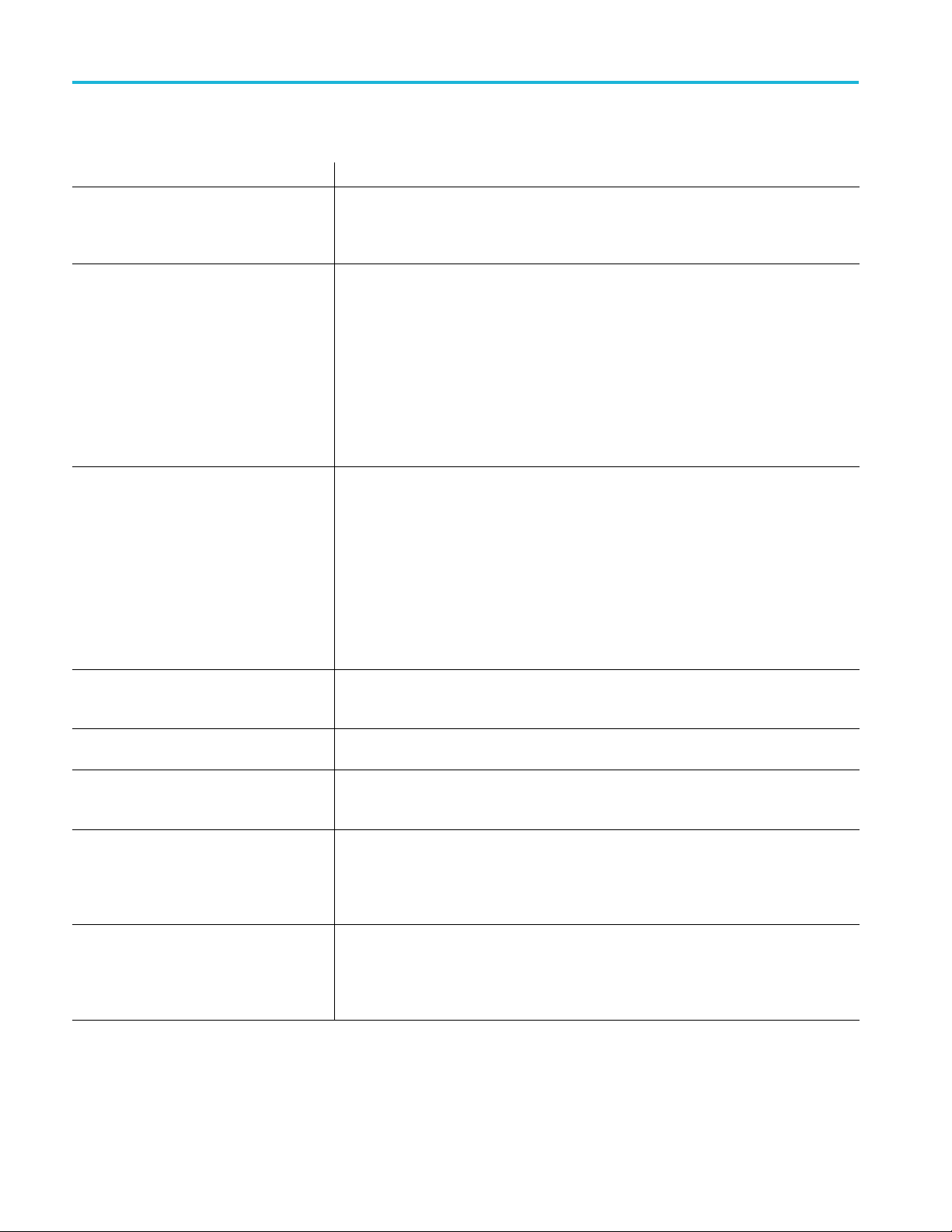
Table 2-56: Math expression elements (cont.)
Element Description Example
FREQuency(<wfm>) The first cycle in a waveform or gated
region. Frequency is the reciprocal of
the period; it is measured in hertz (Hz)
where one Hz is one cycle per second.
:MATH:DEFINE
"FREQUENCY(CH1)"
HIGH(<wfm>) This value is used as 100% whenever
high reference, mid reference, or low
reference values are needed, such as
in fall time or rise time measurements.
Calculate u sing either the min/max
or histogram method. The min/max
method uses the maximum value
found. The h istogram method uses the
most common value found above the
midpoint. This value is measured over
the entire waveform or gated region.
:MATH:DEFINE
"HIGH(CH1)*CH2"
LOW(<wfm>) This value is used as 0% whenever
high reference, mid reference, or low
reference values are needed, such as
in fall time or rise time measurements.
Calculate u sing either the min/max
or histogram method. The min/max
method uses the minimum value
found. The h istogram method uses the
most common value found below the
midpoint. This value is measured over
the entire waveform or gated region.
:MATH:
DEFINE "LOW(CH1)"
MAXimum(<wfm>)
The most positive peak voltage. Max is
measured over the entire waveform or
gated region.
:MATH:DEFINE
"MAXIMUM(CH1)"
MEAN(<wfm>)
The arithmetic mean over the entire
waveform or gated region.
:MATH:DEFINE "MEAN(CH1)"
MINImum(<wfm>)
The most negative peak voltage. Min is
measured over the entire waveform or
gated region.
:MATH:DEFINE
"MINIMUM(CH1)"
NDUty(<wfm>) Negative duty cycle: the ratio of the
negative pulse width to the signal period
expressed as a percentage. The duty
cycle is measured on the first cycle in
the waveform or gated region.
:M
ATH:DEFINE "NDUTY(CH1)"
NOVershoot(<wfm>)
Negative overshoot: this is measured
over the entire waveform or gated
region and is expressed as: Negative
Overshoot = (Low – Minimum) /
Amplitude x 100%.
:MATH:DEFINE
"NOVERSHOOT(CH1)"
2-410 MDO4000/B/C, MSO/DPO4000B and MDO3000 Series Oscilloscopes Programmer Manual