00195376-05_SM_D1_D1i_D2_D2i_EN.pdf - 第151页
Service Work 4.4.19 Replacing the RSF Digita l Rotary Encoder (DP Axis) [0033 5990-xx] C&P6/12 Head Service Manual SIPLACE D1/D1i/D2/D2i 151 See also 4.4.2 Remo val/Installatio n of Head Front Part [ ➙ 115] ► Adj…
Service Work
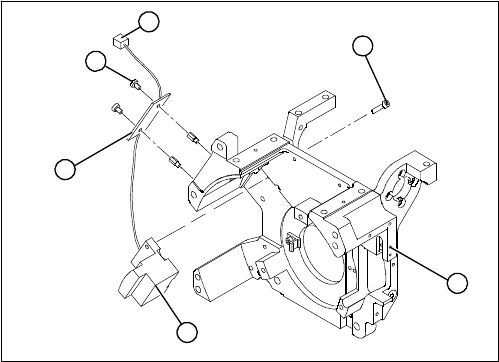
C&P6/12 Head 4.4.19 Replacing the RSF Digital Rotary Encoder (DP Axis) [00335990-xx]
150 Service Manual SIPLACE D1/D1i/D2/D2i
Installation
► Insert the new rotary encoder and initially fix loosely
in place with the two M2.5x8 hexagon socket-head
screws (3).
► Fit the handle of the C&P head.
► Insert the sleeve into the star and turn the star, with
the sleeve, until it reaches the rotary encoder.
► Fix the star in this position using the gauge for the
star.
1
6
5
4
3
2
Service Work
4.4.19 Replacing the RSF Digital Rotary Encoder (DP Axis) [00335990-xx] C&P6/12 Head
Service Manual SIPLACE D1/D1i/D2/D2i 151
See also
4.4.2 Removal/Installation of Head Front Part [ ➙ 115]
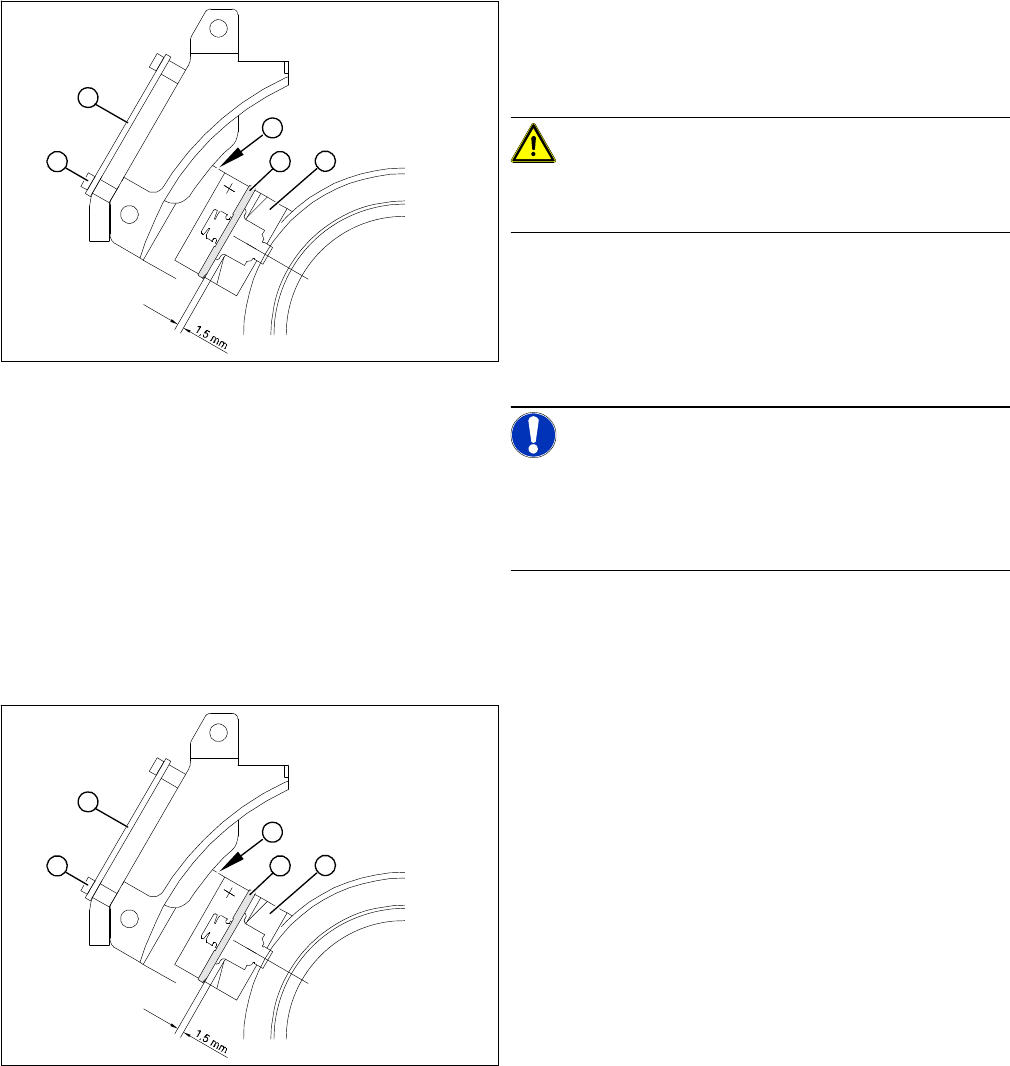
► Adjust the rotary encoder, so that the distance be-
tween the rotary encoder window and the incremental
disk on the sleeve is 1.5 mm.
Proceed as follows:
CAUTION!
Sensitive component!
RISK OF BREAKING THE INCREMENTAL DISK
► Carefully push the tapered end of the test probe be-
tween the window of the incremental encoder (1) and
the incremental disk (2).
► Loosen the fixing screws for the incremental encoder,
if you can not push the test probe in easily.
NOTICE!
The test probe has a blunt and a tapered end. Only push
the tapered end of the test probe between the incremen-
tal encoder and incremental disk of the sleeve, to avoid
scratching the disk and thus causing counting errors.
► Carefully push the rotary encoder towards the incre-
mental disk and along the stop edge (A) until the test
probe lies flat against the incremental disk (2) and the
window of the rotary encoder (1).
► Fix the rotary encoder in place using the two M2.5x8
hexagon socket-head screws.
► Carefully pull the test probe out of the gap.
► Remove the gauge for the star.
► Remove the sleeve from the star.
► Use the two M2.5x4 hexagon socket-head screws (4)
to fasten the RSF board (3).
► Connect the plug connector to the slot on the interme-
diate distributor.
► Place the black blanking cap over the RSF board.
► Fit the front part of the C&P head.
► Test the function of the rotary encoder to make sure
that it is working correctly.
A
1
4
3
2
A
1
4
3
2
Service Work
C&P6/12 Head 4.4.20 Replacing the Control Board for the Nozzle Changer 6/12 [00317353-xx]
152 Service Manual SIPLACE D1/D1i/D2/D2i
4.4.20
4.4.20 Replacing the Control Board for the Nozzle Changer 6/12 [00317353-xx]
Replacing the Control Board for the Nozzle Changer 6/12 [00317353-xx]
Overview
4.4.21
4.4.21 Checking the Cable Routing
Checking the Cable Routing
SIPLACE D1/D2 as example
Correct cable routing to and from the placement head is essential for long and accurate operation.
The high acceleration of the gantries can cause wear and damage to the connection leads.
▪ Cover unused connector strips with plastic caps:
Flat ribbon cables and coax leads can be damaged by unused connector strips. Make sure you at-
tach plastic caps.
Use dummy plugs for this [00368931-xx].
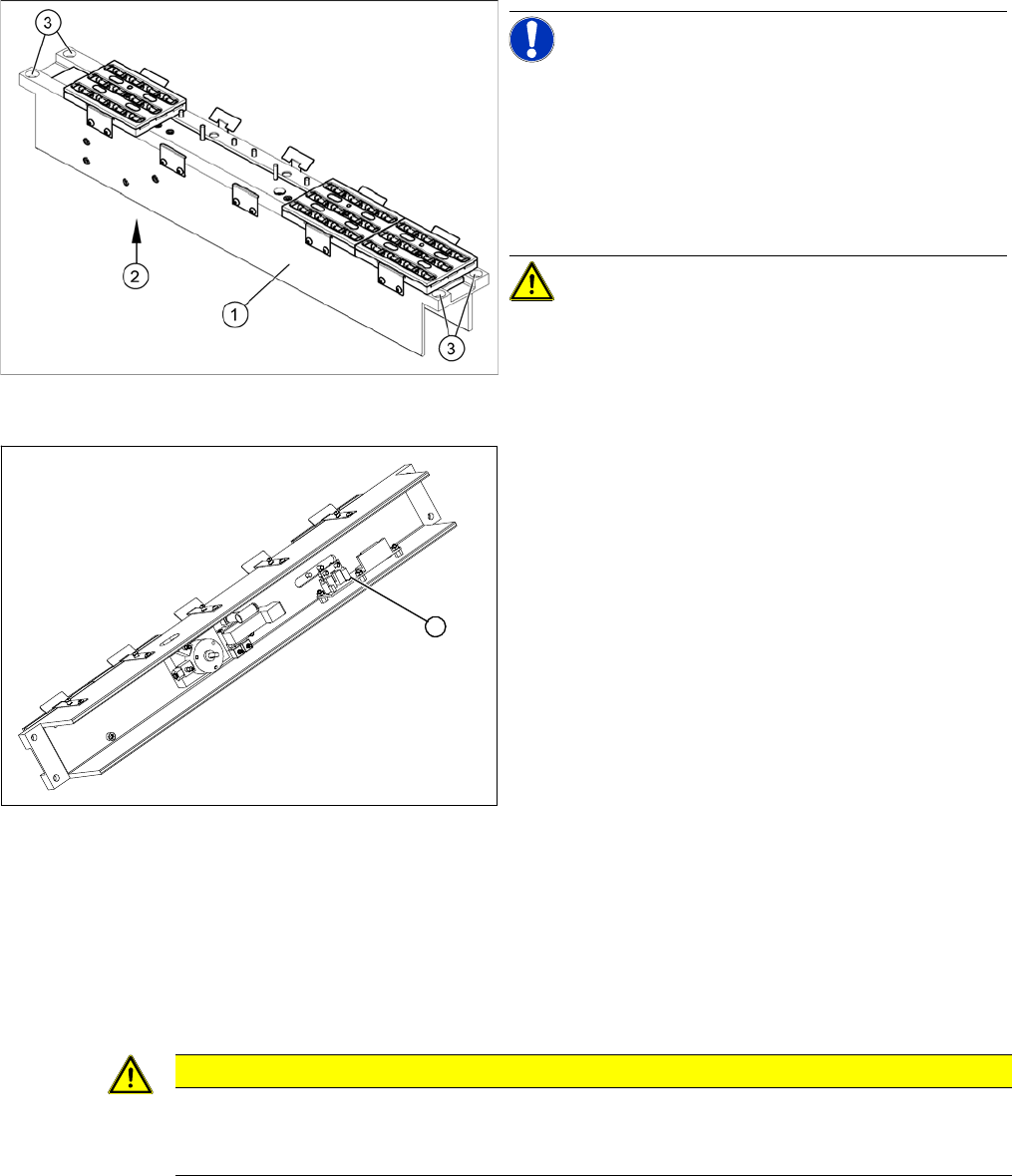
Nozzle changer for C&P12 (D4 shown as example)
NOTICE! The D1/D2 nozzle changers are just 1
magazine longer than those used for the D4. The struc-
ture is identical.
Legend
1. Nozzle changer 12 segments
2. Control board (installed on the underside)
3. 4 x fastening screws
CAUTION! The control board is also used for the
6-segment nozzle changer.
► Remove the nozzle changer from the machine. The
control board is situated on the underside of the noz-
zle changer.
Nozzle changer for C&P12 - viewed from below (D4
shown as example)
► Disconnect the control board (1) from the electrical
system.
► Loosen the fastening screws and remove the control
board .
► Fit the new control board and reconnect to the elec-
trical system.
► Fit the nozzle changer in the machine.
► Measure the nozzle changer with SITEST.
1
CAUTION
Check the cable routing!
Incorrect cable routing or poor fixture of the connection cables can cause mechanical damage.
This can then lead to malfunctions, non-reproducable errors and machine standstill.