S1.pdf - 第31页
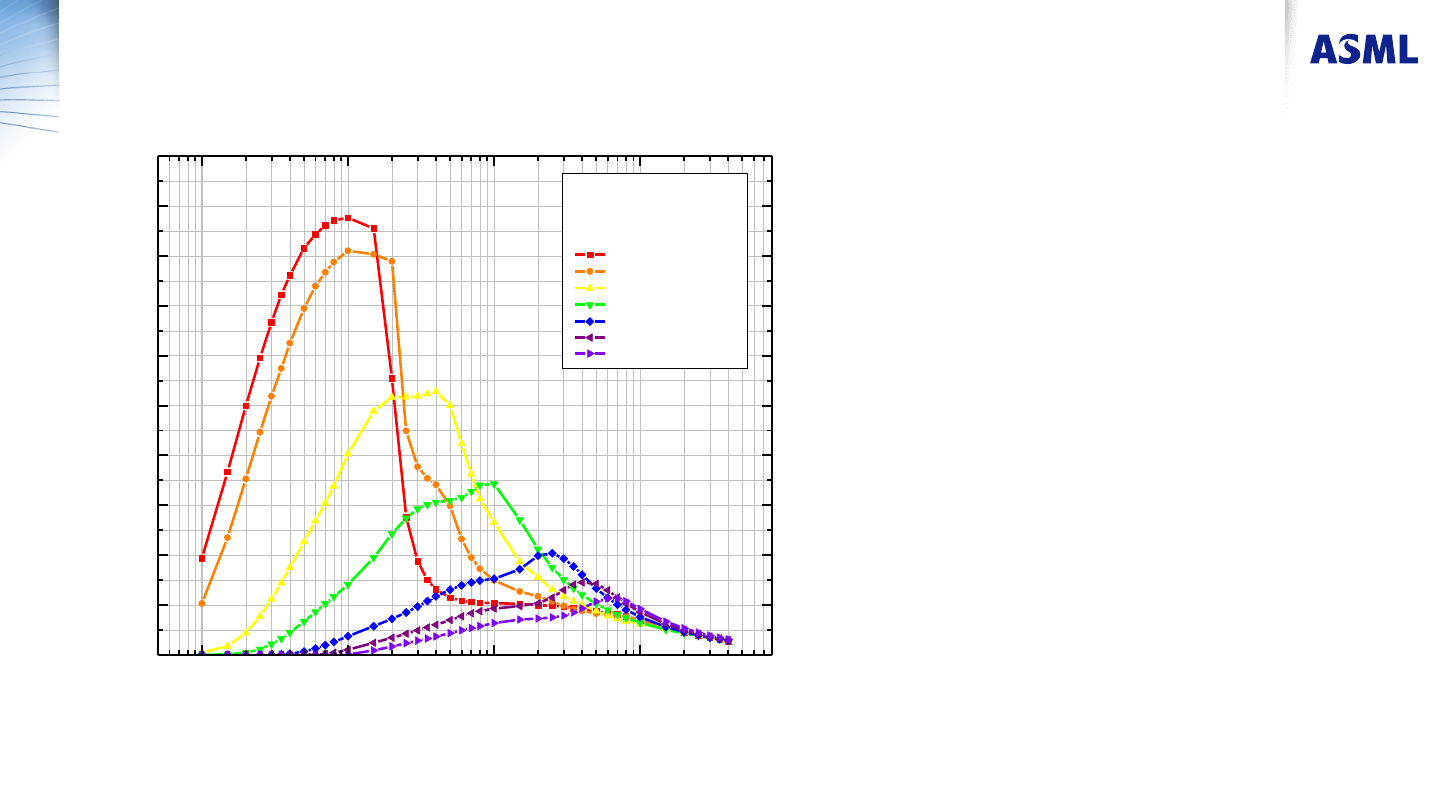
10 9 10 10 10 11 10 12 0 1 2 3 4 5 6 7 8 9 10 CE (%) Intensity (W/cm 2 ) Tin target, 50 m m 10 ns isquare-t op laser CE calc ulated with Gaussian 2% bandwi dth 10.6 m m 5.0 m m 2.0 m m 1.064 m m 532 nm 355 nm 266 nm Slid…
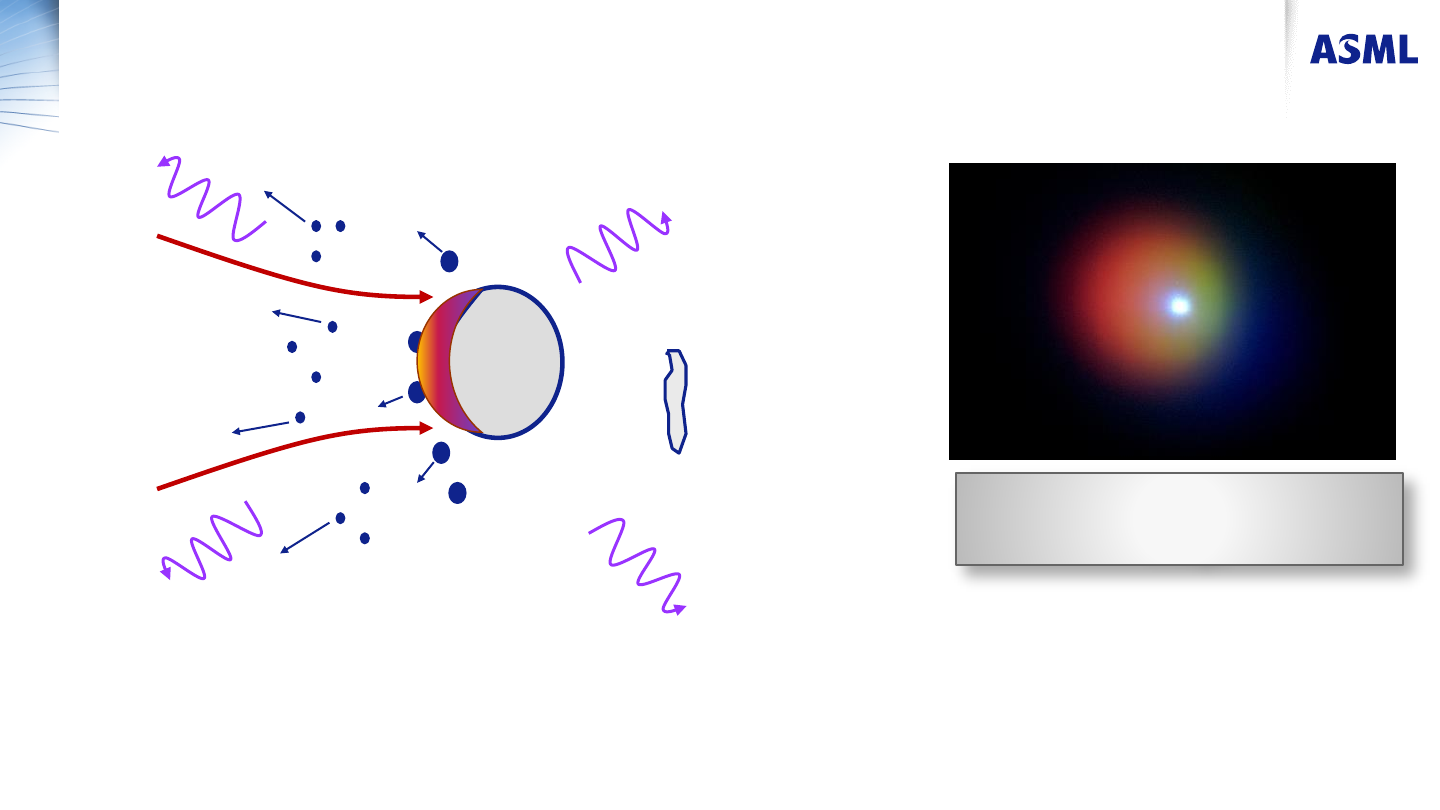
Fundamentals: EUV Generation in LPP
Laser produced plasma (LPP) as an EUV emitter
Slide 30
30 micron diameter tin droplet
Focused
Laser light
electrons
tin ions
“ejecta”
microparticles
tin vapor
1. High power laser interacts with liquid tin producing a plasma.
2. Plasma is heated to high temperatures creating EUV radiation.
3. Radiation is collected and used to pattern wafers.
Tin Laser Produced Plasma
Image
EUV
EUV
EUV
EUV
Dense hot
Plasma
Public
10
9
10
10
10
11
10
12
0
1
2
3
4
5
6
7
8
9
10
CE (%)
Intensity (W/cm
2
)
Tin target, 50 m m
10 ns isquare-top laser
CE calculated with
Gaussian 2% bandwidth
10.6 m m
5.0 m m
2.0 m m
1.064 m m
532 nm
355 nm
266 nm
Slide 31
Modelled EUV CE of LPP Sn Plasma vs. Wavelength
EUV CE defined into 2% bandwidth, 2p sr solid angle
Simulation Assumptions:
• 1D modeling
• Sn flat target (50um thickness)
• Laser Pulse: 10ns duration
(rectangular)
• Uniform radial distribution of
intensity in beam spot
• Prizm Computational
Sciences, Inc., 2005
Public
Slide 32
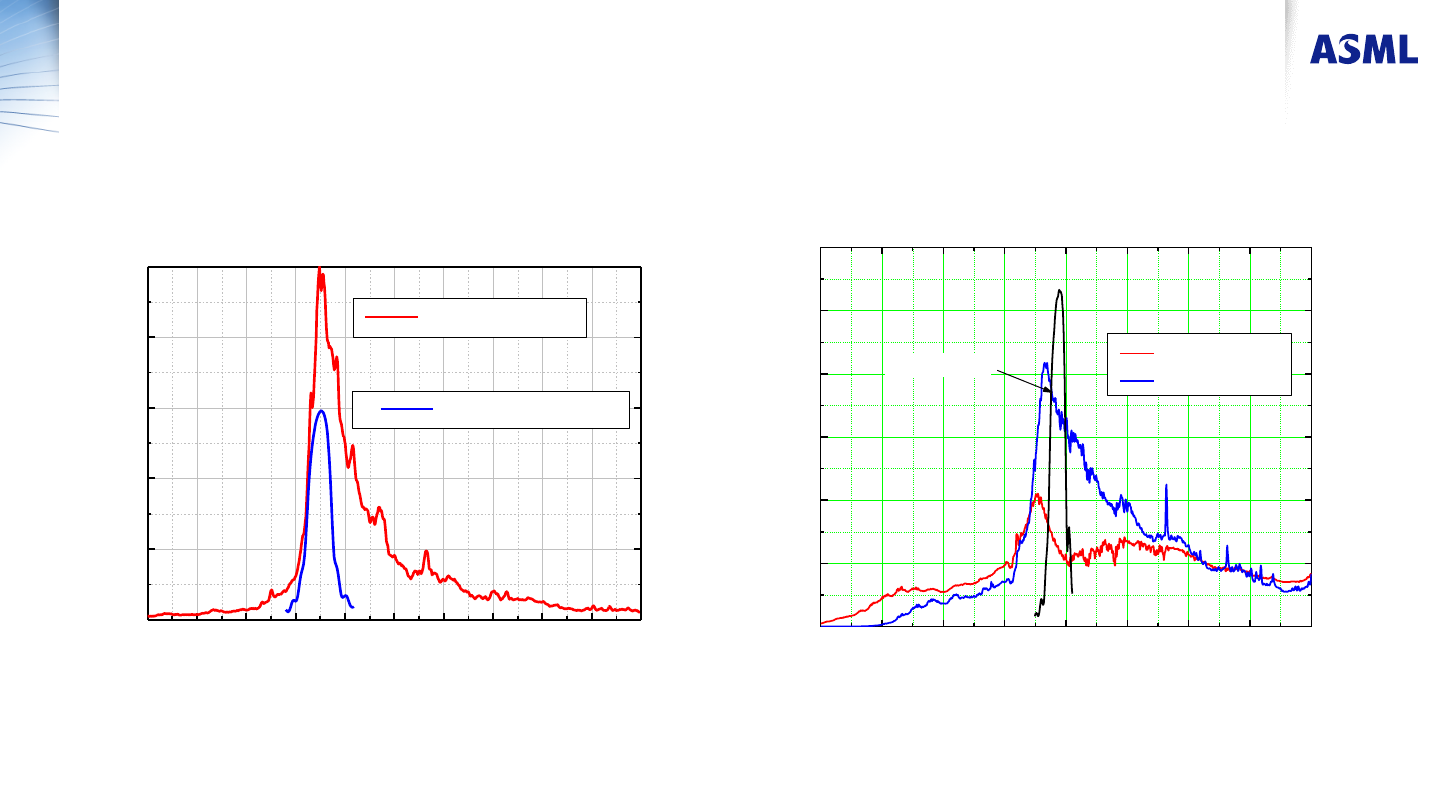
EUV Spectra of Laser Produced Sn Plasma
10 11 12 13 14 15 16 17 18 19 20
0.0
0.2
0.4
0.6
0.8
1.0
EUV spectrum
Intensity (arb. u.)
Wavelength (nm)
EUV Spectrum and MLM Reflectivity
0
20
40
60
80
100
Reflectivity (%)
MLM reflectivity
Peak of EUV spectrum matches the MoSi
multilayer reflectivity band at 13.5 nm
6 8 10 12 14 16 18 20 22
0
1
2
3
4
5
6
Sn, 355nm
Sn, 1064nm
EUV mirror
Signal, (a.u.)
Wavelength, (nm)
EUV spectrum with CO
2
Laser
at 10.6 mm
EUV spectrum with Nd:YAG Laser
at 1064 nm and 355 nm
Public