S1.pdf - 第45页
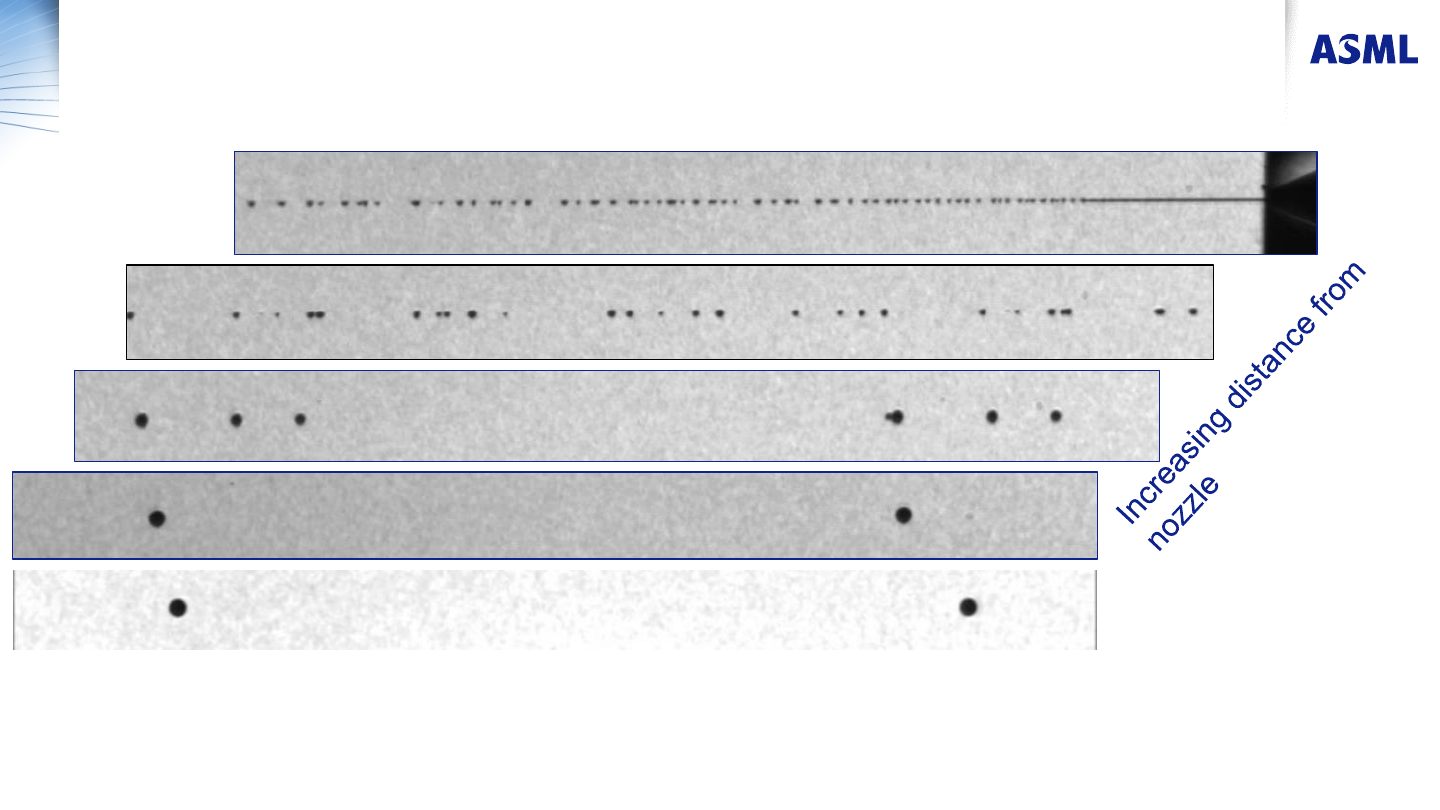
Slide 45 Droplet Generator: Principle of Operation Multiple small droplets coalesce together to form larger droplets at larger separation distance Large separation between the dro plets by special modul ation Public
0 10 20 30 40 50 60
-40
-20
0
20
40
60
80
100
Droplet position,
m
m
Time, hours
Slide 44
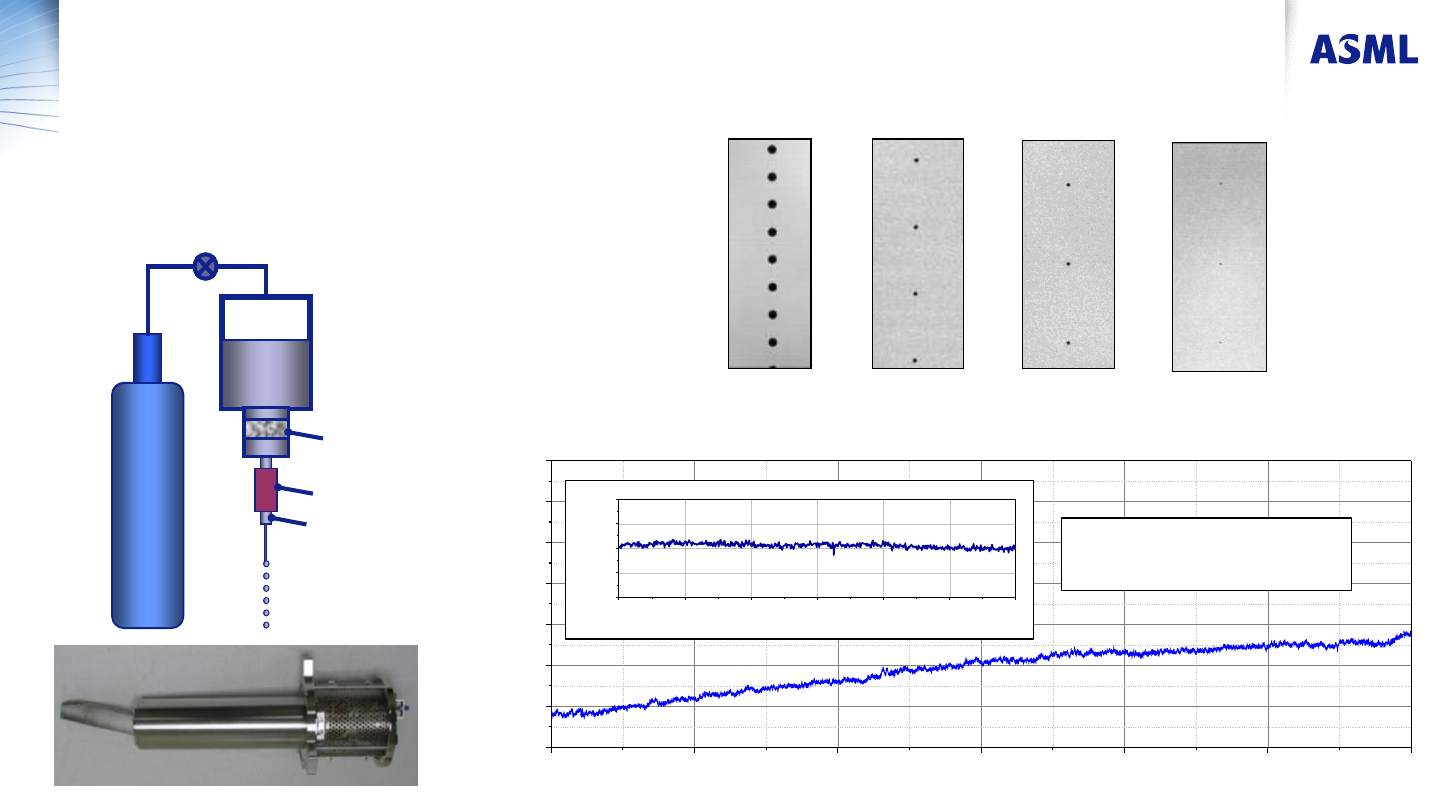
Droplet Generator: principle of operation
• Tin is loaded in a vessel & heated above melting point
• Pressure applied by an inert gas
• Tin flows through a filter prior to the nozzle
• Tin jet is modulated by mechanical vibrations
Nozzle
Filter
Modulator
Gas
Sn
0 5 10 15 20 25 30
-10
-5
0
5
10
Droplet position,
m
m
Time, sec
140 mm 50 mm 30 mm
Short term droplet
position stability σ~1mm
16 mm
Public
Droplet position stability, long and short term
Droplets of different sizes can be generated
Pressure: 1005 psi
Frequency: 30 kHz
Diameter: 37 µm
Distance: 1357 µm
Velocity: 40.7 m/s
Pressure: 1025 psi
Frequency: 50 kHz
Diameter: 31 µm
Distance: 821 µm
Velocity: 41.1 m/s
Pressure: 1025 psi
Frequency: 500 kHz
Diameter: 14 µm
Distance: 82 µm
Velocity: 40.8 m/s
Pressure: 1005 psi
Frequency: 1706 kHz
Diameter: 9 µm
Distance: 24 µm
Velocity: 41.1 m/s
Fig. 1. Images of tin droplets obtained with a 5.5 μm nozzle. The images on the left were obtained in
frequency modulation regime; the image on the right – with a simple sine wave signal. The images
were taken at 300 mm distance from the nozzle.
Slide 45
Droplet Generator: Principle of Operation
Multiple small droplets coalesce together to form larger droplets at larger separation distance
Large separation between the droplets by special modulation
Public
Slide 46
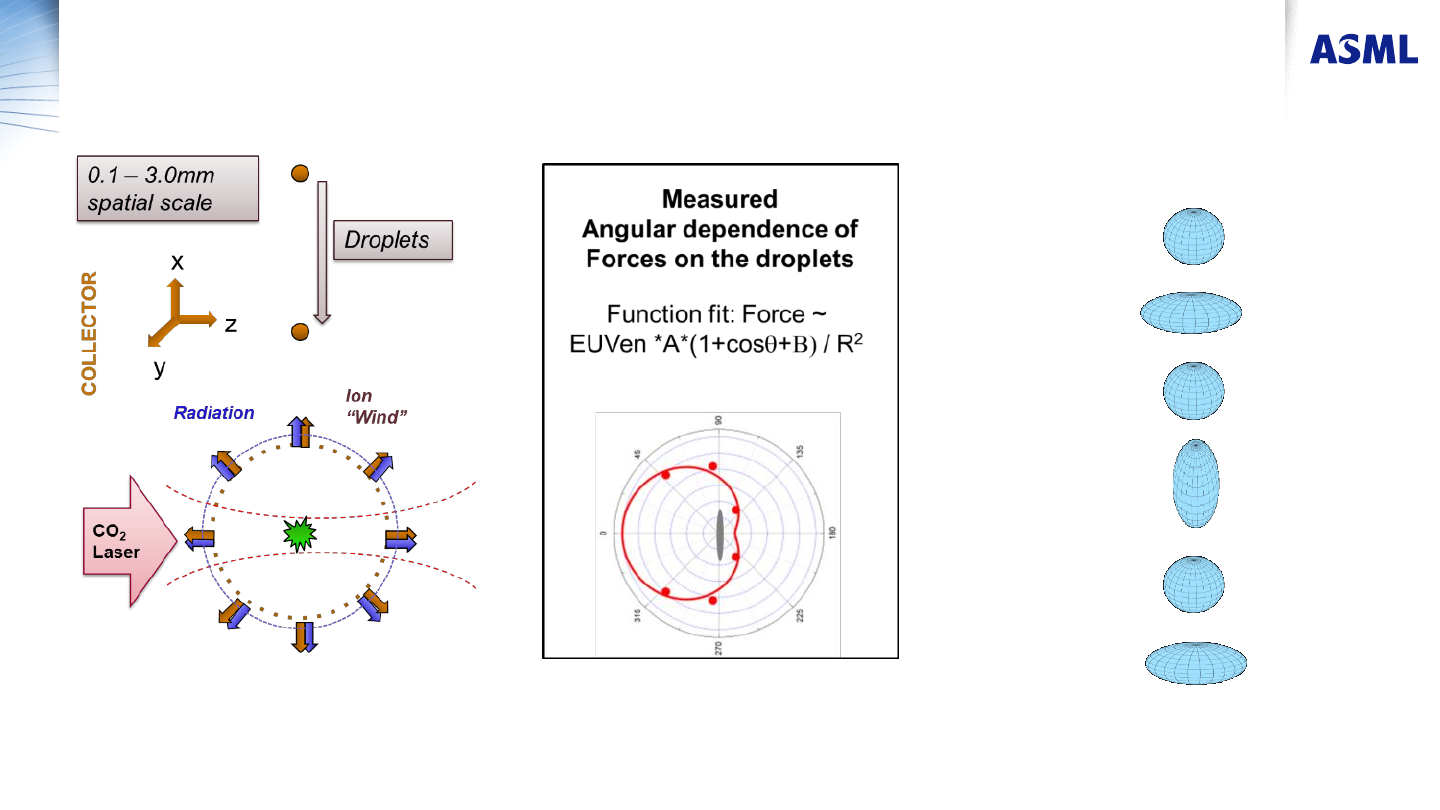
Forces on Droplets during EUV Generation
High EUV power at high repetition rates drives requirements
for higher speed droplets with large space between droplets
Public
Droplet deformations induced
by LPP of previous pulses
Lowest vibrational
mode n=2