S1.pdf - 第54页
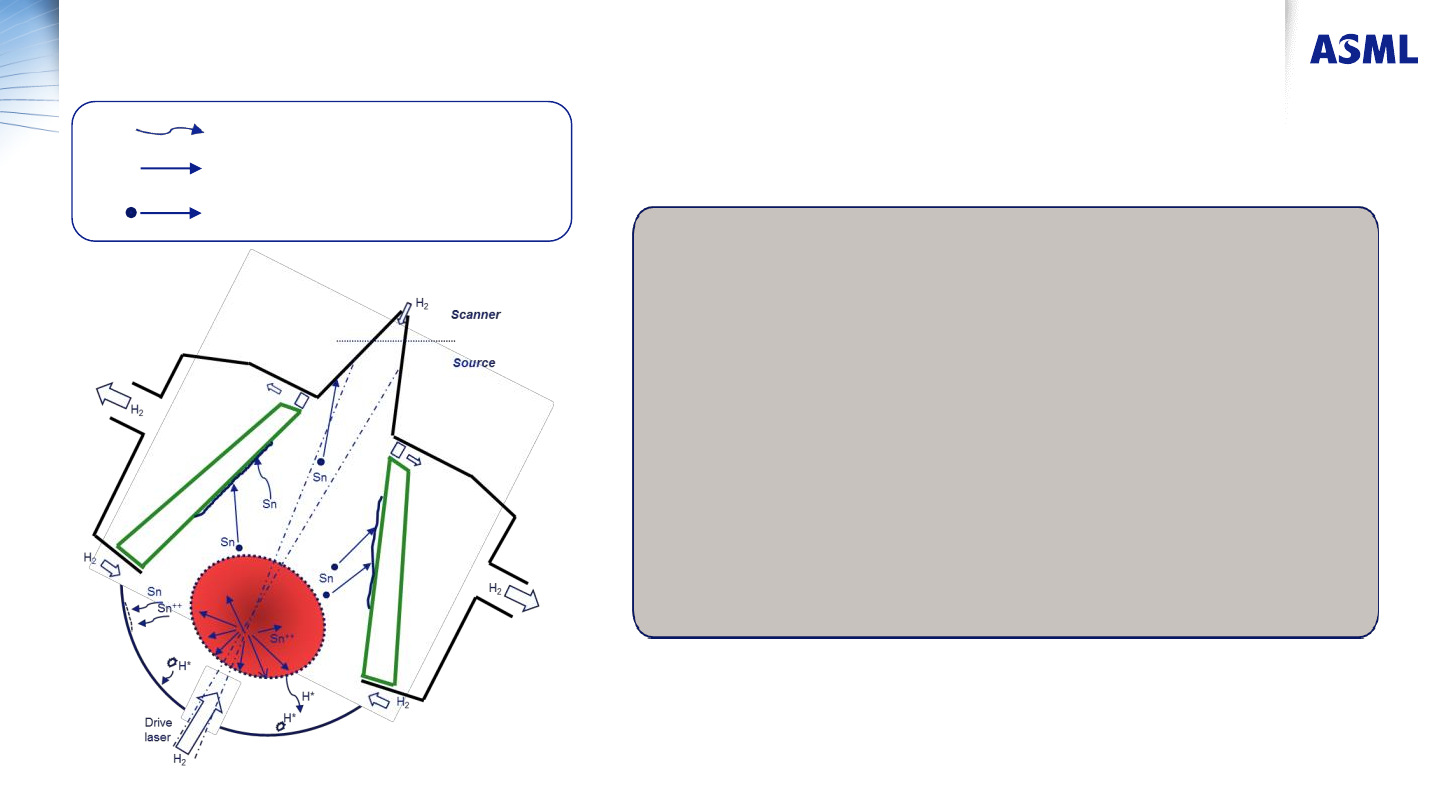
Slide 54 Debris in the tin LPP EUV source Primary debris – directly from plasma and before collision w ith any surface: ➢ Heat and momentum transfer into surroundin g gas o Kinetic energy and momentum of stopp ed ions o …
Slide 53
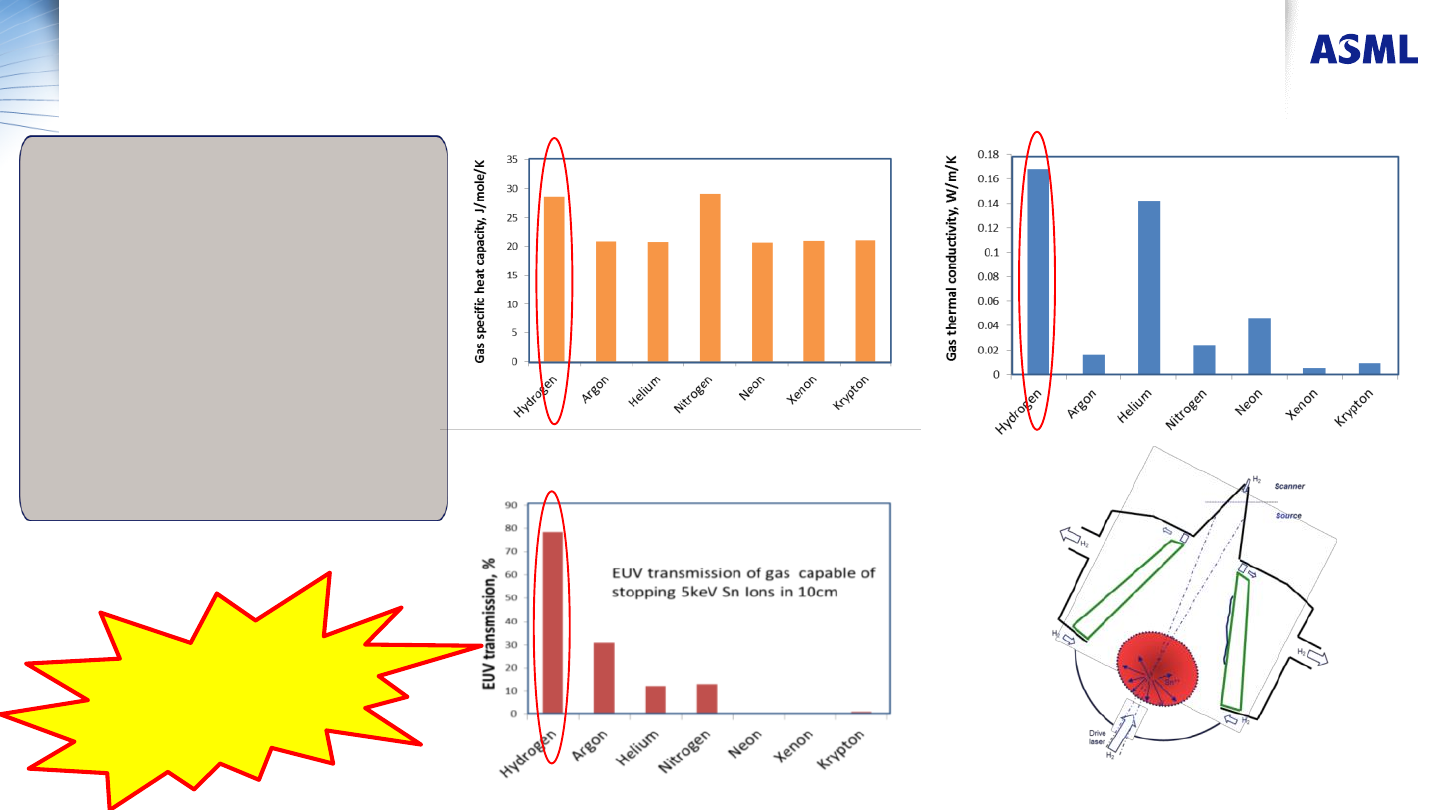
Hydrogen gas central to tin management strategy
Hydrogen performs well
for all these tasks!
Requirements for buffer gas:
➢ Stopping fast ions (with high
EUV transparency)
➢ Heat transport
➢ Sn etching capability
High heat capacity
High thermal conductivity
High EUV transparency
Public
Slide 54
Debris in the tin LPP EUV source
Primary debris – directly from plasma and before
collision with any surface:
➢ Heat and momentum transfer into surrounding gas
o Kinetic energy and momentum of stopped ions
o Absorbed plasma radiation
➢ Sn flux onto collector
o Diffusion of stopped ions
o Sn vapor
o Sn micro-particles
Sn
Sn
Sn vapor (diffusion debris)
Sn particles
Sn
+
Fast Sn ions (line of sight debris)
Public
Slide 55
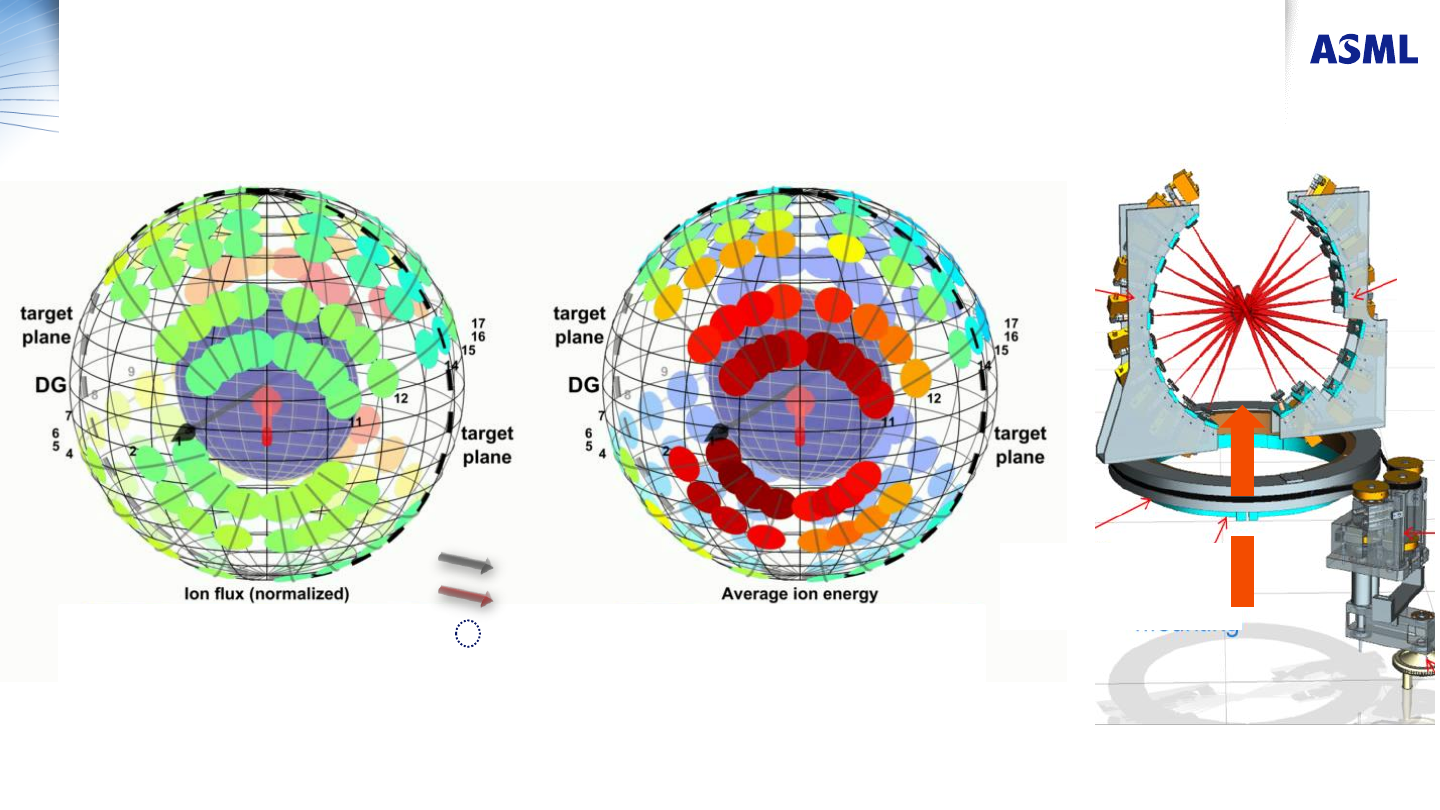
3D measurement of fast tin ion distributions
Faraday cups measure tin ion distributions
LASER
Ion measurements inform H
2
flow requirements for source
Target direction
Laser direction
FC direction
Faraday cup
Red = more
Blue = less
Public