S1.pdf - 第35页
Simulation of the EUV source The plasma code’s outpu ts were proces sed to produce synthetic source data. The comparis on to experiments helps to validate the code and unders tand it’s accura cy . Measured Shadowg rams S…
Plasma simulation capabilities
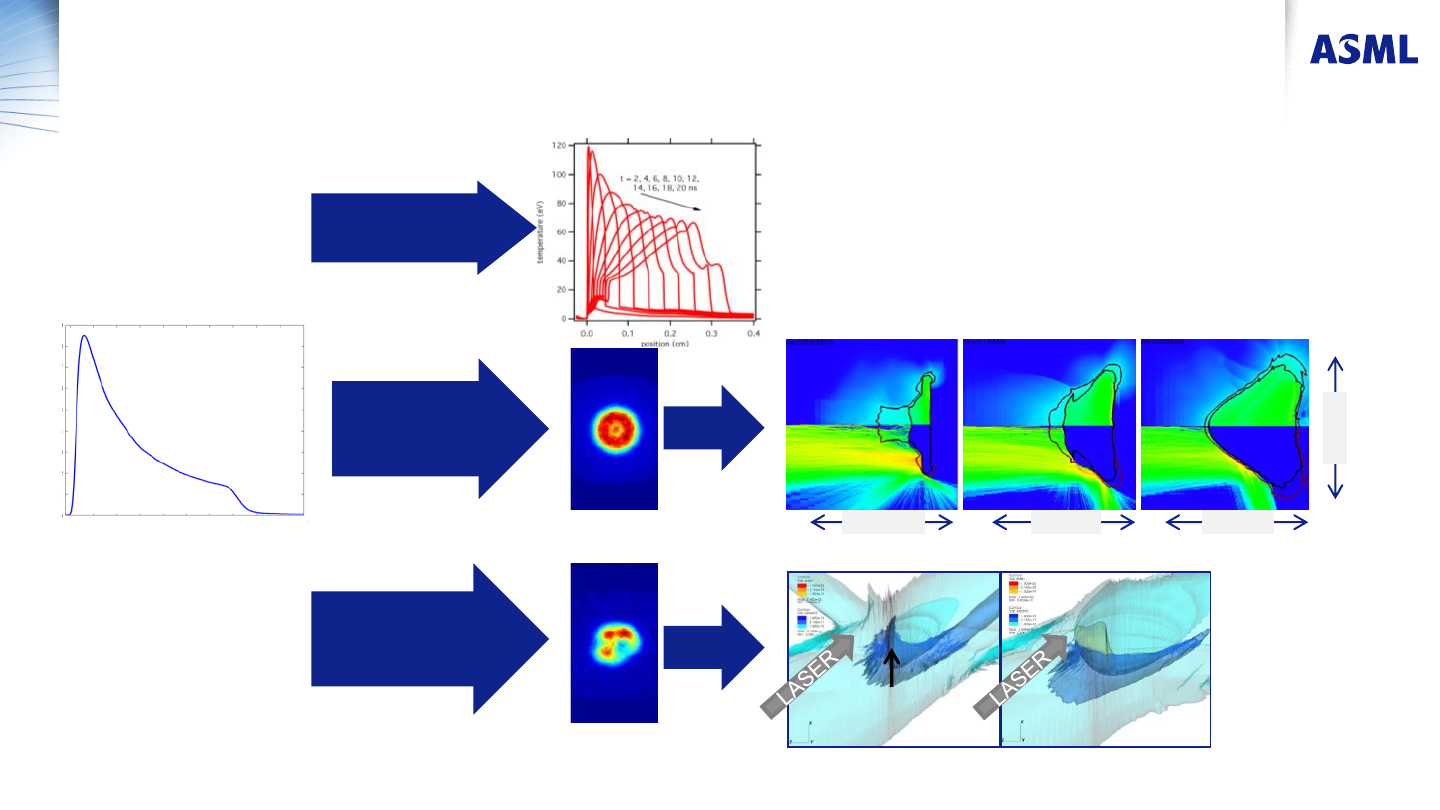
Main-pulse modeling using HYDRA
Main-pulse
shape
1D simulations are fast and useful
for problems that require rapid
feedback and less accuracy
3D:
+ real asymmetric
profile
2D and 3D
simulations are run
for the full duration
of the Main pulse.
Results include
temperature,
electron density,
spectral emission,
etc.
Target
Sn target using a real
irradiance distribution
1D:
real pulse shape
2D:
+ symmeterized
beam profile
Electron density (top half) with laser light (bottom half)
500μm500μm500μm
500μm
Power (arb. Units)
Time
Slide 34
Public
Simulation of the EUV source
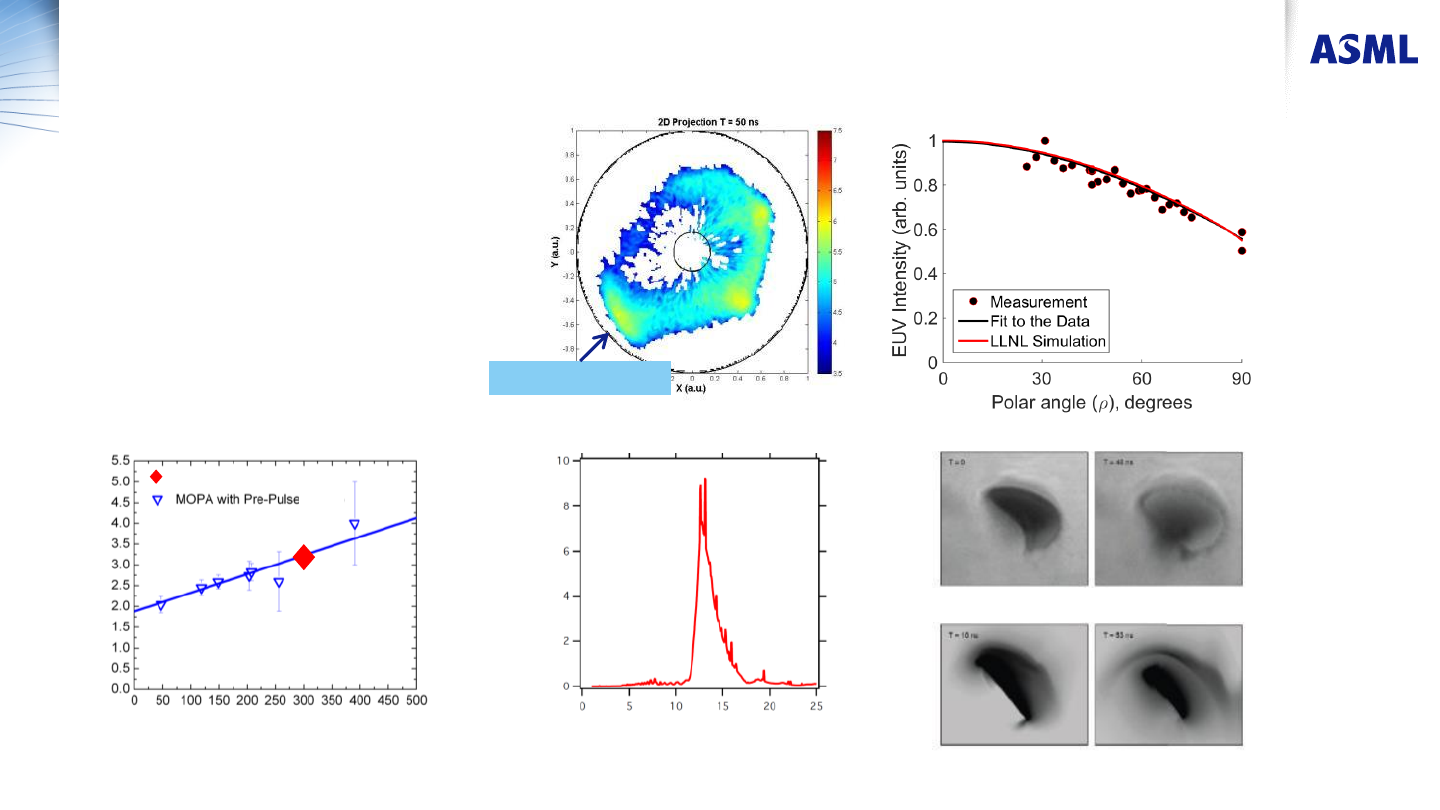
The plasma code’s outputs
were processed to produce
synthetic source data. The
comparison to experiments
helps to validate the code and
understand it’s accuracy.
Measured Shadowgrams
Simulated Shadowgrams
Simulated EUV spectra
Emission anisotropy
Collector rim
Reflected laser modeling
Conversion Efficiency (%)
Target Diameter (µm)
Fluence
(J/cm2/S/mm)
Wavelength (nm)
Simulation
Conversion Efficiency
Slide 35
Public

EUV Source: Architecture
and Operation Principles
Slide 36
Public