YSM40R_Mainte_E.pdf - 第64页
2-9 2 Daily maintenance items 1.2 Checking the nozzles visually T o visually check nozzles, remo ve each nozzle from the head or from the nozzle station. Also, YSM40R is equipped with a maintenance mirror that can be use…
2-8
2
Daily maintenance items
1.1.1 Vacuum level when nozzle is open
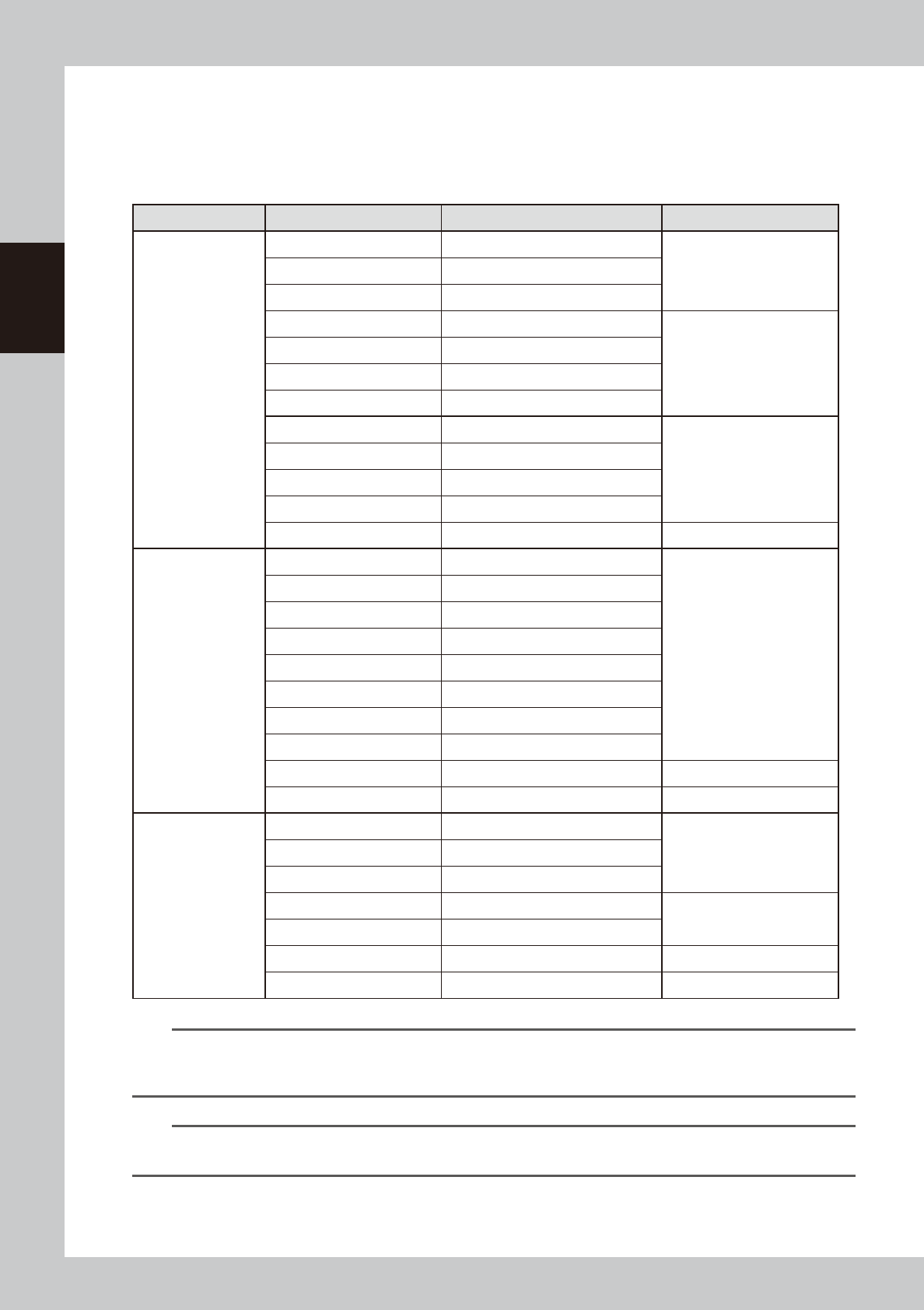
The table below shows the vacuum level measured when each nozzle is open.
The values might differ slightly depending on the air source and operating conditions. Use these values for
reference during maintenance.
n
Standard vacuum level when nozzle is open
Head Type Nozzle Standard value when nozzle is open Remarks
MU head
Type500A 180 or less
Standard nozzleType501A 120 or less
Type502A 75 or less
Type510A 180 or less
Narrow-pitch nozzle
Type511A 150 or less
Type512A 100 or less
Type513A 60 or less
Type503A/Type514A* 30 or less
Type504A/Type515A* 30 or less
Type506A/Type517A* 40 or less
Type507A/Type518A* 30 or less
No nozzle 30 or less
RS head
Type7201A 225 or less
Standard nozzle
Type7202A 220 or less
Type7203A 200 or less
Type7204A 150 or less
Type7205A 110 or less
Type7206A 110 or less
Type7207A 110 or less
Type7208A 110 or less
No nozzle** 100 or less
No nozzle/No filter 90 or less
FL head
Type601A 120 or less
Type602A 75 or less
Type603A* 30 or less
Type604A* 30 or less
With O-ring
Type605A* 30 or less
Type606A* 40 or less With V-notch
No nozzle 30 or less
n
NOTE
The nozzle hole of the nozzles marked by asterisk (*) is larger than that of other nozzles. So, if the vacuum levels of a
head using those nozzles marked by asterisk (*) or using no nozzle exceed the above standard values, the air path
(spline shaft, etc.) in the head might be clogged.
n
NOTE
**When the vacuum level does not get 100 or less while nozzle is detached from RS head unit, measure the vacuum
level by detaching the filter.
2-9
2
Daily maintenance items
1.2 Checking the nozzles visually
To visually check nozzles, remove each nozzle from the head or from the nozzle station. Also, YSM40R is
equipped with a maintenance mirror that can be used to visually check nozzles.
n
Points to check detached nozzles
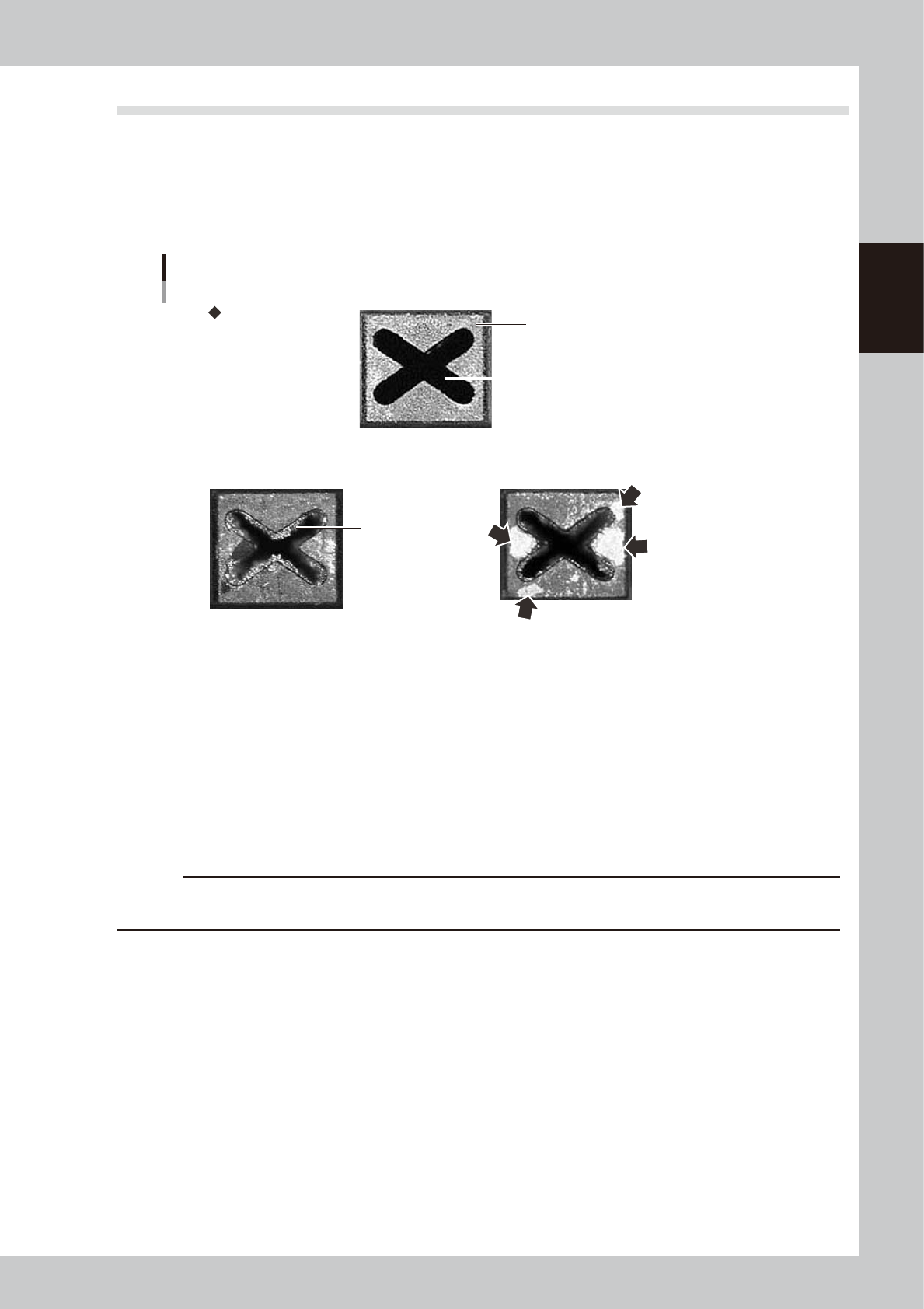
Check the removed nozzles with a magnifying glass or similar tool. If solder or dust is adhering to the nozzle tip or
nozzle hole, then clean the nozzles.
Nozzle tip
Solder is adhering to
nozzle hole.
Solder is adhering to
nozzle tip (flat surface).
Nozzle hole
Checking the nozzle condition
No good: Nozzle is clogged No good: Shiny material on tip
Normal condition
53202-N9-00
n
Checking nozzles by detaching them from the head individually
1. Move the head to a position where the nozzles can be easily detached, then detach each nozzle manually.
2. After checking and cleaning the nozzle, reattach the nozzle to the head while making sure the head position and the
nozzle's orientation are correct.
n
Checking nozzles by detaching them from the nozzle station (option)
1. Return all nozzles in the nozzle station.
2. Press the [Nozzle Stn Shutter] button on the [Unit]-[Head] tab screen to be ready for detaching nozzles.
3. After checking and cleaning the nozzle, return nozzles to original positions and press the [Nozzle Stn Shutter] button.
c
CAUTION
Be sure to attach nozzles to the original head. When the nozzles were detached from the nozzle station (option), return
them in the original positions.
2-10
2
Daily maintenance items
n
Checking the nozzles with the maintenance mirror
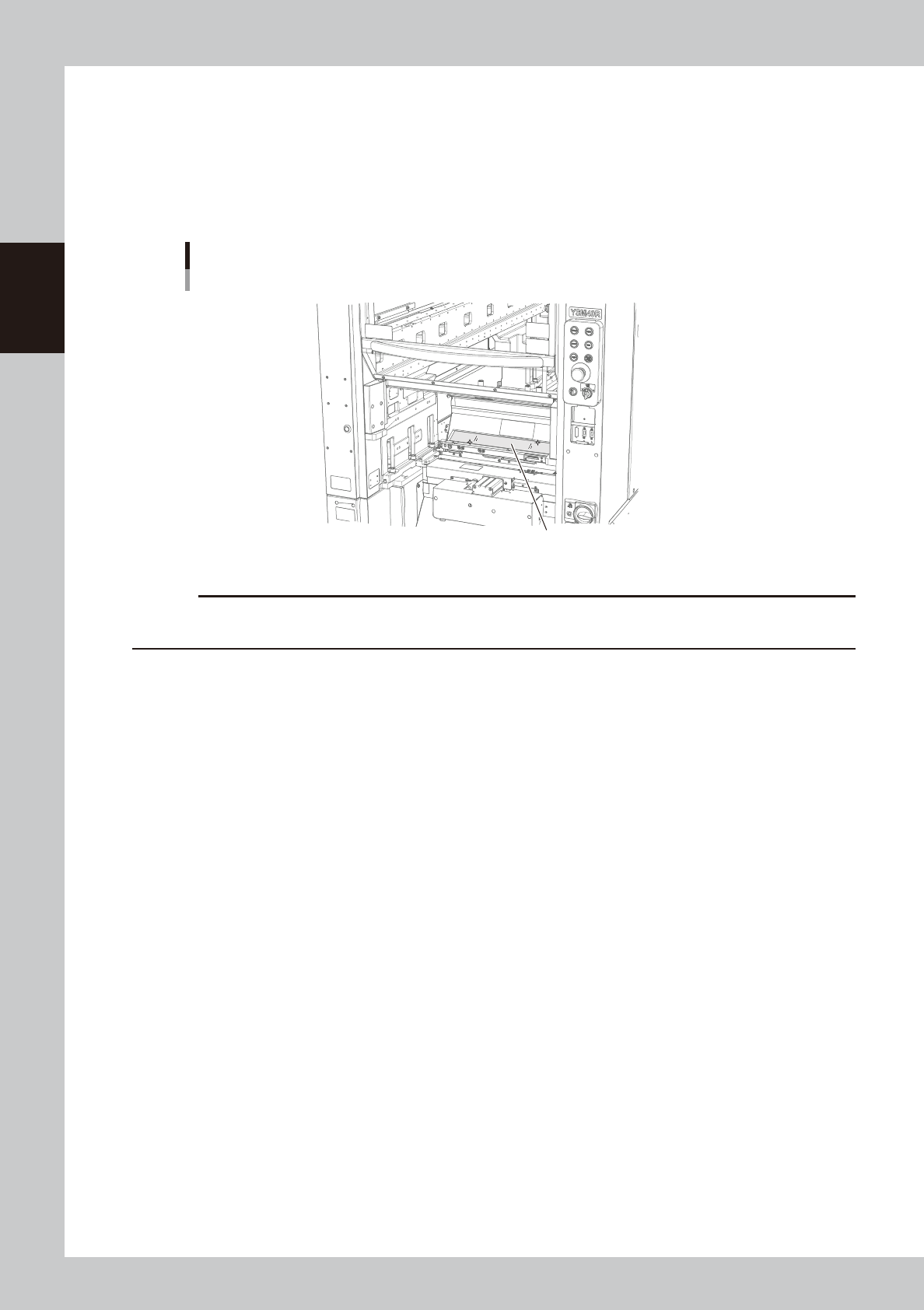
The maintenance mirror is located near the feeder slope of this machine to make it easier to check the condition of the
nozzle tips.
1. Use the CLAMP ON/OFF switch to lower the feeder exchange carriage and remove it from the machine.
2. Move the head to a position above the maintenance mirror.
3. Use the maintenance mirror to check the condition of the nozzle tips.
Maintenance mirror
Maintenance mirror
53203-N9-00
c
CAUTION
If any nozzle is dirty or clogged, clean the nozzle hole and nozzle tip. See "1.2 Nozzle cleaning" in Chapter 3 for
details.