00193922-03.pdf - 第284页
6 Component handling User ma nual SIPLACE HF series 6.5 Removing the used tape channel dividing plate Software Version SR.50x.xx 01/2006 US Edition 284 W ARNING 6 Æ Switch t he placem ent machi ne off at the m ain switch…
User manual SIPLACE HF series 6 Component handling
Software Version SR.50x.xx 01/2006 US Edition 6.5 Removing the used tape channel dividing plate
283
6.5 Removing the used tape channel dividing plate
In the standard version, the used tape channel can guide component tapes with a maximum
pocket height of 17 mm to the pneumatic tape cutter.
6
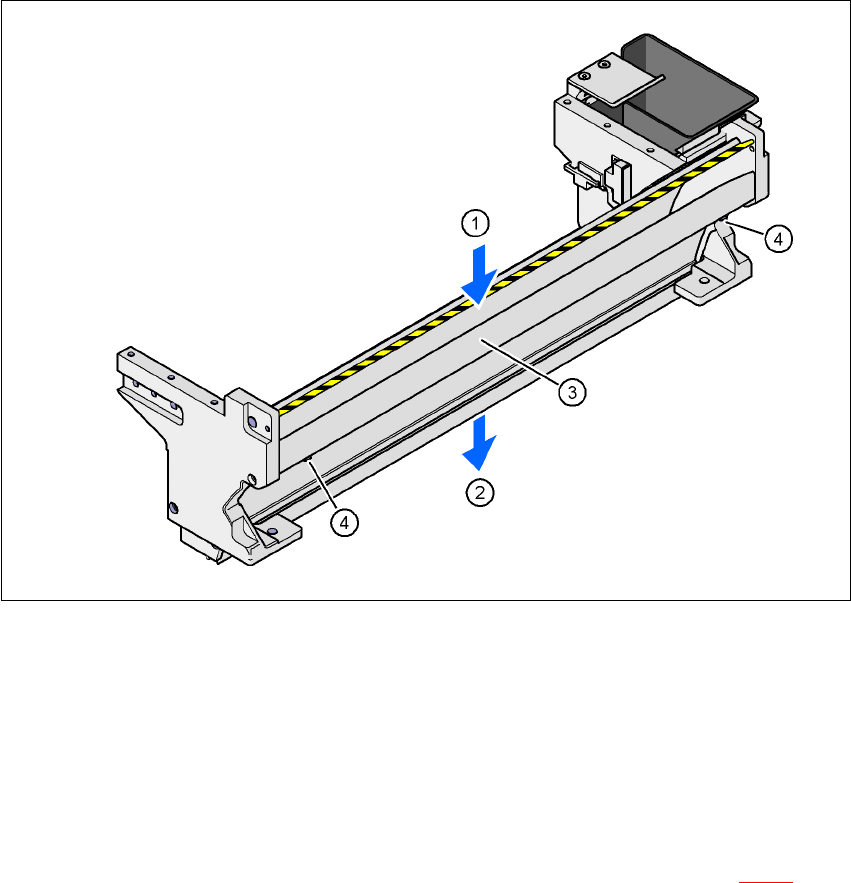
Fig. 6.5 - 1 Used tape channel with component reject bin
(1) Inlet slot for the used tapes
(2) Outlet slot for the used tape above the pneumatic tape cutter
(3) Dividing plate for tapes < 17 mm (can be removed for tapes > 17 mm)
(4) DIN 84 - M3x6 screw, 2x
If feeder modules that process component tapes with a pocket height > 17 mm are used, such as,
for example, the 44 mm S DP feeder module, then the separating plate (item 3 in Fig. 6.5 - 1
) must
be removed.
6 Component handling User manual SIPLACE HF series
6.5 Removing the used tape channel dividing plate Software Version SR.50x.xx 01/2006 US Edition
284
WARNING 6
Æ Switch the placement machine off at the main switch to remove the dividing plate.
Æ Disconnect the machine from the power and compressed air supply.
Æ Secure the machine to prevent it being switched on again, as described in section 2.10, page
85
.
Æ Wait until the operating pressure for the tape cutter has dropped to 0 MPa.
Æ Wear robust protective gloves.
Æ Do not reach inside the used tape channel.
Æ Loosen the two slotted screws (item 4 in Fig. 6.5 - 1).
Æ Pull out the dividing plate.
PLEASE NOTE
Do not position feeder modules with shallow pockets immediately beside bar feeder modules
with deep pockets. The used tapes could overlap and build up.
User manual SIPLACE HF series 6 Component handling
Software Version SR.50x.xx 01/2006 US Edition 6.6 Matrix tray changer
285
6.6 Matrix tray changer
The use of flatpack ICs is becoming an increasingly significant aspect in the production of flat
modules. These components are now almost exclusively provided in waffle trays. The space re-
quired by waffle trays is relatively large in comparison to the component density, however. The low
component capacity also requires the waffle trays to be changed frequently, which means that the
placement sequence has to be interrupted if the trays are changed manually.
The use of a matrix tray changer eliminates this unnecessary time loss since the waffle trays are
stored and automatically changed. Programmable, random access to up to 100 x waffle-pack
trays also considerably increases the range of components that can be made available.
6.6.1 Description
The matrix tray changer can be used to store and change up to 100 waffle trays fully automatically.
The levels (storage locations in the towers) for the waffle trays are numbered consecutively in as-
cending order from bottom to top.
The towers move independently of one another in the vertical direction until the selected maga-
zine is within range of the feed axis. The horizontal feed axis transports the waffle-pack tray from
the tower into the access area of the placement head.
Tower 1 has 30 levels, each of which can hold 2 JEDEC trays or one large tray up to 240 x
340 mm² from the waffle-pack tray carriers.
Tower 2 has a capacity of 40 levels for JEDEC trays.
A matrix tray changer may be docked in place of a component trolley at locations 2 and 4 on the
HF machine (only at location 2 on HF/3 machines). The draw-in device installed for the component
trolley may be replaced with the docking device for the matrix tray changer. Or conversely, the ma-
trix tray changer can be replaced with a component trolley.
The matrix tray changer has an integral chassis, and is therefore easy to move to other locations.
It is supplied with the PCB transport height implemented for the HF machines, but can easily be
adapted for PCB transport heights of 830, 900, 930 and 950 mm.